 Vietnamnet.vn

 Podcast



The sixth ASEAN Digital Ministers’ Meeting (ADGMIN) officially opened on January 15 in Hanoi, affirming the region’s collective ambition to build a smart, deeply connected, innovative, and responsible digital community in the era of rapid technological change.
Under the theme “ASEAN Adaptive: From Connectivity to Connected Intelligence,” this year’s conference marks a strategic shift in ASEAN’s digital cooperation - from focusing solely on physical infrastructure to emphasizing digital intelligence and human-centric connectivity.
The high-level event brought together digital ministers from ASEAN member states, the ASEAN Secretary-General, representatives from dialogue partners, and international organizations, as well as hundreds of delegates from across the region.
A turning point in ASEAN’s digital cooperation mindset
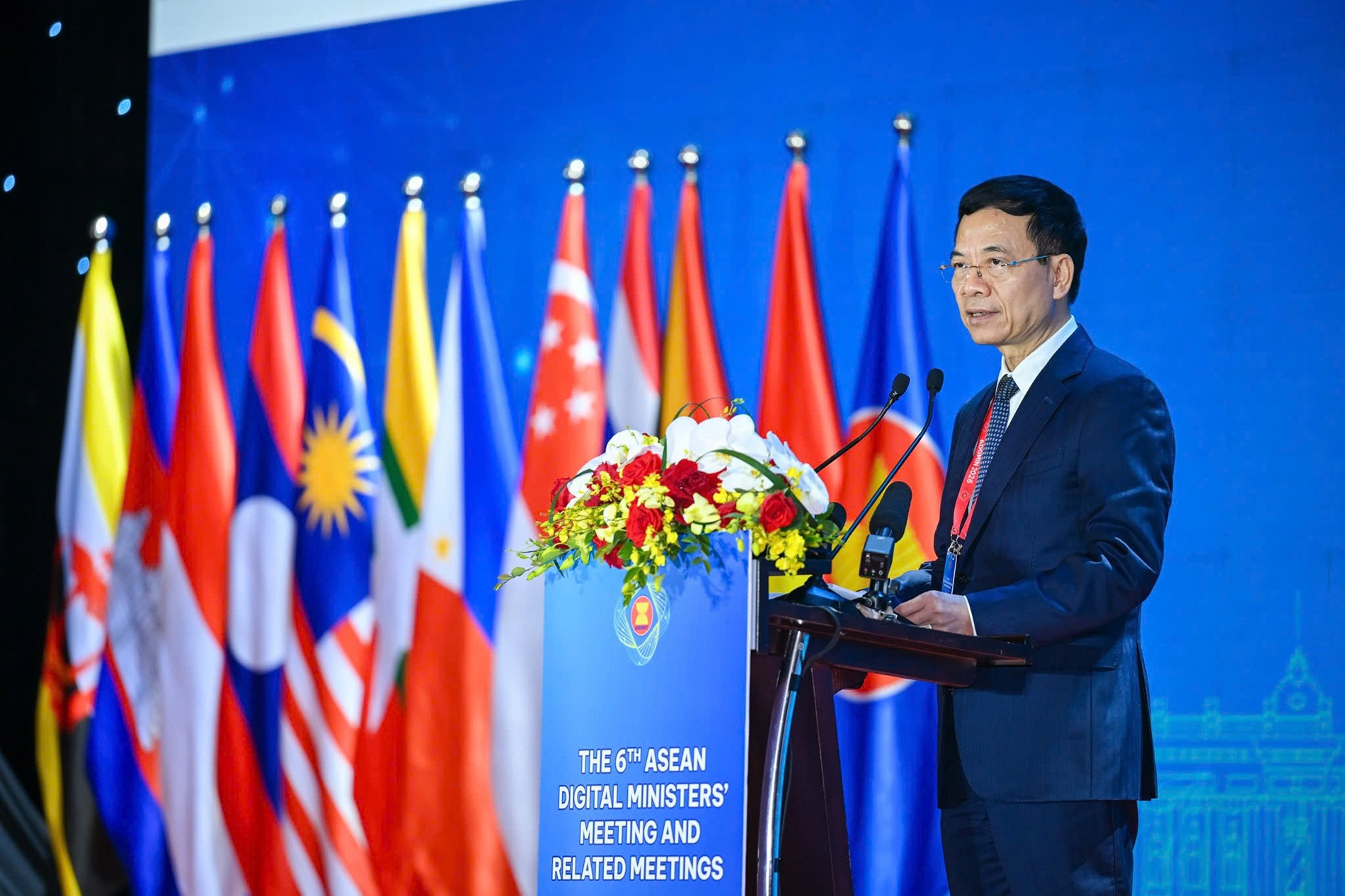
In his opening remarks, Minister of Science and Technology Nguyen Manh Hung emphasized that the conference’s theme reflects a critical evolution in ASEAN’s digital thinking: from hardware-centric connectivity to intelligent, integrated digital ecosystems.
Referencing the ASEAN Economic Community Strategic Plan 2026–2030, he noted that regional growth is now pivoting toward sustainable, inclusive models and cross-sectoral governance.
“ASEAN needs a new, unified and integrative digital master plan - one that transcends fragmented approaches to create a cohesive ASEAN digital space and a unified ASEAN AI network,” he urged.
The Minister proposed eight key focus areas for transformation: infrastructure, digital government, trust and safety, inclusive digital development, talent and human capital, innovation, digital economy and trade, and green digital transition.
Vietnam, he added, stands ready to collaborate on shared initiatives around data governance and artificial intelligence to help ASEAN not only keep pace with, but shape, the global digital future.
Strengthening trust and collaboration
ASEAN Secretary-General Kao Kim Hourn affirmed the bloc’s commitment to advancing inclusive digital cooperation, narrowing the digital divide, and fostering a trustworthy and secure digital space for all member nations.
He described the ADGMIN mechanism as instrumental in translating ASEAN’s digital vision into tangible programs, joint initiatives, and meaningful partnerships.
UN Under-Secretary-General and Tech Envoy Amandeep Singh Gill also addressed the conference, advising ASEAN to pursue a balanced, human-centric digital strategy - ensuring technology development serves sustainable development and ethical standards.
Vietnam’s strategic digital vision for ASEAN
In a keynote speech, Prime Minister Pham Minh Chinh outlined three strategic directions for ASEAN’s digital future, contextualized by the global boom in AI, big data, and the Internet of Things.
With the region’s digital economy forecast to reach USD 300 billion by 2025, the Prime Minister underscored both the opportunities and challenges ahead, including widening digital gaps, cybersecurity threats, and intensifying tech competition.
He stressed that digital connectivity should transcend physical networks to embrace shared intelligence, trust, and solidarity.
“Digital ecosystems are not only growth platforms - they’re bridges for mutual respect, connection, and regional harmony,” he said.
Highlighting Vietnam’s own progress, the Prime Minister shared that 5G coverage now reaches 91.3% of the population, mobile Internet speeds rank in the global top 20, and e-commerce is projected to hit USD 36 billion by 2025. However, institutional and infrastructure challenges persist.
Three strategic directions for ASEAN’s digital community:
Digital institutions and trust
ASEAN should pursue a human-centered, ethical digital ecosystem, where AI is developed and used responsibly. “Humans created artificial intelligence - we must ensure its evolution remains ethical and civilized,” he said.
He called for harmonized legal frameworks and data-sharing mechanisms, with transparency and flexibility guiding AI development.
Digital infrastructure
The region must upgrade its digital backbone to boost resilience, with a focus on undersea and terrestrial fiber optic systems. He proposed each nation develop domestic data centers and connect them regionally, while also cooperating on satellite technologies for disaster monitoring, resource management, and Internet access in remote areas.
Digital workforce and cybersecurity
ASEAN must enhance information-sharing and joint cybersecurity exercises to effectively respond to cyberattacks. He emphasized cooperation to combat online fraud and cybercrime.
Human capital remains central, particularly in key fields like AI, big data, cloud computing, and IoT. “We may have digital government, digital society, digital economy - but without digital citizens, the impact is limited,” he said, referencing Vietnam’s national campaign for “universal digital literacy.”
Concluding his speech, the Prime Minister called on all ASEAN nations and businesses to deepen solidarity, cooperation, and dialogue.
Quoting President Ho Chi Minh - “Unity, unity, great unity. Success, success, great success” - he affirmed that solidarity is the enduring foundation of ASEAN’s strength and identity.
He expressed confidence that today’s commitments will be translated into real actions, ushering in a prosperous, inclusive, and sustainable digital era for ASEAN.
Du Lam
.svg)
