 Vietnamnet.vn

 Podcast


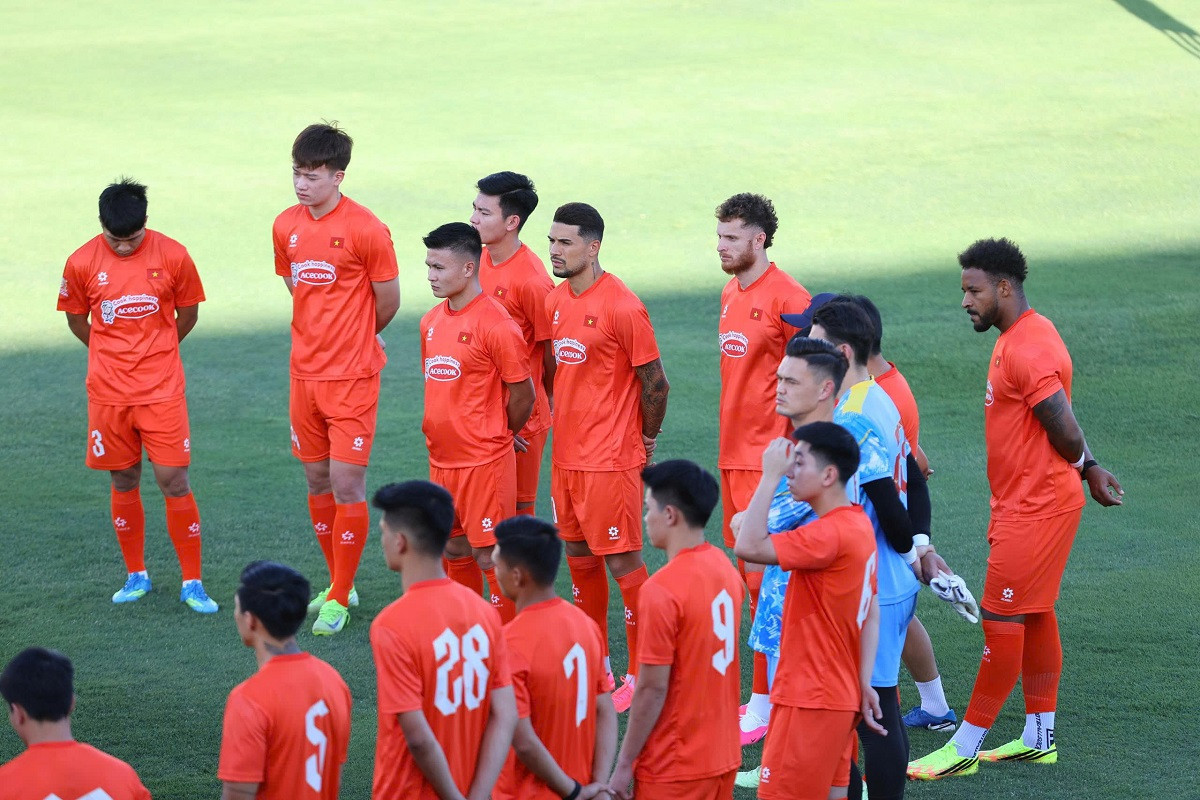
More time to prepare, but change is essential
The 2027 Asian Cup has not been postponed, but the possibility of moving the tournament to 2028 has been raised by the president of the Asian Football Confederation (AFC) amid security instability in Saudi Arabia.
A decision could be made following AFC meetings in Japan on October 21-22.
For Vietnam and head coach Kim Sang Sik, a postponement could provide a much-needed breathing space. Not because the team is unprepared for the tournament, but because several important issues cannot be resolved overnight.
Some players need more time to recover from injuries, while newcomers must be assessed and given opportunities to prove they can fit into the national team.
The coaching staff would also have more time to monitor performances in the V-League, experiment with different personnel and explore alternative tactical approaches.
Vietnam's recent performances at the FIFA ASEAN Cup exposed weaknesses in a squad that has begun to look somewhat outdated, both in its playing style and personnel.
Against that backdrop, a delay to Asia's premier national team competition could prove valuable as Kim searches for solutions.
However, an additional year of preparation would mean little if the South Korean coach continued relying on the same core players, simply waiting for injured stars to return before assembling a familiar lineup.
Calls for change first emerged two years ago, shortly after Vietnam won the 2024 ASEAN Cup. Yet meaningful progress has been limited.
Even with more players now available for selection, Kim is still struggling to take the national team to a higher level.
Injury-hit frontline adds to Vietnam's concerns
Vietnam are unlikely to have their strongest attacking lineup available for the November international window, with Xuan Son, Hoang Hen and Tai Loc either still recovering from injuries or yet to regain full fitness.
Dinh Bac's availability also remains uncertain.
These are significant setbacks, though hardly surprising given the demanding schedules many of Vietnam's leading forwards have endured across successive competitions.
Still, there are encouraging signs from the V-League that could ease some of Kim's concerns.
Experienced forwards such as Tien Linh, Tuan Hai and Quoc Viet are showing signs of rediscovering their form, potentially giving the South Korean coach more options.
Kim could also welcome naturalized striker Olaha Manh Duc to the national team for the first time during the upcoming training camp, with the forward now eligible to represent Vietnam.
The availability of these players offers Kim an opportunity to refresh his attacking options and increase competition for places.
Yet the shortage of forwards is only part of a much bigger problem.
Vietnam need more than new faces in attack
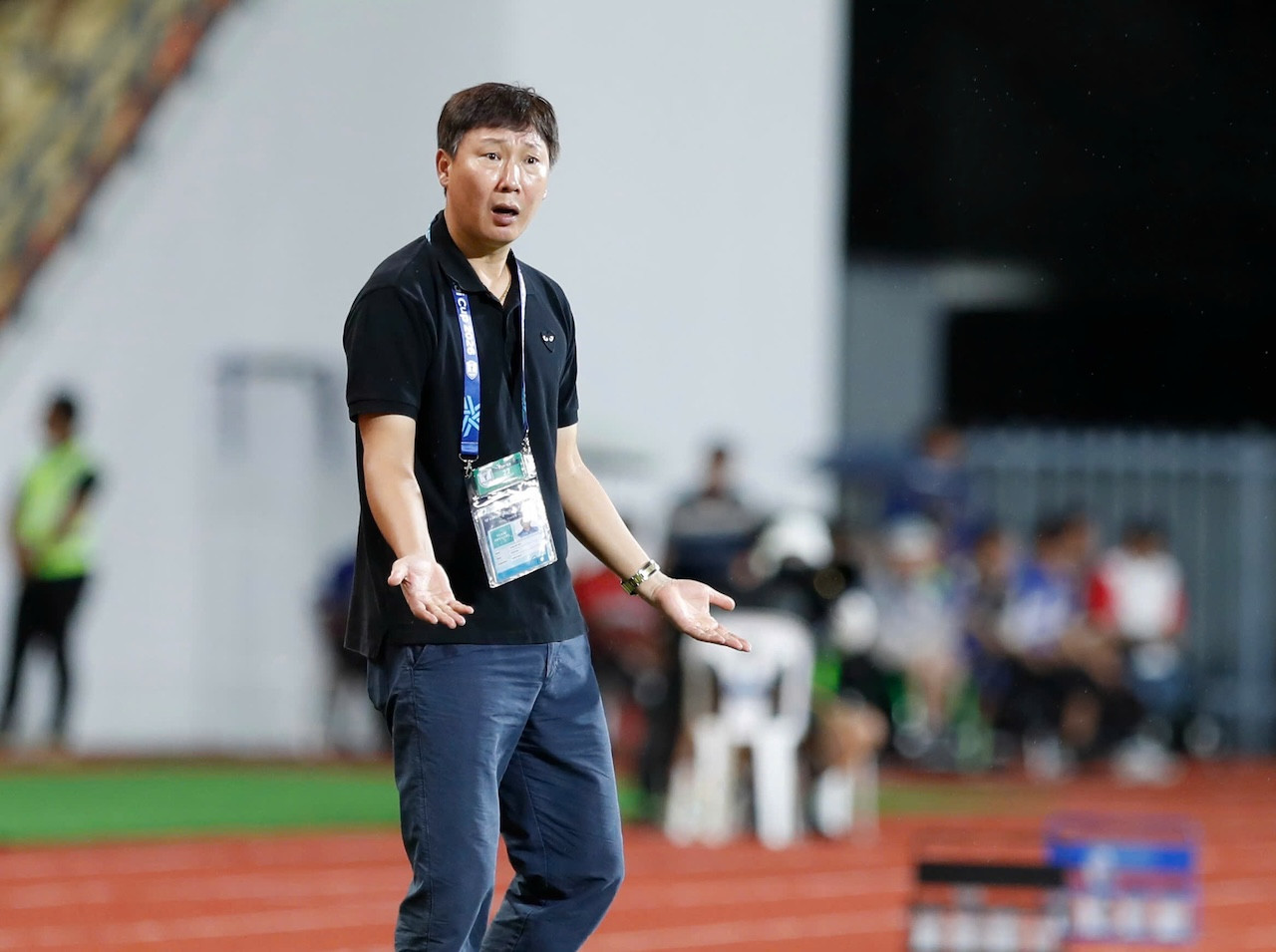
Under Kim, Vietnam have generally enjoyed good spells of possession and sustained attacking pressure, but their finishing and overall attacking efficiency have often fallen short.
The team have frequently struggled to establish an early lead that would force opponents to abandon their defensive approach.
Vietnam's draw with Singapore at the ASEAN Cup offered a clear example. Despite controlling much of the game, they struggled to break down a deep-lying defense.
The defeat to Thailand at the FIFA ASEAN Cup further exposed the same limitations.
Even in victories under Kim, the pattern has often repeated itself. Vietnam have applied considerable pressure but needed until late in matches to find a breakthrough.
Such performances highlight a longstanding dependence on moments of individual brilliance rather than a consistently effective attacking system.
That is why November's two friendlies should be about much more than identifying replacements for Xuan Son, easing Dinh Bac's workload or assessing the form of established players.
Kim needs to develop more varied attacking combinations, improve his team's ability to break down compact defensive systems and find ways to convert possession into clear scoring opportunities.
Without those improvements, Vietnam could continue producing familiar, frustrating performances even with a fully fit frontline: plenty of possession, sustained pressure, but too few goals.
Asian Cup postponement would be an opportunity, not a solution
If the Asian Cup is moved to 2028, Vietnam could gain almost another year to strengthen their squad and refine their playing style.
But additional preparation time will not automatically produce a stronger team.
Kim must use that period to identify fresh talent, deepen the squad, increase competition for key positions and build a more dynamic attacking system.
The challenge is particularly important because the Asian Cup represents a considerably higher level of competition than the ASEAN Cup.
At continental level, opponents are likely to be more disciplined, offer fewer scoring opportunities and make fewer costly defensive mistakes.
Vietnam cannot afford to depend solely on individual brilliance or wait until the closing stages of matches to find a breakthrough.
A possible postponement could therefore be both a welcome opportunity and a demanding test of Kim's ability to transform the team.
If he continues relying on familiar personnel and tactical approaches, delaying the tournament would amount to little more than buying time.
Ultimately, the question is not how long Kim Sang Sik has to prepare Vietnam for the Asian Cup, but how much he can change the team before the tournament begins.
Duy Nguyen

