 Vietnamnet.vn

 Podcast


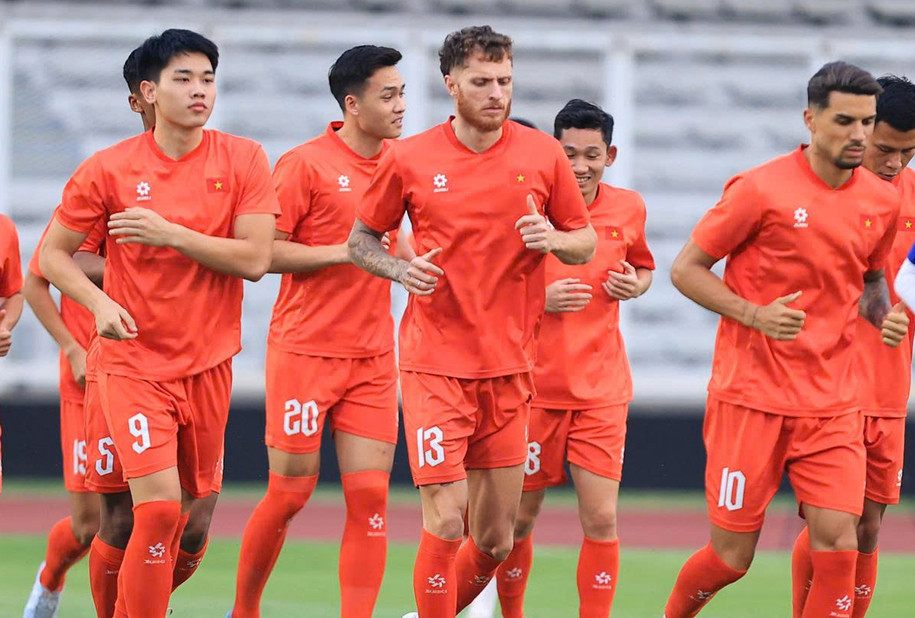
Gap between starters and substitutes remains significant
Following the FIFA ASEAN Cup and even the ASEAN Cup, coach Kim Sang Sik has undoubtedly recognized that a considerable gap remains between Vietnam's first-choice lineup and its reserve players.
When key players are unavailable or fail to perform at their best, the Vietnam national team has struggled to maintain its competitiveness, despite Kim's efforts to make tactical adjustments and experiment with different personnel.
Substitutions may fill vacant positions on the pitch, but they do not automatically allow the team to maintain its playing style. A replacement who cannot fulfill the required role can disrupt the entire tactical system.
The problem is particularly evident in midfield, where Vietnam needs players capable of winning duels, recovering possession and organizing attacks.
However, the limited number of suitable alternatives restricts Kim's ability to make the tactical adjustments he wants.
More importantly, this is not a problem that has emerged from a single tournament.
Vietnam regularly introduces new players during national team training camps, but relatively few have demonstrated the ability to compete seriously for starting positions.
In other words, a large squad does not necessarily translate into genuine squad depth, and having substitutes available does not mean the coaching staff can rely on them with complete confidence.
Kim Sang Sik searches for reliable alternatives
Vietnam's two friendlies against Chinese Taipei and Kyrgyzstan in November will provide Kim with an opportunity to assess players outside his established starting lineup.
However, if he continues to prioritize familiar faces and makes personnel changes only when absolutely necessary, Vietnam risks repeating the same problems.
Experimentation does not mean indiscriminately giving opportunities to young players or newcomers.
Instead, Kim must identify precisely what the team is lacking, determine which players can fulfill those roles and assess which tactical alternatives can function effectively against stronger opponents.
The upcoming friendlies should help the coaching staff find answers to these questions rather than simply achieve the superficial objective of winning matches.
Both games are therefore particularly valuable for Vietnam, as the 2027 AFC Asian Cup will not be an appropriate stage for testing backup options for the first time.
If Kim enters that tournament still relying exclusively on his established core of players, his tactical plans and broader ambitions could prove difficult to realize.
The South Korean coach does not necessarily need to overhaul the national team.
However, beyond the familiar names, Vietnam needs dependable alternatives capable of sharing responsibilities and stepping up when injuries, suspensions or other setbacks affect key players.
Ultimately, squad depth is not determined by the number of players called up or how many newcomers are introduced.
What matters is whether those players possess the quality required to earn Kim's trust and contribute effectively when needed.
That is the challenge Vietnam must address before the coach and his players can realistically pursue their longer-term ambitions at the 2027 AFC Asian Cup.
Duy Nguyen

