 Vietnamnet.vn

 Podcast



SMEs account for up to 98 percent of total active businesses, forming a large and dynamic force present across almost all industries and business fields, while playing a crucial role in creating jobs and driving business operations. However, this sector still faces numerous difficulties in accessing credit capital.
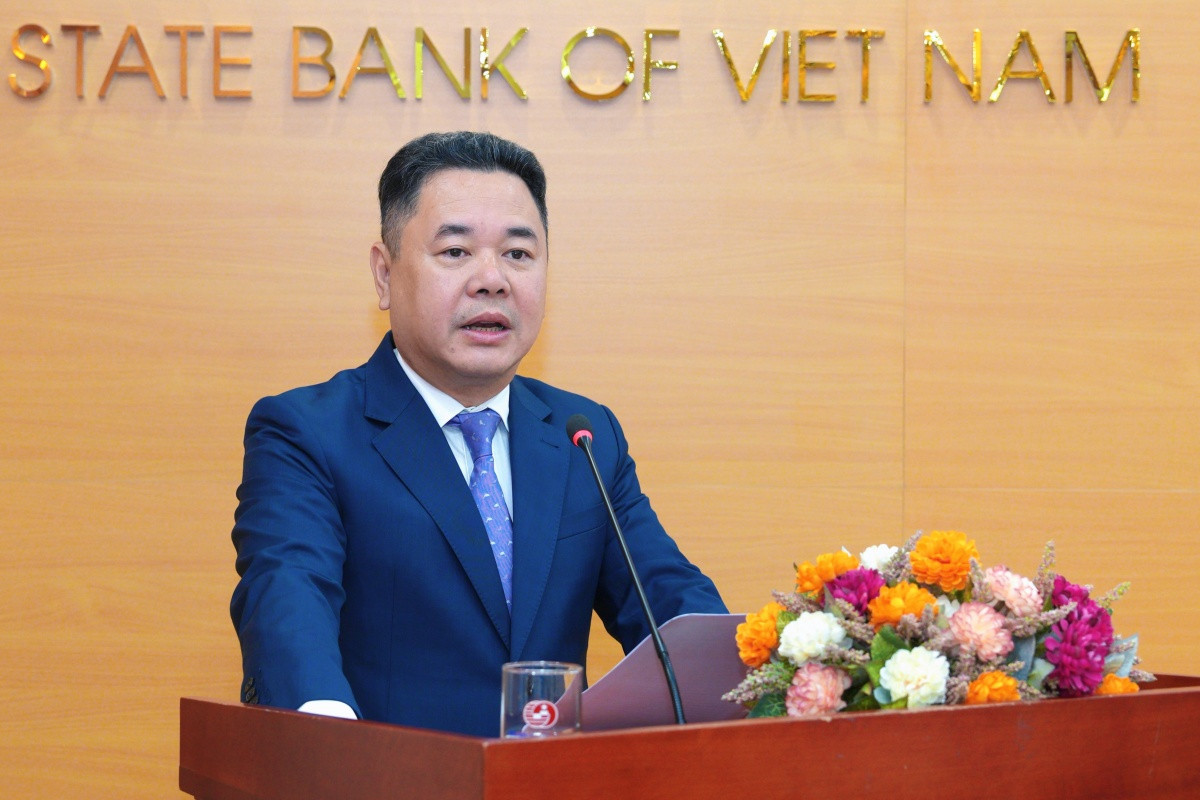
Speaking at the conference titled "Enhancing Credit Capital Accessibility for SMEs" organized by the State Bank of Vietnam (SBV) on August 18, SBV Deputy Governor Nguyen Ngoc Canh said that as of August 28, 2026, total credit balance to the economy reached nearly VND20.5 quadrillion, up 10.24 percent compared to the end of 2025.
For SMEs, credit balance surpassed VND4.1 quadrillion, up 12.37 percent and representing approximately 20 percent of the total economy's credit balance.
In striving for double-digit growth, the SBV instructed credit institutions in August to roll out credit packages targeting SMEs as well as businesses and individuals operating in growth-driving sectors.
After more than a month of implementation, expanding from an initial four state-owned commercial banks registering a VND220,000 billion credit package, 19 commercial banks have registered to participate with a total scale of around VND407,000 billion, offering preferential interest rates 1 to 2 percent per year lower than average lending rates of the same terms.
However, the deputy governor said it was necessary to acknowledge that SMEs still face obstacles in accessing capital.
“SMEs and microenterprises generally have limited financial capacity, equity and resilience; their management and business planning capabilities vary; some businesses do not yet have viable production and business plans; they lack sufficient feasibility to demonstrate their ability to repay loans; and their financial information, financial statements and cash flows are not transparent,” the deputy governor said.
Meanwhile, credit institutions are increasingly adopting international risk-management standards that place greater requirements on the transparency of customers’ financial information and collateral. Therefore, the deputy governor said lowering lending standards is not a viable solution for facilitating credit access.
“Appraising loans without collateral requires banks to have sufficient information about a business's financial position, cash flow, operating history and debt-servicing capacity. This is the central and most critical issue in unlocking capital flows into the economy. Removing this bottleneck requires breakthrough solutions, ranging from banking policies and mechanisms to businesses taking greater initiative and ensuring financial transparency themselves,” the deputy governor said.
Nguyen Xuan Bac, deputy director of the SBV's Credit Department, said that appraising unsecured loans requires sufficient information on a business's financial position, cash flow, repayment history and debt-servicing capacity.
According to Bac, the biggest challenges facing SMEs are limited financial and management capabilities, uneven business planning capacity, and inconsistencies between financial statements and tax reports.
Proposal for a digital bank
To improve SMEs' access to capital in the coming period, Nguyen Van Than, chair of the Vietnam Association of SMEs, said the association had proposed five solutions.
One notable proposal is for the SBV to work with the association to study a pilot scheme for establishing a specialized digital bank for SMEs and household businesses.
The proposal is seen as a new approach to addressing some of the current limitations in the sector's access to credit.
According to Than, SMEs and household businesses are characterized by their very large numbers and diverse capital needs, yet their outstanding loans currently amount to only about VND3 quadrillion. If traditional lending models, which involve high loan appraisal costs, are applied, credit costs will remain an obstacle for this customer segment.
Therefore, SBV should study ways to facilitate the licensing and development of lending institutions which don’t take deposits from the public, thereby diversifying credit providers for SMEs and household businesses.
For SMEs, particularly microenterprises and household businesses, these institutions could offer products better suited to businesses' asset structures, cash flows and operating cycles.
The Ministry of Finance is drafting amendments to the Law on Support for Small and Medium Enterprises, aiming to rename it the Law on SME Development.
The Finance Ministry approaches SME support by facilitating capital access from both supply and demand sides. The State would implement policies to develop credit sources and capital markets, encouraging funding providers to design financial products and supply methods tailored to SME characteristics, basing credit on business plans, revenue, and cash flows rather than solely relying on fixed collateral.
Tuan Nguyen
.svg)
