 Vietnamnet.vn

 Podcast



A $58 billion spark for automation and real estate
At the end of 2024, the National Assembly approved the construction of the North-South high-speed railway connecting Hanoi and Ho Chi Minh City.
The project is designed to transform Vietnam's rail sector, enabling it to compete with aviation and road transport in terms of both travel time and cargo volume.
The venture is expected to significantly benefit at least two key sectors: real estate and automation.
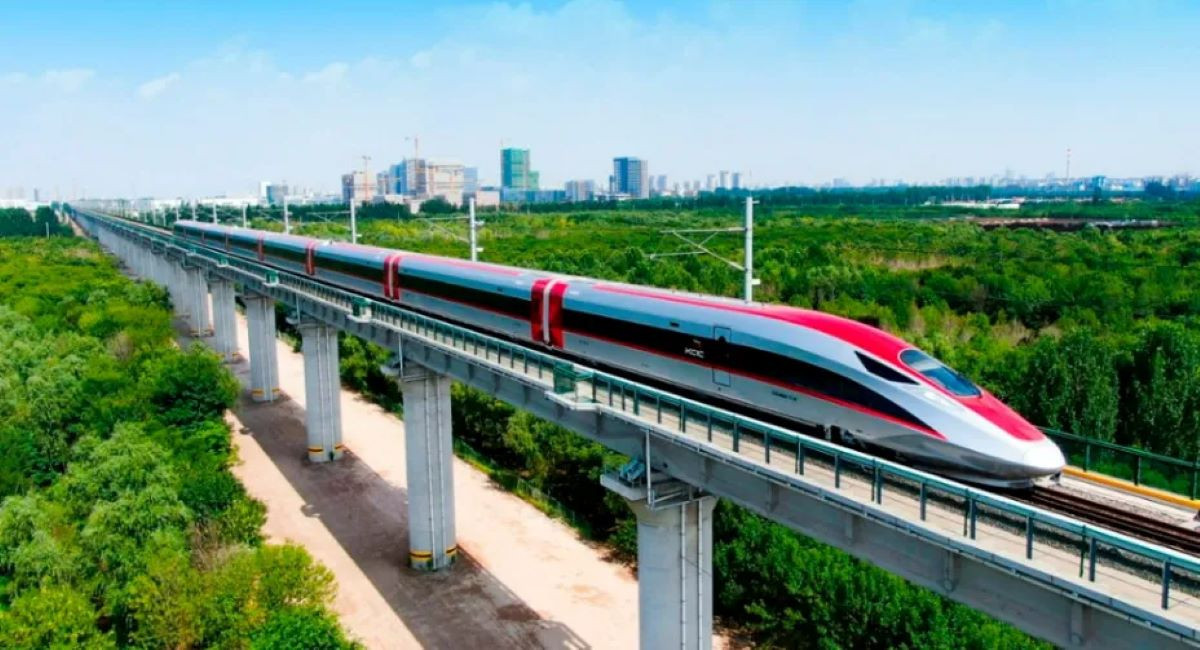
Illustrative image
Only fit for subcontracting?
High-speed rail relies heavily on advanced automation, from signal systems, track switching, automatic doors, and level crossing warnings to fault detection and more.
Professor Dinh Van Hien, former Vice President of the Vietnam Automation Association, said such technologies are relatively new to Vietnam. While there is room for domestic solution providers, most local firms will initially be limited to subcontracting roles and must depend on technology transfer from foreign partners.
However, not everyone shares that cautious view.
Associate Professor Pham Hong Quang, Chairman of Cadpro (Automation Design Software Company), said his firm has previously outperformed major international competitors to supply level-crossing warning systems to Vietnam Railways - offering both lower costs and superior quality.
Quang believes Vietnamese experts and companies are capable of researching and manufacturing many types of railway automation systems. What’s needed now is a supportive legal framework - particularly a revised Railway Law - to unlock these opportunities.
An engine for broader industrial transformation
Dr. Nguyen Van Linh, senior lecturer in transportation infrastructure, described high-speed rail as a "complex industrial locomotive" with transformative potential.
He emphasized that developed countries almost universally possess advanced rail systems and robust domestic railway industries.
According to Linh, this project will drive innovation not only in automation and electronics but across the wider ecosystem - mechanical engineering, materials, IT, logistics, and construction.
He noted that high-speed rail systems require cutting-edge technologies such as smart signaling, safety alerts, sensors, and e-ticketing. These demands offer domestic enterprises a chance to shift from assembly work to mastering core technologies.
“If Vietnam can produce and maintain its own components for high-speed rail, it will move into the upper tier of the global value chain,” Linh stated.
The railway is also seen as a way to restructure Vietnam’s logistics network, connecting ports, airports, and industrial zones more efficiently.
"Reducing logistics costs - which currently account for 16-20% of GDP - to below 10% like developed countries is key to sustainable economic growth," he added.
National Assembly member Hoang Van Cuong, Vice President of the Vietnam Economic Science Association, urged the government to prioritize selecting the right technologies rather than focusing on the country of origin for suppliers.
“If we follow the same tender model as with urban railway lines - relying entirely on foreign suppliers - we risk delays, cost overruns, and long-term dependency,” he warned.
The legal framework must open doors
Professor Bui Xuan Phong, former President of the Vietnam Railway Economic Association, highlighted the sector’s current weaknesses: underdeveloped industry and workforce, limited technology application, and outdated management models.
He stressed the need for policy and legal reforms to encourage investment, including modern science and technology from Industry 4.0 in rail construction and operations to reduce environmental impact and energy use.
He called for financial support and technology upgrades for railway manufacturers, along with policies to promote joint ventures between domestic and foreign firms.
Associate Professor Hoang Ha, Vice President of the Vietnam Association of Bridges and Roads, noted that the revised Railway Law must address the unique requirements of new rail types such as urban and high-speed systems.
These advanced modes demand stringent safety standards and highly skilled human resources, especially in high-tech fields.
He emphasized that high-speed rail is not just an upgrade of conventional systems - it is a fundamentally different mode of transport. As such, staff training must be tailored to these higher requirements.
Ha also pointed out that this modern system entails high investment, so financing, land allocation, workforce training, and equipment procurement must be prioritized.
The law should clearly define the responsibilities of organizations in charge of training programs, and the qualifications required for individuals at every stage of operation.
In mid-May 2025, the National Assembly discussed revisions to the Railway Law. Several companies inside and outside the sector also formally requested to invest in the high-speed railway, aiming to break ground by the end of 2025.
The World Bank has expressed willingness to provide ODA loans if Vietnam proceeds with the project.
However, actual implementation hinges on the National Assembly’s final approval. Experts warn that, like other mega-projects, high-speed rail requires broad multidisciplinary input.
Thus, beyond the actions of Parliament and the government, stakeholders are awaiting the official stance of the Vietnam Union of Science and Technology Associations and the Vietnam Railway Economic Association.
Nguyen Duc Hoang
(Secretary-General, Vietnam Association of Young Scientists and Technologists)
.svg)
