 Vietnamnet.vn

 Podcast



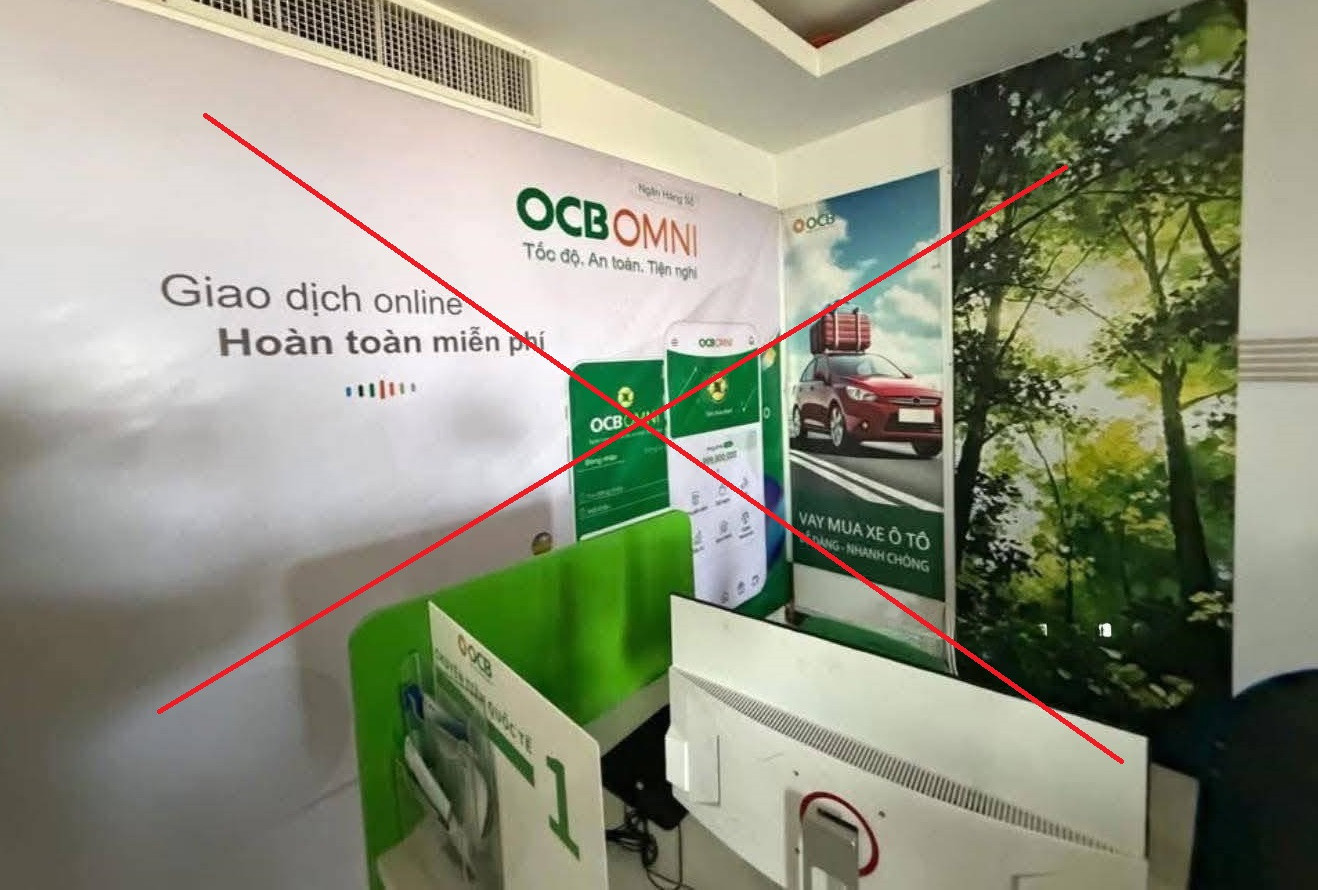
The “headquarters” of a scam ring located along the Cambodia–Thailand border was recently dismantled by authorities. Images from the site show that the suspects invested heavily to turn their operation into a space that looked like a law enforcement office.
The group also built a fake bank “transaction office” that closely resembled an Oriental Commercial Bank (OCB) branch. The purpose was reportedly to conduct video calls impersonating OCB staff who orchestrated pre-arranged traps fooling customers.
Immediately after the scam ring was busted, OCB issued urgent warnings to customers about common scenarios recorded from the site: impersonating police or authorities and requesting cooperation in investigations; impersonating bank staff to ask for “verification,” “account upgrades”, or to pitch high-return financial investments; and creating psychological pressure and demanding urgent disclosure of information or money transfers.
“Staging realistic settings is a new step in scam tactics, making even people with technology knowledge potential victims if they are not vigilant,” OCB warned.
OCB is continuing to send warnings to customers through its official communication channels. It has issued the following warnings:
Do not provide confidential information (card details, login credentials, OTP codes) to anyone, including those claiming to be bank staff.
Do not scan QR codes, access unfamiliar links, or enter personal information; do not photograph or send citizen ID cards or facial images through non-official OCB channels.
Be cautious of requests to verify accounts, upgrade information, redeem reward points, claims that points will expire within 24 hours, exclusive gift offers, installment payment information, or any requests involving urgent money transfers or investments promising high returns.
Immediately lock cards via the digital banking app or the bank’s hotline if information leakage is suspected.
Common scam tactics
As Lunar New Year approaches, shopping demand rises, and it becomes a peak season for scammers to activate fraud scenarios targeting busy consumers.
VPBank has advised customers to stay alert to scenarios that are not new but are reused by criminals to exploit customer trust.
Common scenarios that customers should be extremely cautious about include those below:
Impersonating bank staff to support financial services, such as receiving incoming transfers, unlocking accounts (after criminals deliberately lock them by repeated wrong logins), checking credit card transactions, registering biometric data, handling bad debt, or offering unrealistically low-interest loans.
Impersonating third parties with familiar scripts such as collecting card issuance fees, VAT fees, or delivery fees.
Impersonating authorities such as tax agencies, social insurance, police, or power utility staff to guide users to install apps via fake links or upgrade accounts (VNeID, VSSiD).
Impersonating major companies to invite users to download apps to enjoy sale promotion programs or announce gift giveaways (Vietnam Airlines, The Gioi Di Dong, Dien May Xanh, well-known restaurant chains).
Impersonating investigators, using threatening language and demanding money transfers to police accounts to “prove innocence.”
Persuading victims to join online investment channels with attractive commissions.
Banks emphasize that scam scenarios can be highly sophisticated and diverse, often incorporating personal information to build trust, but they usually boil down to the following actions:
Tricking users into installing fake apps on personal devices to seize control of the device.
Tricking users into providing card numbers on the front, CVV/CVC codes on the back, OTP codes, or performing biometric authentication to complete transactions.
Scamming victims into paying registration fees or cancellation fees for services they do not use.
Banks advise users to be extremely cautious before performing any of the above actions, and to pay special attention to the following points:
Be highly alert to contacts from unfamiliar phone numbers or friend requests from strangers on Zalo or Facebook.
Only install apps from official app stores (Google Play or App Store); never install apps via sent links.
Before performing biometric authentication for transactions, carefully check what transaction is being executed.
Never provide card numbers, CVV/CVC codes, or OTP codes to anyone, including those claiming to be bank staff.
Do not transfer money to individuals or organizations with unclear information.
Du Lam
.svg)
