 Vietnamnet.vn

 Podcast



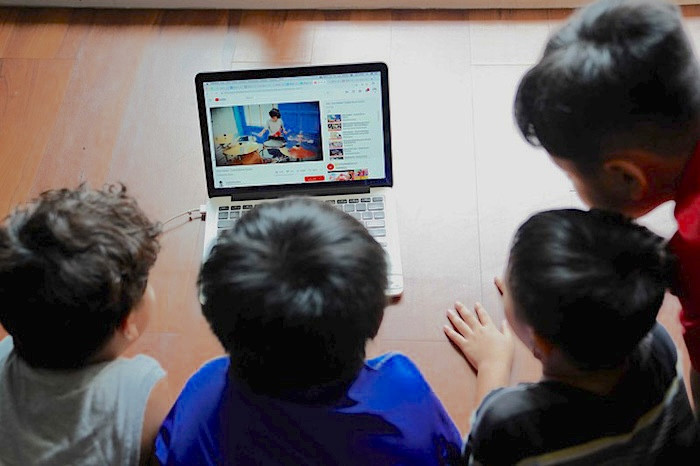
Nguyen Thi Mai Thoa, a National Assembly deputy from Hai Phong, while assessing tasks in the first months of 2026, has proposed solutions to ban or restrict children from using certain popular social media platforms.
Thoa cited examples from several countries that have adopted such measures. Australia has banned individuals under 16 from using social media since December 2025, while Indonesia and France enforced similar bans in March this year. The UK is piloting restrictions on certain platforms.
Regarding the proposal to restrict or ban children from using certain social media, Bui Khanh Nguyen, an education expert, said these concerns stem from the fact that cyberbullying, scams, online abuse and social media addiction are on the rise.
As parents are busy and unable to fully supervise their children’s online activities, strong interventions may be seen as an “emergency response” to reduce immediate risks. Experience from some countries shows that setting age limits can help raise social awareness and push technology platforms to take greater responsibility.
However, Nguyen emphasized that a full ban should be approached with caution. Today, social media is not only for entertainment but also a space for learning, communication, and digital skill development.
In Vietnam, platforms like Facebook, Zalo and messaging apps have become common tools in education, from assigning homework and making announcements to group discussions.
Therefore, rigid bans or restrictions could disrupt the learning ecosystem. Students may lose quick and convenient communication channels with teachers and peers. And not all schools have sufficient resources to implement alternative platforms, potentially increasing inequality between regions.
In addition, when prohibited, children may feel overly controlled, leading to resistance or “underground” usage such as creating fake accounts or borrowing adult accounts, making supervision more difficult.
Restrictions may also unintentionally reduce opportunities to develop digital skills, one of the essential competencies of the 21st century. In the digital era, early access to technology can still be an advantage if properly guided.
Thus, the issue is not whether to “ban or not,” but how to manage usage in a way that both protects children and does not disrupt essential learning activities, he said.
Flexible management
According to the expert, instead of a comprehensive ban, flexible management mechanisms should be applied, such as limiting usage time, controlling content, and requiring stricter age verification from the platforms.
For example, children under 13 should only use "safe" versions with filtered content, while the 13-16 age group can have broader access but under supervision.
It is necessary to promote specialized learning platforms, separate from entertainment social media. Schools should use Learning Management Systems (LMS) or official educational applications to assign work, exchange, and store documents, reducing dependence on popular social media platforms.
Another important solution is to strengthen digital skills and online safety education for students. Instead of just prevention, it is necessary to equip them with the ability to protect themselves, such as identifying scams, behaving civilly, and securing personal information.
When risks are understood and how to handle them is known, the effectiveness of protection will be more sustainable than mere banning.
For these solutions to be effective, Nguyen said they must be implemented at many levels. Regarding policy, platforms could be required to integrate a "child mode" with features such as content filtering, time limits, and activity reporting for parents, while also having clear sanctions for violations such as cyberbullying or spreading toxic content.
Schools need to build separate learning systems, restrict the use of social media for official purposes, and strengthen teacher training and digital skills education.
As for parents, they hold the key role in monitoring and orientation. Instead of banning, they need to establish usage rules, discuss usage openly, and use control tools when necessary, while building trust so that children are ready to share when they encounter problems.
“In short, managing students' use of social media cannot rely on a single solution. Only when there is a combination of policy, education, technology, and family can we both protect children and ensure they develop comprehensively in the digital environment,” Nguyen said.
Thuy Nga
.svg)
