 Vietnamnet.vn

 Podcast



On the afternoon of April 9, the National Assembly held group discussions on a supplementary report assessing the implementation of the 2025 socio-economic development plan and state budget, as well as the situation in the early months of 2026.
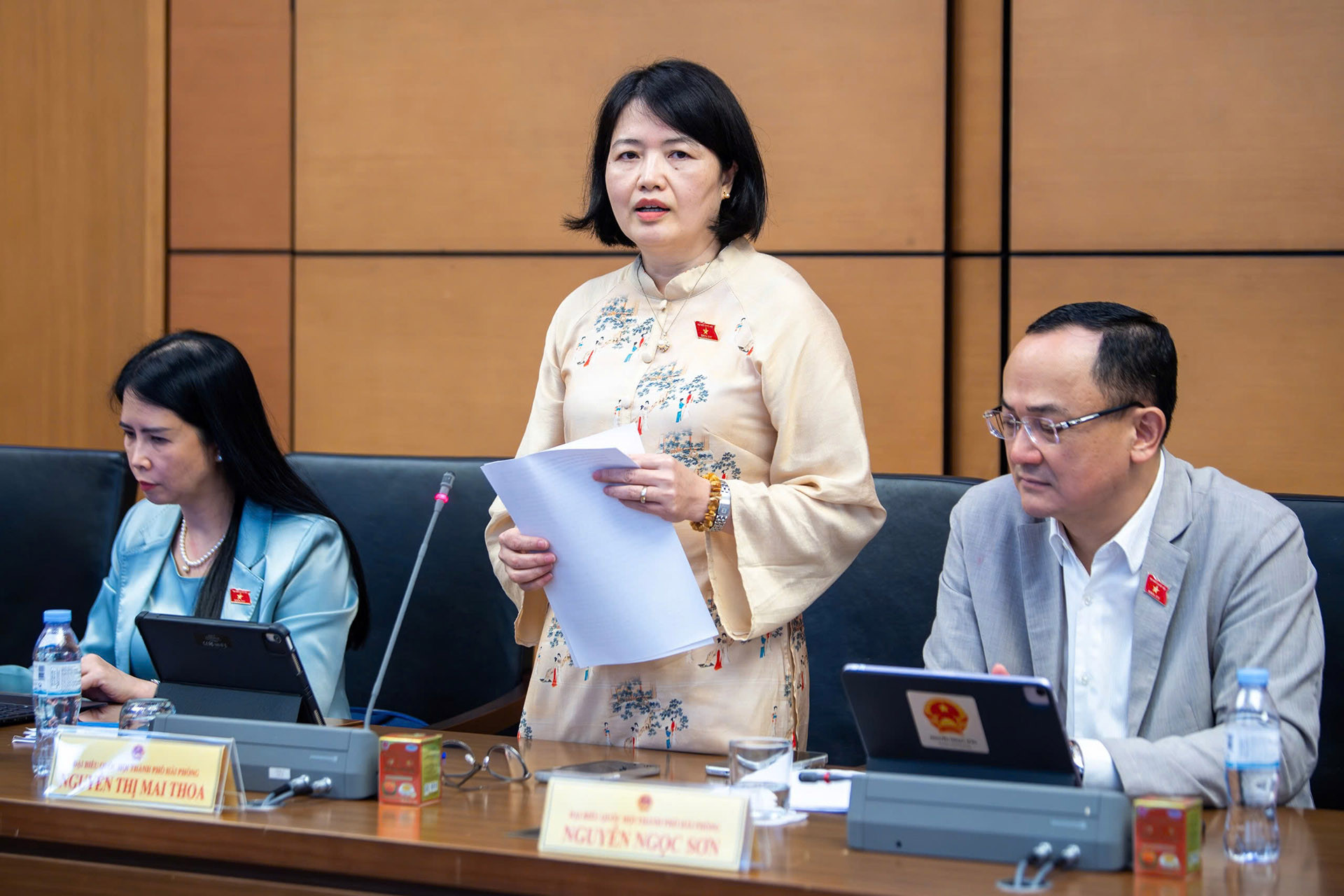
Nguyen Thi Mai Thoa, a delegate from Hai Phong, praised the achievements recorded in early 2026, particularly in culture, education, and social welfare.
However, she noted that while cases of child sexual abuse declined by 2.2% in 2025, the situation remains complex. Violence among school students, especially outside school settings, continues to show alarming severity, while abuse at social protection centers and private care facilities still occurs.
She cited incidents at a social work center in Quang Ninh and other private care institutions that have seriously affected children’s health and even their lives.
Referring to a recent case involving 300 tonnes of food supplied to schools in Hanoi that sparked public concern, she urged the Prime Minister to strengthen food safety management in schools, ensure strict control over food origins, and impose higher standards for food supplied to educational institutions.
“Children are an extremely sensitive and vulnerable group. Without long-term, strict management solutions, this will significantly affect their physical and mental health, as well as the stature of future generations,” she said.
The delegate emphasized the need to enhance inspection, supervision, and prevention of child abuse in cyberspace. She pointed out that online abuse is becoming increasingly sophisticated, including forms such as online grooming, cyberbullying, and exploitation.
“We propose studying solutions to ban or restrict children’s use of social media on certain popular platforms, along with accompanying conditions and measures,” she suggested.
She noted that some countries have already implemented such policies. Australia banned users under 16 from social media platforms from December 2025, while Indonesia and France introduced similar measures from March 2026. The UK is also piloting restrictions on certain platforms. Other countries are considering or implementing regulations to limit access for those under 16 to protect children from harmful content and smartphone addiction.
“No adult has enough time to constantly monitor their children’s use of social media, and not all children are guided on how to use these platforms properly and effectively. Meanwhile, children’s awareness is still developing, making them more susceptible to inappropriate and harmful content,” she added.
Questions over nationwide health screening implementation

At the Hanoi delegation group, Tran Thi Nhi Ha raised concerns that the impact of the two-tier local government model on the healthcare sector had not been sufficiently highlighted in the report.
From July 2025, commune and ward health stations will become public service units managed by local People’s Committees, rather than district health centers as before - a significant organizational shift.
She questioned how responsibilities would be coordinated for key functions such as disease prevention, vaccination, management of non-communicable diseases, school health, food safety, emergency referrals, and responses to public health events.
Although the Ministry of Health has moved to deploy 1,000 doctors to grassroots facilities to prevent service disruptions, she stressed the need to assess the effectiveness of this measure and strengthen actual capacity at the local level.
The government, she said, should present clear solutions to the National Assembly regarding professional coordination mechanisms and operational supervision under the new model, to avoid gaps or disruptions in healthcare service delivery.
Regarding the policy of nationwide periodic health check-ups starting in 2026, she noted that Resolution 72 of the Politburo outlines that citizens will receive at least one free annual health screening and have electronic health records for lifelong monitoring.
By 2030, basic medical fees are expected to be waived, and all commune-level health stations will be equipped with adequate infrastructure. While describing this as a progressive vision, she emphasized the need for effective implementation for a population of 100 million.
She also highlighted the importance of synchronizing electronic health records, classifying risk groups such as the elderly, the poor, patients with chronic diseases, pregnant women, and children, and establishing a clear framework for who will manage follow-ups, reminders for re-examinations, and monitoring of abnormal cases after screening.
Tran Thuong
.svg)
