 Vietnamnet.vn

 Podcast



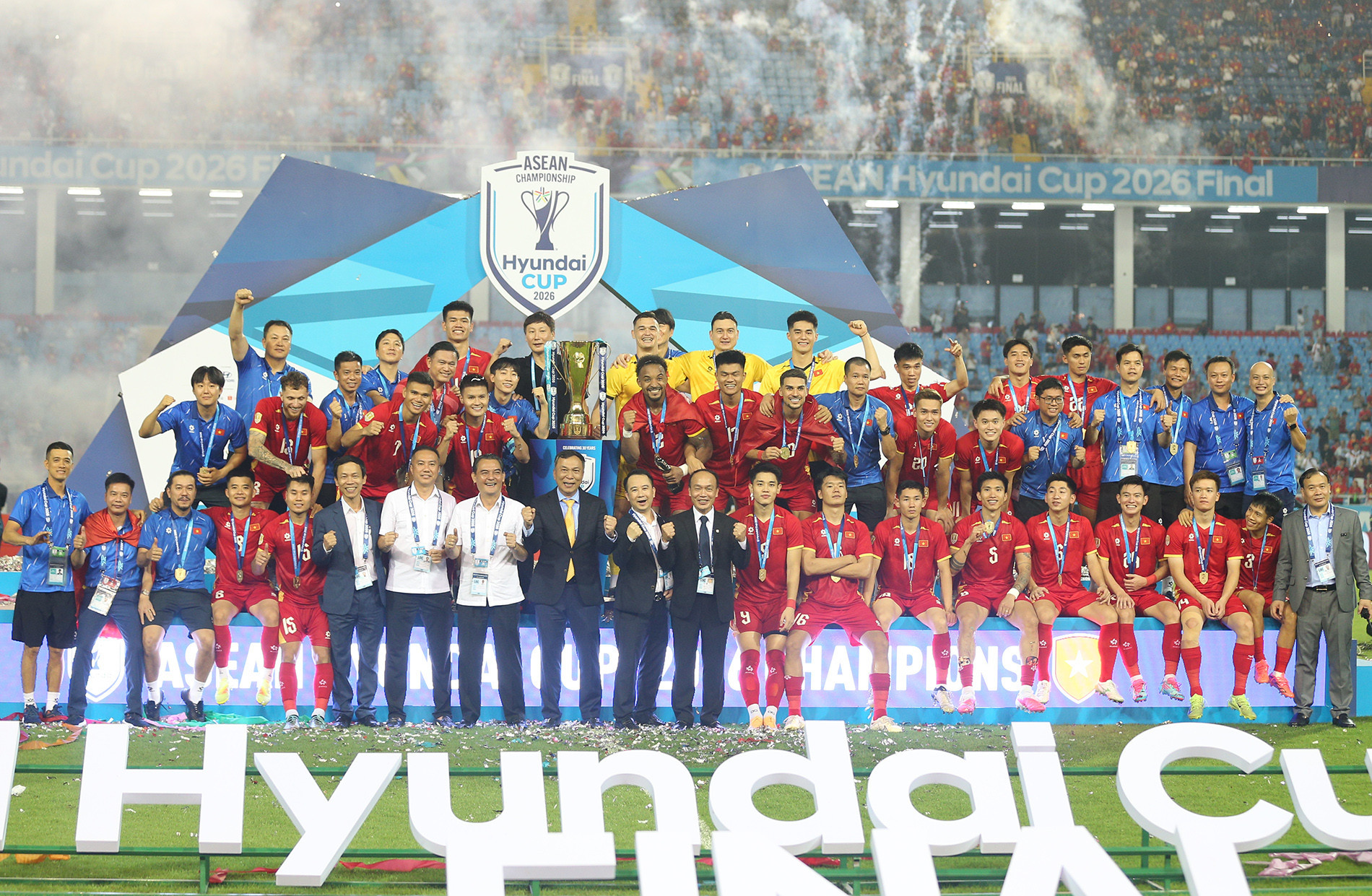
There is little need to embellish Vietnam’s ASEAN Cup 2026 championship. The numbers make a compelling case on their own.
Kim Sang Sik’s side completed the tournament unbeaten, winning six matches and drawing two. They scored 21 goals and conceded only three on the way to successfully defending their Southeast Asian crown.
Vietnam also registered more attempts on goal than any other team and controlled large stretches of most matches they played.
That does not mean everything was straightforward.
There were periods when Vietnam dropped their intensity, allowed opponents to create opportunities and risked being pulled into contests that should have been more comfortable.
The second leg of the final against Thailand was perhaps the clearest example.
Vietnam arrived at My Dinh with a 2-0 advantage from the first leg but twice fell behind on the night. Thailand missed a penalty, struck the woodwork and were unfortunate to concede two own goals as the match finished 2-2.
Yet Vietnam’s ability to survive those difficult periods also revealed one of their greatest strengths.
Experienced teams do not necessarily need to dominate every minute. When under pressure, Vietnam knew how to endure. When a goal was required, Kim had players capable of producing decisive moments. And when the margins became particularly fine, they occasionally benefited from the fortune that so often accompanies champions.
Viewed across the entire tournament, the championship was no surprise gift. Vietnam earned it.
But the strength of their campaign raises another point: considering the resources and preparation available to Kim Sang Sik, failing to win might have been the more surprising outcome.
Vietnam’s preparations were among the most extensive in the tournament.
The squad assembled in mid-June and had nearly two months together before the final. During that period, Kim took his players to South Korea for a training camp, where they played several friendlies against K League clubs.
Vietnam then defeated Myanmar 4-0 in their final warm-up before entering the regional championship.
Thailand’s preparation offered a striking contrast. Before the ASEAN Cup, the War Elephants’ final matches with their strongest squad were two friendlies during the June FIFA international window.
Squad depth also worked heavily in Vietnam’s favor.
Kim had an unusually balanced group, combining established internationals with younger players reaching good form. The squad was further strengthened by additions such as Hoang Hen, Nguyen Tai Loc and Patrik Le Giang.
Nguyen Xuan Son and Nguyen Dinh Bac finished with five goals each to share the tournament’s Golden Boot, illustrating the attacking options available to the champions.
Vietnam therefore entered the competition with almost every major ingredient in place: preparation, depth, experience, quality and stability.
It was why they had been considered one of the leading contenders from the outset.
That status did not guarantee the trophy. Football rarely offers guarantees, and Thailand demonstrated in the final just how quickly a comfortable advantage can come under threat.
But over an entire tournament, Vietnam had more answers than their opponents.
Their players could withstand difficult spells, their squad offered Kim alternatives when changes were required, and their extended preparation provided a level of cohesion that was difficult for opponents to match.
The championship should therefore not be viewed simply through the emotion of the final night at My Dinh.
It was the outcome of a process that began months earlier.
Vietnam were one of the strongest teams, prepared more thoroughly than most of their rivals, assembled an almost full-strength squad and maintained their consistency from the opening stage through to the final.
When a team with those advantages ultimately becomes champion, the result is not unexpected.
That does not diminish Vietnam’s achievement. If anything, it strengthens its significance: the national team entered the tournament under the pressure of being defending champions and favorites, and still delivered.
For Kim Sang Sik and his players, ASEAN Cup 2026 was not a surprise triumph.
It was the championship their preparation demanded - and the one their performances ultimately deserved.
Duy Nguyen
.svg)
