 Vietnamnet.vn

 Podcast



This year’s Vu Lan season marks a striking shift as expressions of filial piety move from traditional temple ceremonies into the digital space.
TikTok, Facebook, and YouTube have become “virtual pagodas” for the younger generation, where messages of gratitude to parents spread in an instant. Generation Z is redefining how filial love is expressed in the digital era.
Digitizing Vu Lan rituals
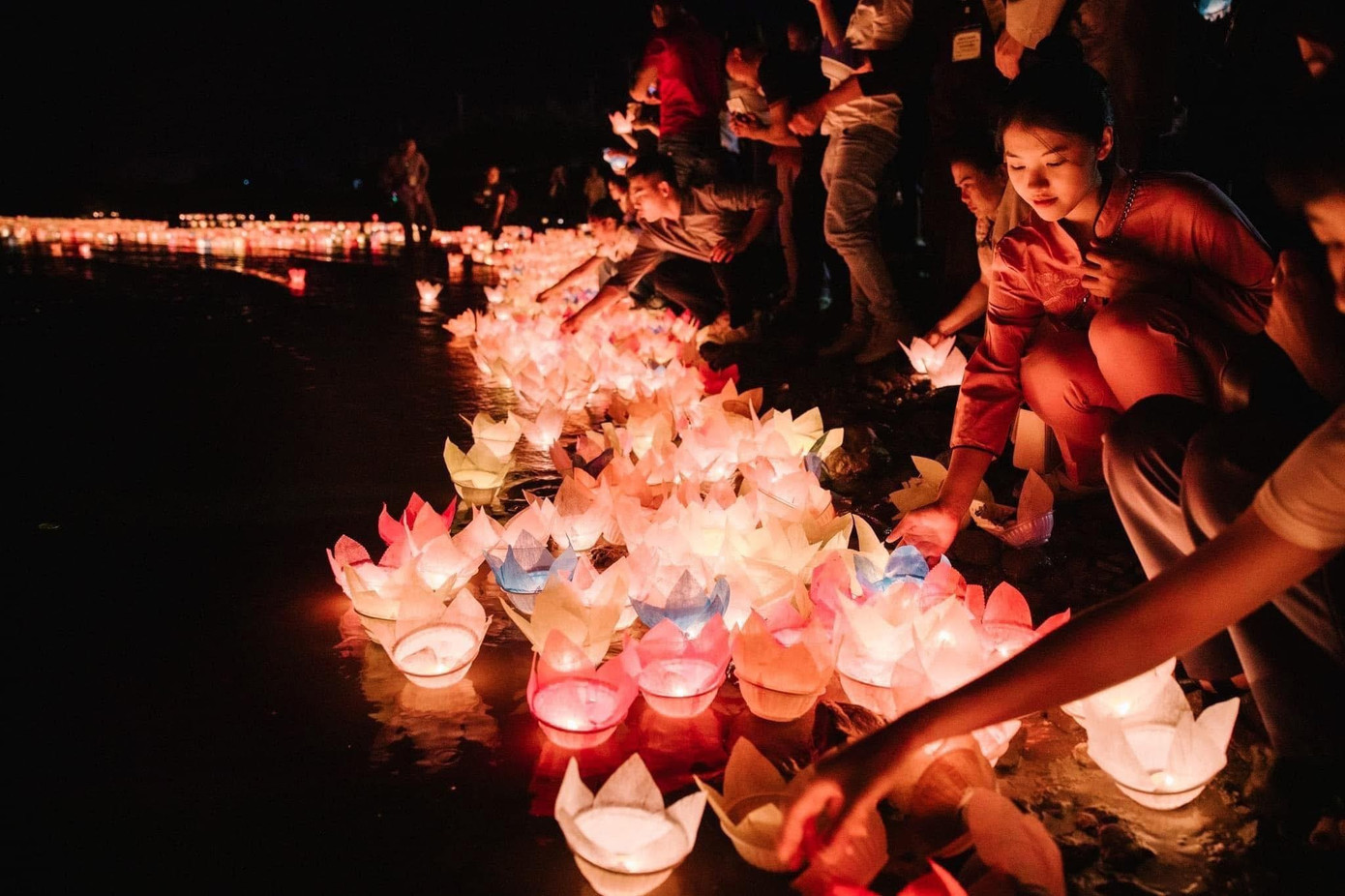
The Vu Lan season of 2025 witnessed a remarkable transformation: traditional expressions of filial piety, once tied to temples and ceremonies, are now flourishing online. On TikTok, the hashtag #BongHongCaiAo (Pink Rose on the Shirt) topped trend charts with hundreds of thousands of videos featuring young people sharing heartfelt stories about their parents. Facebook and YouTube also saw a surge in related content - songs, vlogs of childhood memories, and commemorative posts for loved ones.
According to a DataReportal report, as of early 2025, Vietnam had about 76.2 million social media users (75.2% of the population) and 79.8 million Internet users (78.8%). This makes any emotionally resonant content - especially family-centered messages during Vu Lan - likely to go viral.
Seizing this trend, many large pagodas such as Ba Vang Pagoda and Vinh Nghiem Pagoda hosted online Vu Lan ceremonies. On YouTube, Ba Vang livestreamed its grand Vu Lan event, attracting hundreds of thousands of simultaneous viewers. Vinh Nghiem also offered livestream services, allowing remote followers to participate. TV Loc Uyen (Plum Village) broadcasted the Pink Rose on the Shirt ceremony and made ritual materials legally reusable by the public. Meanwhile, Phuc Khanh Pagoda (Hanoi) accepted Vu Lan ritual registration via Zalo and email - followers simply submitted names and addresses to participate without attending in person.
An Lac Pagoda in Thu Duc City hosted an entire week of Vu Lan programming streamed on a fixed schedule - evidence of how digitized religious calendars are being adopted.
Since the COVID-19 pandemic, Vu Lan has evolved significantly online. During the social distancing periods of 2020–2021, temples had to digitize rituals to maintain spiritual connections. Livestreams of ceremonies, online prayer sessions, and digital chanting tutorials became practical solutions. By 2025, these virtual offerings have become integral to modern spiritual and cultural life.
In parallel with online rituals, remote ancestor worship services have grown in popularity - especially for busy families or those living far from home. According to Lac Hong Vien Spiritual Park, over 400 online memorial services were booked during Vu Lan 2025, with peak days seeing up to 30 orders. Prices ranged from about USD 12 (basic package) to USD 80 (full service with fresh flowers, vegetarian food, offerings, and incense).
A park representative noted the growing trend of environmentally friendly offerings and minimal use of joss paper. While nothing replaces visiting a loved one’s grave in person, these services help distant family members maintain their connection and express respect during the season of gratitude.
Venerable Thich Minh Quang from the Central Dharma Propagation Committee commented: “Livestreaming Vu Lan ceremonies cannot replace direct spiritual experiences, but they do expand the circle of connection - especially for young people who rarely visit temples but still seek spiritual grounding.”
Cultural researcher Nguyen Khoa agreed: “The digital space is reviving Vu Lan’s spirit in a modern format. The younger generation finds expressive tools that fit their rhythm of life and habits while broadening the message’s reach.”
He emphasized that the essence of Vu Lan lies in sincerity, not format: “Whether attending temple, pinning a rose to your shirt, joining a livestream, or simply posting a tribute online - if done with genuine gratitude, all are meaningful. Rituals are just vessels; the core meaning of Vu Lan is to honor and repay our parents and preserve family bonds.”
Between expression and performance
The rise of “digital filial piety” also brings concerns - especially when emotions become content, often dramatized for visual effect rather than heartfelt expression.
Dr. Tran Duc Hoa (University of Social Sciences and Humanities) warned: “Many videos showing gift-giving to parents are now heavily staged: lighting, camera angles, background music, and facial expressions are carefully scripted. While not inherently wrong, if the focus shifts solely to views and likes, the essence of filial piety risks becoming diluted into entertainment.”
Some Vu Lan videos even disguise brand advertising, with gifts, flowers, or jewelry sponsored by companies seeking engagement. According to TikTok, an estimated 20% of Vu Lan 2025 hashtag videos included branded or sponsored content, with many failing to disclose affiliations. This blurs the line between sincere emotion and marketing tactics.
Gen Z’s new ways of honoring parents
Gen Z - those born between 1997 and 2012 - now make up nearly 25% of Vietnam’s population, according to the General Statistics Office. They are the most connected generation, averaging seven hours of daily Internet use, with over 80% active on TikTok, Facebook, and YouTube. This cohort increasingly uses the digital space to express emotions, build communities, and share personal values.
During Vu Lan 2025, many young people chose “Gen Z-style” tributes over traditional temple ceremonies. These included mashup videos combining gift-giving with catchy electronic remixes of Pink Rose on the Shirt, personal blogs about reconciling with parents, or reaction clips capturing their parents’ surprised joy at receiving gifts. Social media has become a shared stage for Gen Z to connect and express love.
Nguyen Mai Huong, 22, whose video “Dad Taking Me to School” garnered over 200,000 views, shared: “I’ve never visited a temple during Vu Lan, but I made a video about how my dad used to bike me to school. It went viral quickly and received thousands of heartfelt comments.”
Tran Duc Anh, a TikToker with over 55,000 followers, added: “Last year, I filmed myself cooking a Vu Lan meal for my parents. To my surprise, the video hit almost 300,000 views in just two days. Many viewers messaged me, saying it reminded them of family memories. Social media has helped Gen Z express love in ways previous generations didn’t imagine.”
Dr. Le Quynh Trang, an expert in digital culture, observed: “Gen Z is reshaping how we express filial piety. Instead of traditional rituals, they share personal stories through short videos, blogs, and hashtag challenges. This allows the spirit of Vu Lan to reach more people, especially the youth.”
Alongside personal expression, community campaigns are also gaining momentum. VTV Digital, in collaboration with social platforms, launched an online Pink Rose on the Shirt campaign. Users were invited to change their profile pictures and post messages of gratitude. Within one week, the campaign generated over 1 million posts and tens of thousands of donations to Vu Lan-themed charities.
Tien Phong
.svg)
