 Vietnamnet.vn

 Podcast



In Vi Khe bonsai village (Vi Khe ward, Ninh Binh province), artisans who specialize in pruning and shaping ornamental trees can earn remarkably high incomes - ranging from 700,000 to 1,000,000 VND (about 28–40 USD) per day.
They don’t own vast gardens or billion-dong tree collections, yet these pruning craftsmen are silent artists, patiently breathing life and spirit into each creation.
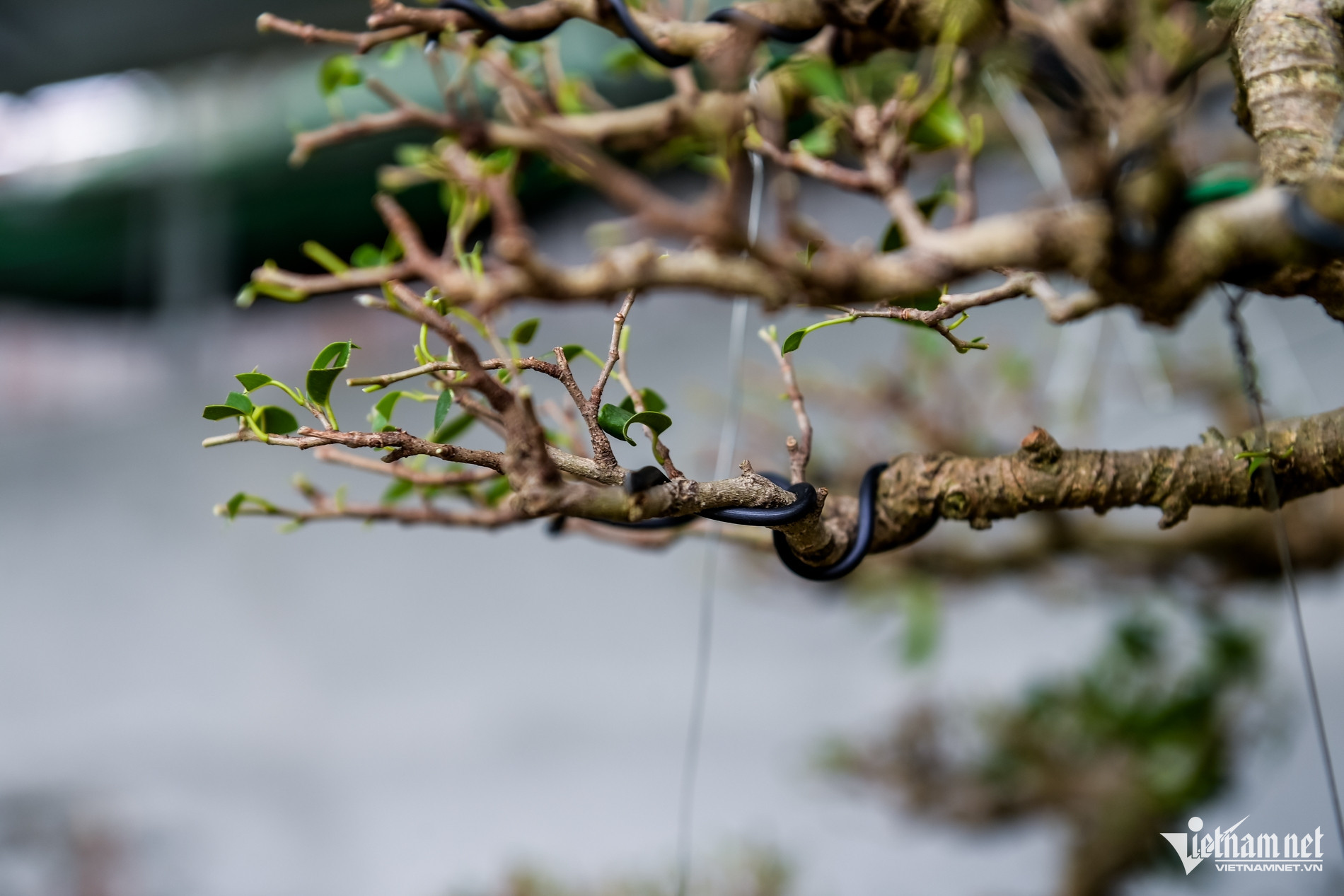
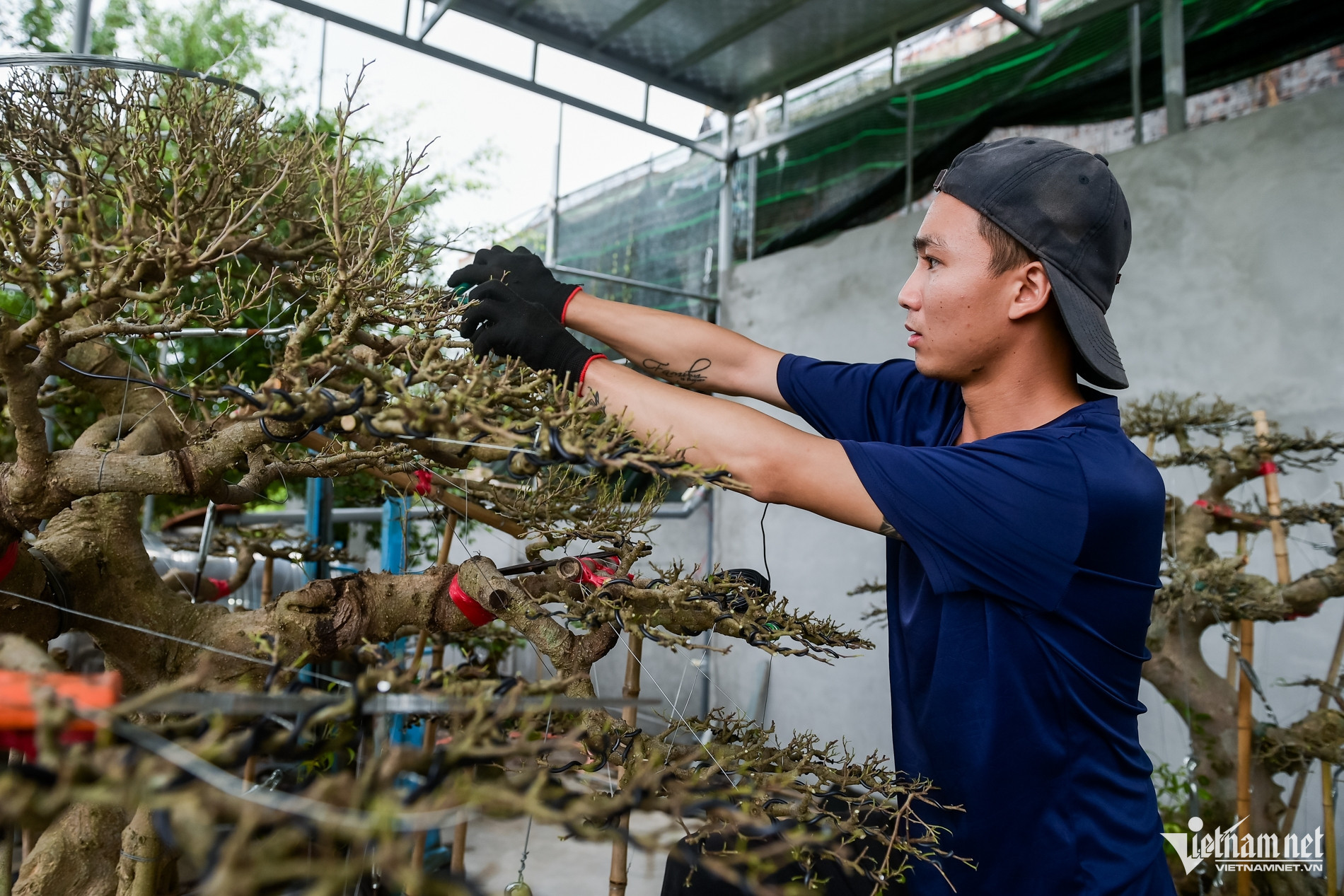
Experienced tree shapers in Vi Khe say their work demands precision, patience, and an artistic eye. Every cut of the shears and every turn of the wire must be exact to bring branches into the desired form - achieving balance, flow, and beauty.
These skilled craftsmen aren’t limited to local work. They are frequently invited to gardens across Vietnam to shape trees. Each trip brings not only income but also the opportunity to learn new styles and creative approaches.
Crafting beauty from patience and precision
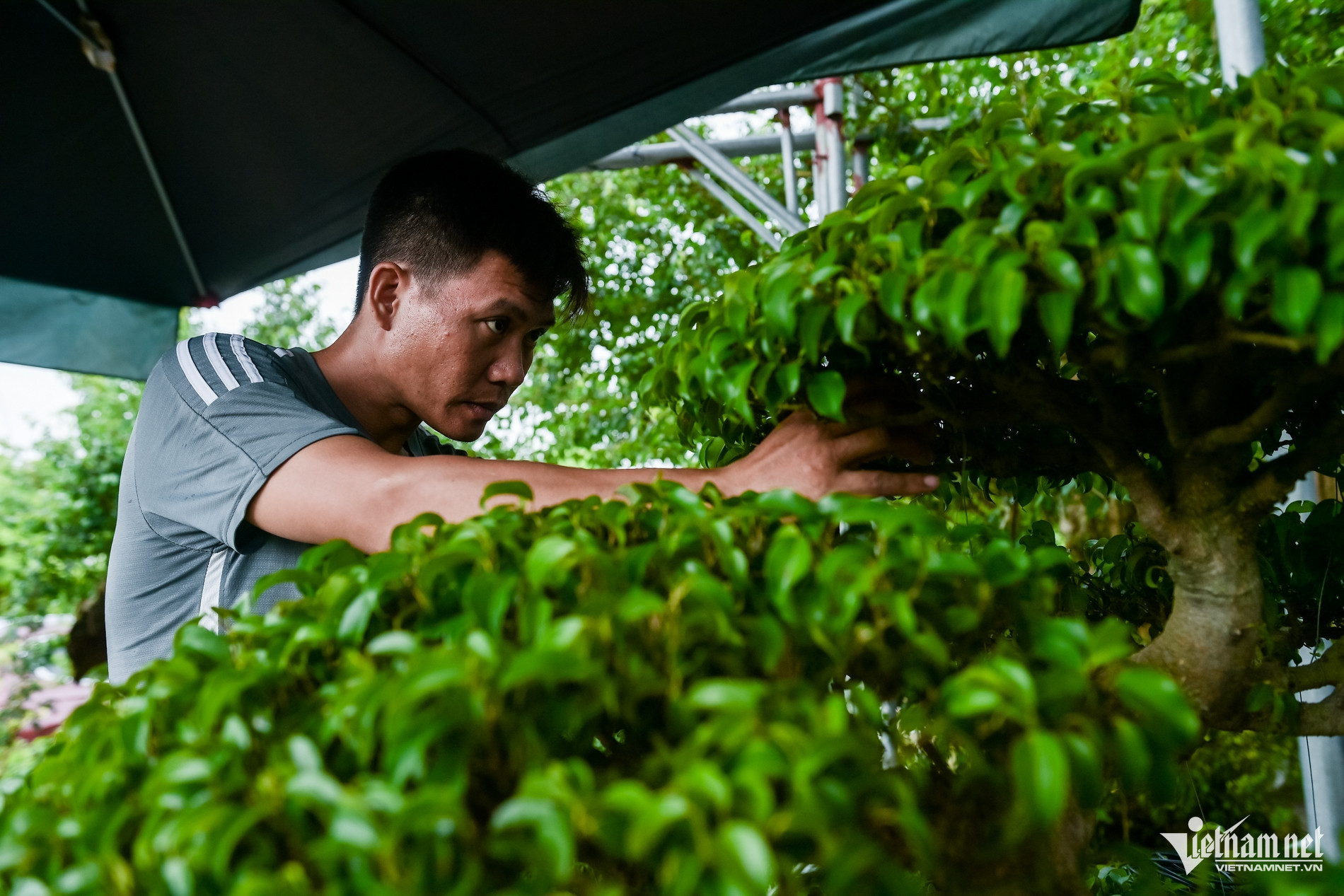
At 32, Trinh Xuan Tra from Vi Khe has been shaping trees since childhood. Born into a family with generations of bonsai artists, he learned from his father the discipline of cutting, wiring, and styling ornamental trees - a skill that has brought him a stable livelihood.
“I work year-round - from one garden to another - there’s never a shortage of jobs,” Tra shared. “Besides working for gardens here in the village, I often travel to provinces like Quang Ninh, Hai Phong, Phu Tho, and even to Ho Chi Minh City and Dong Thap. On average, I earn about 700,000 VND per day locally, and up to 1 million when working away.”
He explained that payment varies depending on the tree’s complexity. “For high-value bonsai that require detailed, artistic shaping, clients often pay per tree instead of by the day.”
Some raw tree specimens worth hundreds of millions of dong (thousands of dollars) can require a team of skilled craftsmen to work continuously for three to five days - with total labor costs reaching tens of millions of dong (several thousand USD).
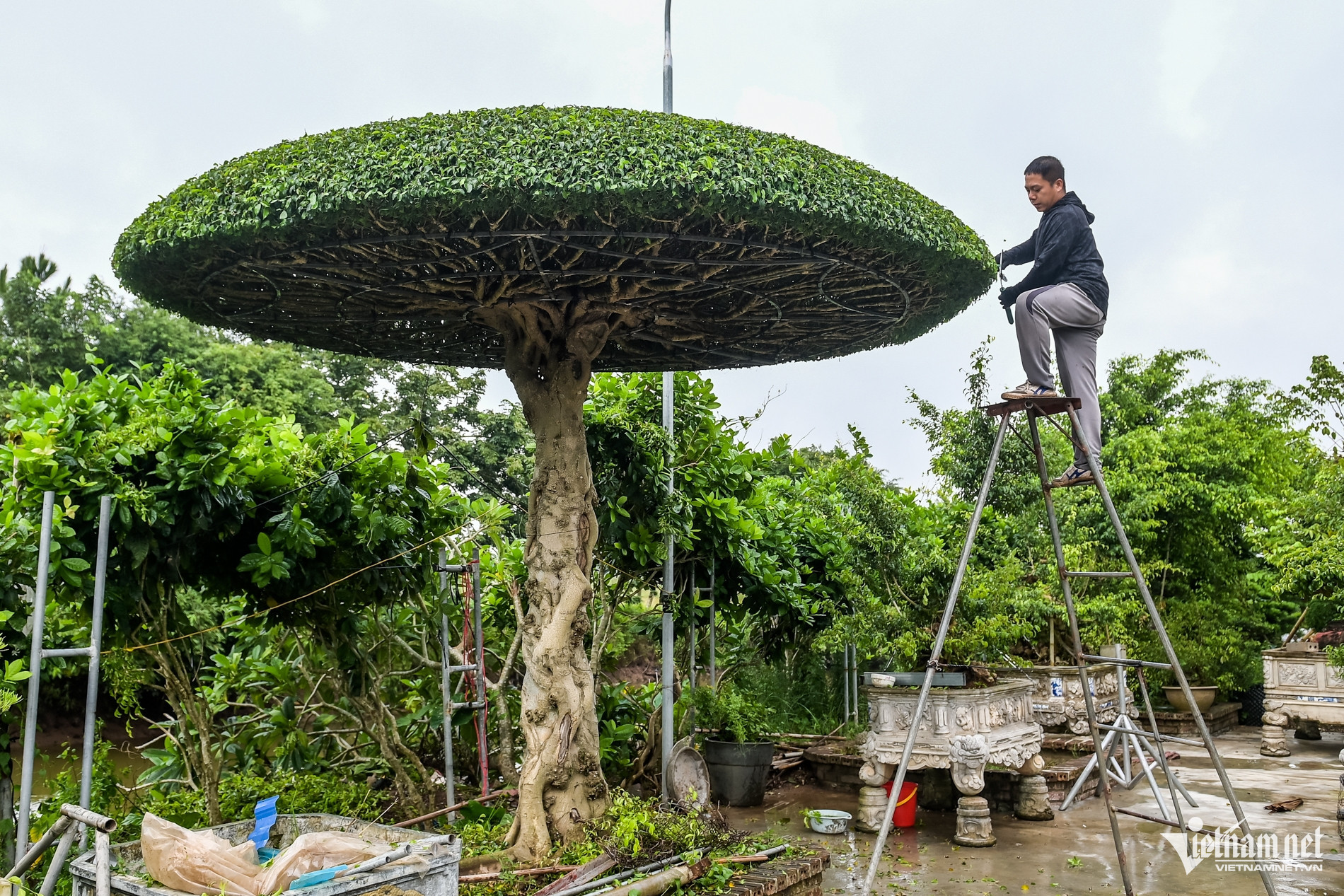
Behind the attractive earnings lies intense labor. Artisans spend hours under the blazing sun, carefully bending and trimming branches. Over the years, their hands become rough and calloused - a mark of dedication to their living artworks.
“This job is about passion, not just money,” Tra said. “Turning a raw tree into a refined bonsai takes months, sometimes years of care. You invest effort you can’t measure - but when the tree takes shape, and the owner sells it at a good price, that’s the real reward.”
The artistry behind each curve
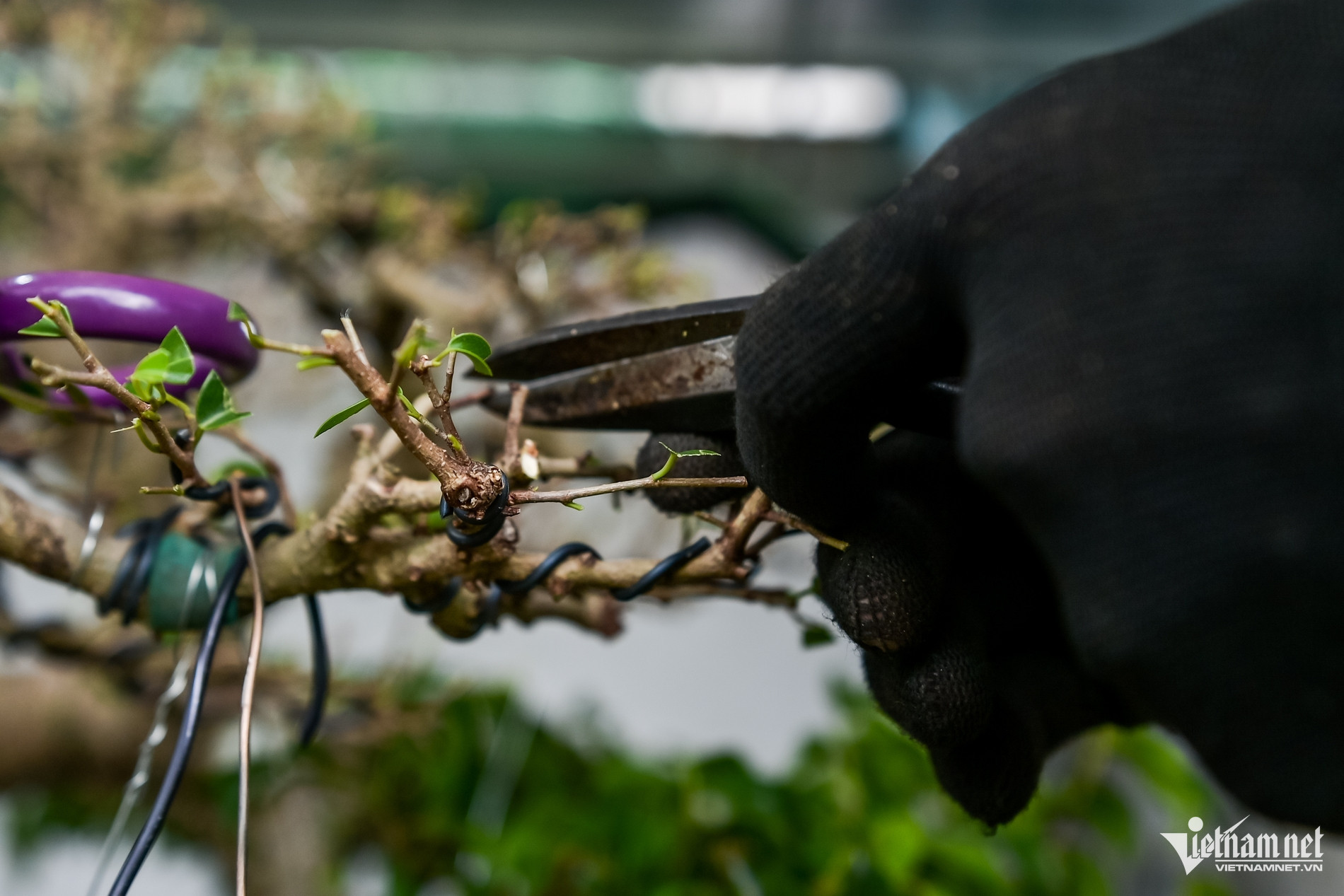
After 18 years in the trade, Pham Tuan Anh (35) says shaping a bonsai always begins with stripping away leaves to expose its structure before using aluminum wire to define the branches.
From that foundation, the artist sculpts - transforming a rough specimen into a graceful, balanced composition. Depending on the tree’s natural form, each artisan adds a personal touch, making no two works the same.
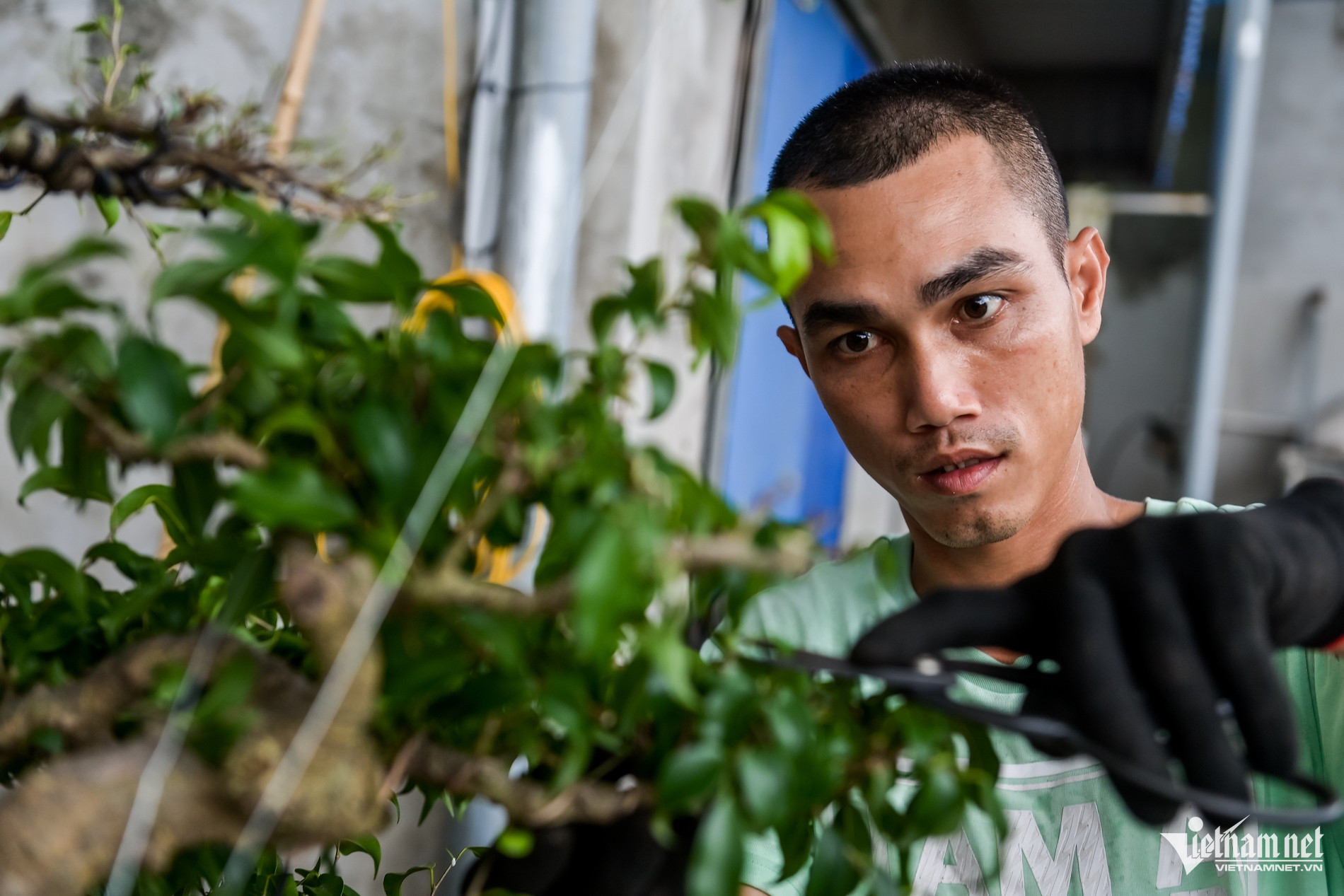
“The hardest part is defining the form,” Tuan Anh said. “To earn well, you must keep learning and improving your artistic eye. Before starting, we always discuss with the owner to align ideas - preserving their vision while enhancing the tree’s natural beauty.”
“Each craftsman expresses their own sense of style and emotion through the tree, so every bonsai carries a distinct personality,” he added.
Sustaining a village of artistry
Nguyen Minh Hoat (born 1980), owner of a 7,000-square-meter bonsai garden with more than 1,000 trees, employs 7–10 pruners daily. Their combined monthly wages exceed 150 million VND (around 6,000 USD), meaning each worker earns an average of 15–20 million VND (600–800 USD) per month.
“I always hire workers from Vi Khe,” Hoat said. “Their craftsmanship has been proven over generations. Besides skill, I look for artisans whose aesthetic sense matches mine, ensuring that each piece achieves its intended artistic value.”
Today, more than 95% of households in Vi Khe ward earn their living from bonsai. In the historic core of Vi Khe village, nearly every household practices the craft.
To help the village thrive sustainably, Do Dinh Diem, Standing Deputy Secretary of the Vi Khe Party Committee, said the local government identifies flower and bonsai cultivation as the key economic driver.
Dedicated production zones have already been established, yielding strong economic results. In the coming years, Vi Khe plans to invest further in infrastructure, irrigation, and green economic development linked with eco-tourism and hands-on experiences.
“Bonsai cultivation will continue to be our top development priority,” Diem said. “By 2030, the ward aims to reach an annual budget revenue of 275 billion VND (about 11 million USD) and an average per capita income of 150 million VND (approximately 6,000 USD).”
Trong Tung
.svg)
