 Vietnamnet.vn

 Podcast



The Government’s recent issuance of eight resolutions - abolishing 184 administrative procedures, decentralizing 134, simplifying 349 and removing 890 business conditions - marks a powerful reform step and reflects a culture of saving in national governance.
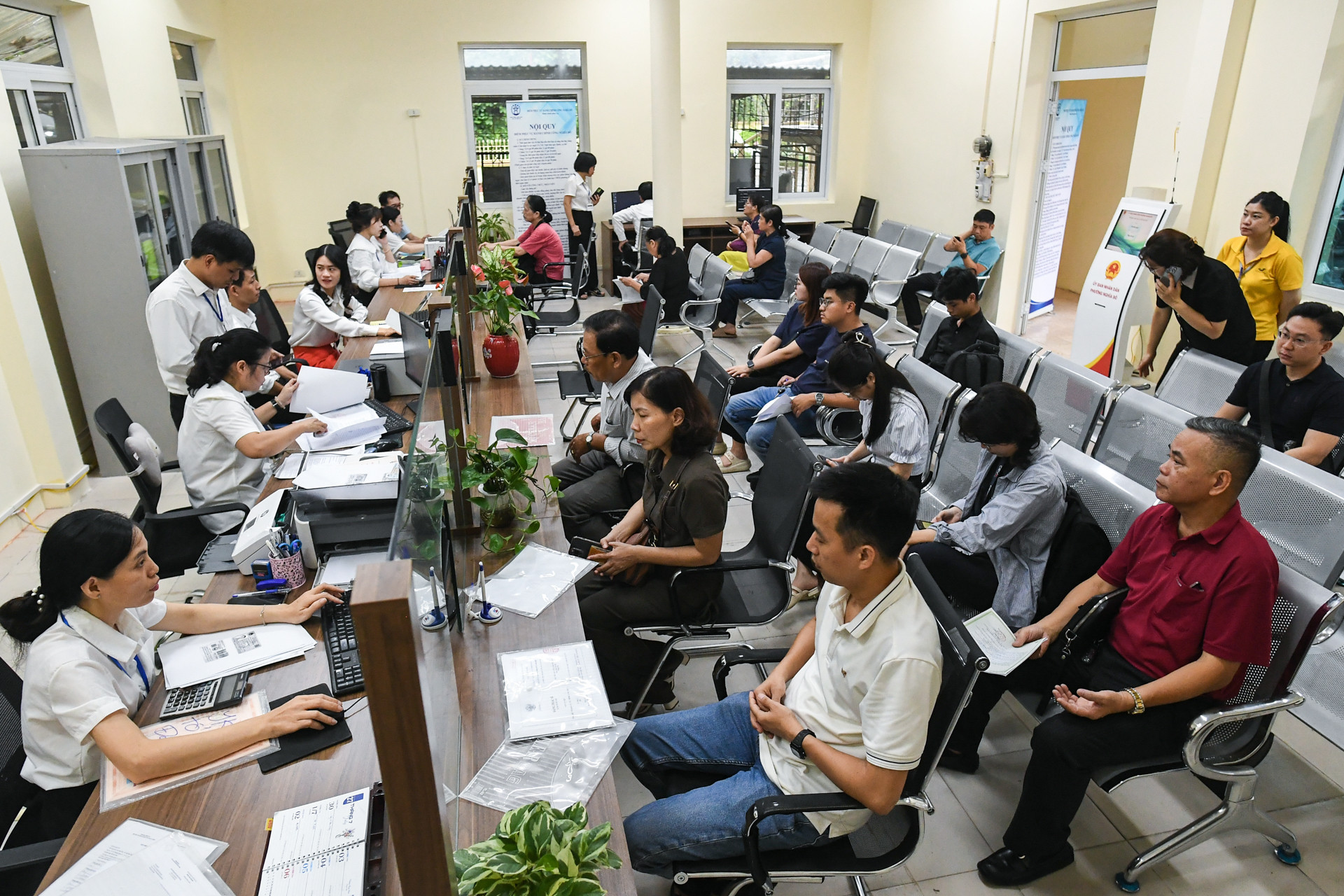
From the message of General Secretary and State President To Lam, on combating waste to the directive of Prime Minister Le Minh Hung on reducing recurrent expenditure, a consistent spirit emerges: for the country to rise, it must first value every đồng of the state budget, every hour of labor, and every development opportunity for citizens and businesses.
For many years, when speaking of saving, the focus has often been on cutting spending, limiting purchases, reducing conferences, and avoiding ostentation. These measures are valid, but insufficient. In a nation entering a new era of development, saving must be understood more broadly - as a cultural standard, a governance method, and a soft resource for growth.
Saving is not merely about spending less, but about using resources more effectively. It is not only about cutting unnecessary costs, but about freeing up resources for what truly matters. It is not just about protecting the budget, but also about safeguarding people’s time, reducing business costs, preserving social trust and expanding national opportunities.
From this perspective, the removal of 890 business conditions goes beyond an administrative decision. It signals a shift in governance thinking: the State not only sets regulations but is also willing to review and eliminate outdated barriers; not only demands faster movement from society but also streamlines its own apparatus to serve more efficiently.
According to official data, the eight resolutions revise and supplement 163 legal documents, including two government resolutions, 155 decrees and six decisions by the Prime Minister, alongside the removal, decentralization and simplification of hundreds of administrative procedures. Behind these figures lie millions of hours saved, reduced compliance costs, and expanded space for investment, entrepreneurship and innovation.
Waste in development is not limited to financial loss. Some forms are more subtle yet equally restrictive: the waste of social time. A procedure delayed by a few days, multiplied across thousands of businesses, becomes a significant cost. An unnecessary business condition can stall a project, discourage an investor or eliminate a market opportunity. A cumbersome administrative process can exhaust citizens, drain businesses and trap social resources in paperwork instead of directing them toward production, creativity and job creation.
Reducing procedures and removing business conditions, therefore, is a form of anti-waste at the institutional level. If saving in public spending creates more fiscal space for development investment, saving in procedures accelerates the economy, strengthens business confidence and enhances convenience for citizens.
A state that knows how to save is not only one that reduces expenditure, but one that avoids imposing unreasonable costs on society. An efficient administration is not just one that spends less, but one that enables people and businesses to spend less time generating greater value.
In his article on combating waste, Mr. To Lam emphasized the need to build a culture of prevention, making saving and anti-waste practices “self-aware,” “voluntary,” and as natural as daily habits.
This framing is profound, as saving gains real vitality only when it is no longer a temporary campaign or a slogan, but becomes a behavioral norm, an operational standard and a personal responsibility for every agency, official, business and citizen.
A culture of saving begins with the recognition that all national resources are valuable. The state budget represents the effort, trust and contributions of the people. Citizens’ time is a resource. Business opportunities are resources. Land, public assets, natural resources, heritage, talent, data and national credibility are all resources. If we save money but waste time, cut purchases but prolong procedures, reduce meetings but delay projects, or advocate anti-waste without reforming obstructive regulations, saving cannot become a true development culture.
Alongside administrative reform, the call to reduce recurrent expenditure is being pursued with determination. Prime Minister Le Minh Hung has required at least a 10% reduction in recurrent spending in 2026 - equivalent to around VND170,000-180,000 billion (US$7-7.4 billion) - to free up resources for priority tasks, while also emphasizing energy savings with specific targets. This is not only a budgetary directive, but also a message on financial discipline and public service culture.
Importantly, saving does not mean constraining development. It is not about spending less at all costs, but about spending more wisely; not about reducing investment, but about improving its effectiveness; not about limiting operational capacity, but about eliminating expenditures that do not generate public value.
A shorter meeting that delivers results is saving. A digitized procedure that reduces travel is saving. A well-prepared project implemented on schedule is saving. Removing an outdated business condition is saving. Designing clear, feasible policies with low compliance costs is saving.
In the cultural sector, this principle carries particular significance. While there is growing emphasis on cultural development, cultural industries and national soft power, investment in culture must also embrace a culture of saving. This does not mean reducing cultural spending or impoverishing spiritual life, but preventing waste: avoiding underused facilities, superficial festivals, costly events with little lasting value, scattered investments, neglected heritage and unutilized creative talent.
A museum must have visitors. A theater must be active. A library must attract readers. A cultural center must become a living space for the community. Every đồng spent on culture must translate into identity, creativity, pride and national soft power. True saving lies not in minimizing expenditure, but in maximizing the value each expenditure creates.
More broadly, a culture of saving must become a societal norm. In the public sector, it means financial discipline, administrative reform, digital transformation, efficient use of public assets and accountability. In businesses, it involves modern management, resource optimization, technological innovation and reduced waste of materials, energy and time. In families, it reflects modest living and responsible consumption. In education, it means teaching younger generations to value labor, resources, the environment and learning opportunities.
A nation cannot advance if resources are trapped in procedures. An economy cannot accelerate if businesses lose time to outdated conditions. A system cannot serve effectively if administrative energy is dispersed on formality. A society cannot develop sustainably if it tolerates waste - whether of money, time, land, talent, heritage or trust.
The removal of 890 business conditions, the reduction of hundreds of procedures, and the requirement to cut at least 10% of recurrent expenditure, if implemented consistently, will generate not only material resources but also a vital intangible one: trust. Citizens will see a system moving to serve them better. Businesses will feel a more open environment. Officials will recognize reform as irreversible. Society will understand that every đồng, every minute and every opportunity is being valued.
A culture of saving, therefore, is not about frugality, but about development intelligence. It does not limit ambition, but strengthens its foundation. It does not reduce momentum, but removes obstacles. When saving becomes a culture, anti-waste becomes discipline, and institutional reform becomes routine, the nation will gain the strength to move faster, further and more sustainably toward prosperity, civility and happiness.
Dr. Bui Hoai Son
.svg)
