Kim Dong-ho, founder and former chairman of the Busan International Film Festival, has praised the growth of Da Nang Asian Film Festival and the efforts of its director, Ngo Phuong Lan, to connect Vietnamese cinema with the world.
On October 11, 2026, during the 31st Busan International Film Festival (BIFF) in South Korea, the Vietnam Film Development Association (VFDA) hosted a forum titled "Film Festivals - A Bridge Connecting Vietnamese Cinema with the World."
The event brought together Vietnamese Ambassador to South Korea Vu Ho; BIFF founder and former chairman Kim Dong-ho; Da Nang Vice Chairwoman Nguyen Thi Anh Thi; Tran Thi Phuong Lan, head of the Culture and Arts Department of the Communist Party's Central Propaganda Commission; Pham Tuan Long, director of the Hanoi Department of Culture, Sports and Tourism; Vietnamese Consul General Doan Phuong Lan; and numerous Vietnamese and international producers, directors, industry experts and representatives of film organizations and businesses.
Vietnamese Ambassador to South Korea Vu Ho attends the film industry forum held during the 31st Busan International Film Festival. Photo: VFDA.
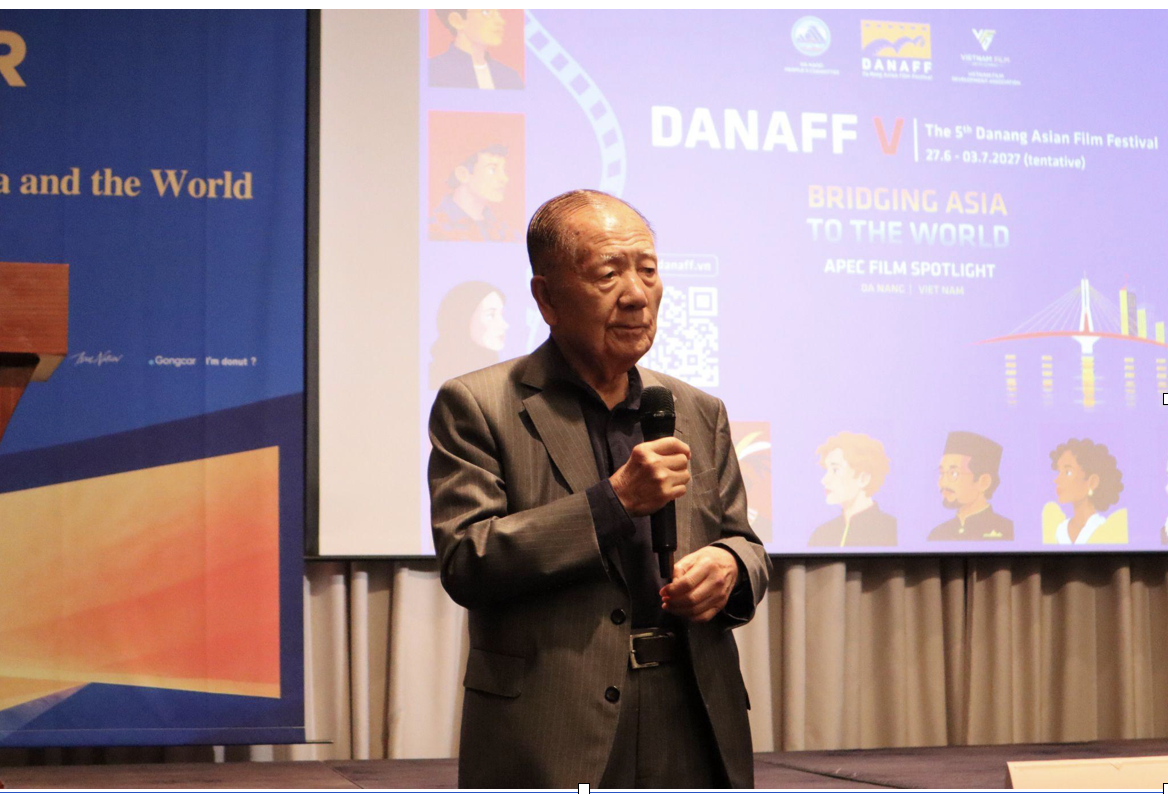
Speaking at the forum, Kim Dong-ho commended the progress made by the Da Nang Asian Film Festival (DANAFF). He acknowledged the festival's contributions and the efforts of Dr. Ngo Phuong Lan, VFDA president, in promoting Vietnamese culture, the country and its cinema while strengthening connections between Asian filmmakers and the wider international film community.
Kim expressed hope that exchanges between Vietnam and South Korea would continue to expand, creating further opportunities for cooperation across the international film industry.
Ambassador Vu Ho highlighted the practical value of VFDA's film promotion initiatives, which have attracted enthusiastic participation from artists, producers and leaders of film organizations in Vietnam and abroad. He praised the association's efforts to bring Vietnamese cinema closer to international audiences, particularly through the establishment and development of DANAFF.
According to the ambassador, film cooperation between Vietnam and South Korea should move beyond cultural exchanges toward concrete projects involving script development, production, post-production, distribution and professional training.
He also stressed that the use of artificial intelligence must be accompanied by respect for copyright, artists' rights and the originality of creative work.
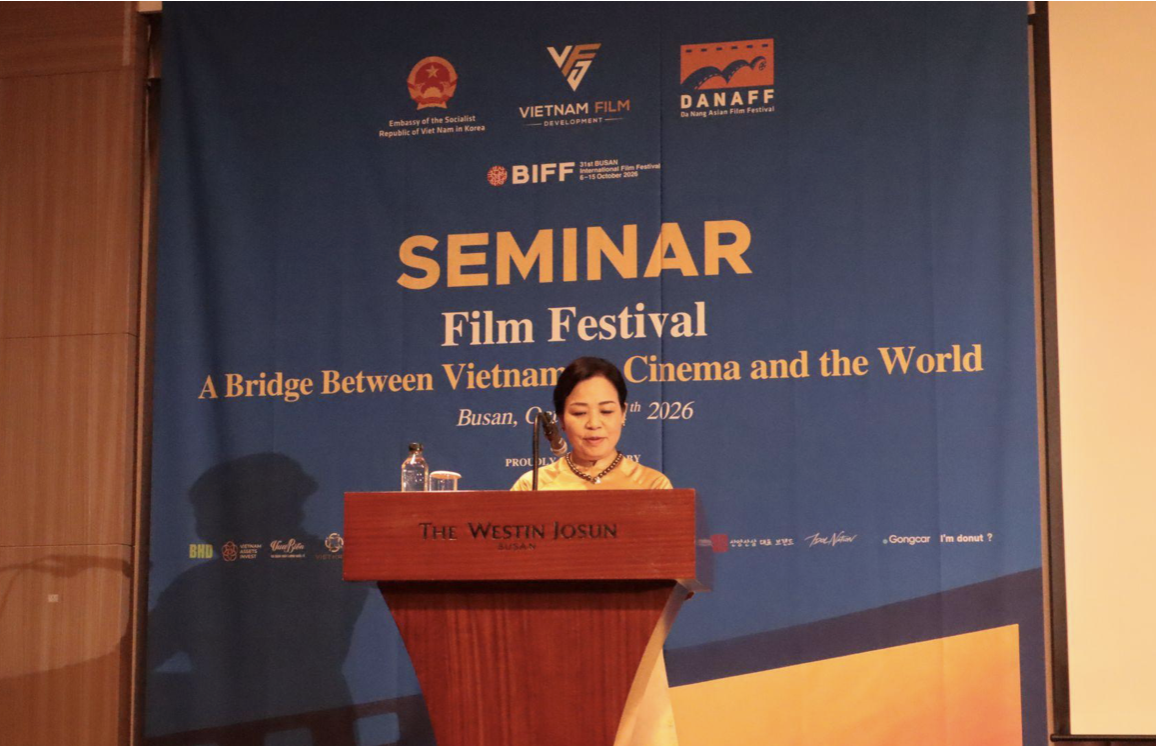
Opening the forum, Dr. Ngo Phuong Lan, president of VFDA and director of DANAFF, emphasized the role of film festivals in bringing cinematic stories to new audiences, building professional relationships and opening doors to cooperation.
Kim Dong-ho, founder and former chairman of the Busan International Film Festival. Photo: VFDA.
Vietnamese cinema is showing encouraging signs of growth, with emerging young talent and an expanding domestic market. However, she said that turning these positive developments into a sustainable international presence would require stronger support systems and more effective industry connections.
With that vision in mind, she introduced several programs planned for the fifth edition of DANAFF, including a showcase of Vietnam's cinematic heritage, APEC Cinema Spotlight, DANAFF Talents and DANAFF Industry Connect.
These initiatives are designed to combine film promotion with talent development, project support and opportunities for collaboration with international partners.
Director Nguyen Hoang Diep, known for her film Dap canh giua khong trung (Flapping in the Middle of Nowhere), attended the 31st BIFF with her new feature 1982.
She reflected on more than a decade of involvement in Busan's film project development activities. Returning to the festival after more than 12 years, she was moved by the growing presence of Vietnamese filmmakers, producers and film organizations.
Nevertheless, Diep pointed to a persistent challenge facing Vietnamese cinema: the lack of suitable screening venues where arthouse and independent films can reach domestic audiences after appearing at international film festivals.
Producer Ngo Thi Bich Hanh, vice president of VFDA, shared her experience of developing film markets through Busan.
Dr. Ngo Phuong Lan, president of VFDA and director of DANAFF, delivers the opening remarks at the forum. Photo: VFDA.
She argued that a film market does not necessarily need to begin on a large scale. More important is the sustained effort to build professional networks, support film projects and gradually expand cooperation.
This approach also underpins DANAFF's ambition to evolve from a festival primarily showcasing films into a broader platform connecting different parts of the film industry.
One of the forum's central discussions focused on developing DANAFF Industry Days into a film market platform capable of delivering tangible results.
Da Nang Vice Chairwoman Nguyen Thi Anh Thi said the city hopes to draw lessons from Busan's Asian Contents & Film Market (ACFM) to strengthen connections between film projects, producers, investors and distributors.
The city also aims to encourage international co-productions, facilitate the acquisition and sale of film rights, and explore how cultural traditions, history and heritage can become intellectual property with the potential to be developed into screen productions.
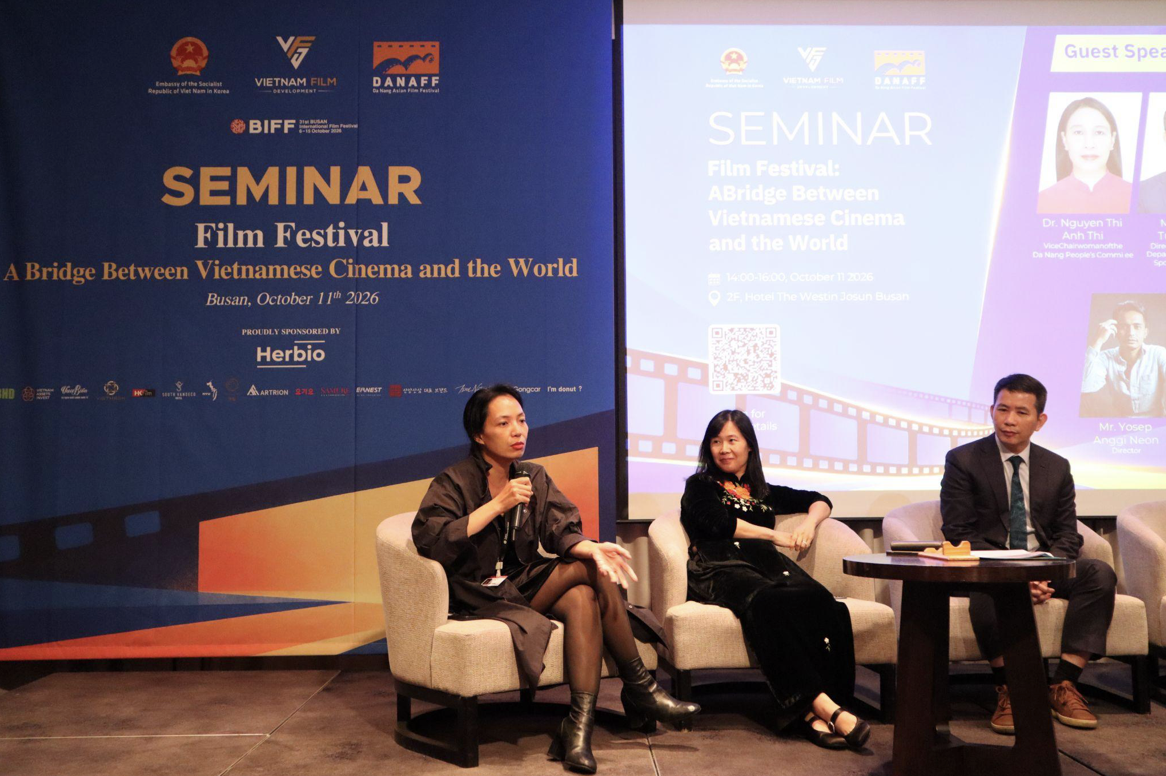
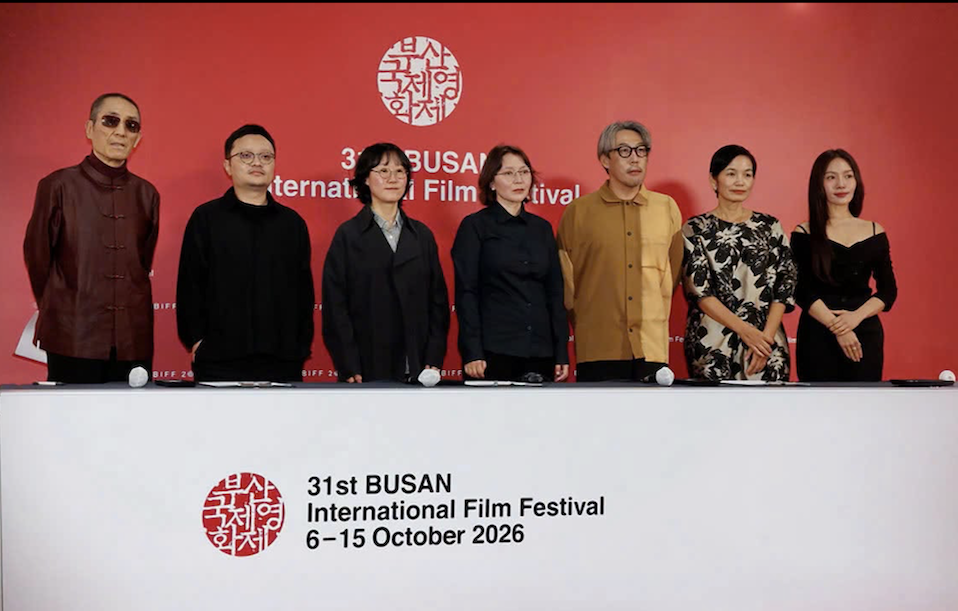
Director Nguyen Hoang Diep and producer Ngo Thi Bich Hanh attend the discussion on connecting Vietnamese cinema with the international film industry. Photo: VFDA.Vietnamese producer Tran Thi Bich Ngoc serves on the jury of this year's Busan International Film Festival alongside acclaimed Chinese director Zhang Yimou. Photo: VFDA.
Regarding efforts to attract international film crews, Pham Tuan Long, director of the Hanoi Department of Culture, Sports and Tourism, highlighted the Vietnamese capital's potential as a filming destination, citing its heritage sites, architecture, traditional craft villages and pool of artistic talent.
Nguyen Thi Anh Thi said Da Nang must adopt a comprehensive approach, promoting filming locations while improving administrative procedures, infrastructure, services and coordination mechanisms to make the city more attractive and convenient for film production.
The forum also introduced plans to develop the Production Attraction Index (PAI), an initiative by VFDA designed to compile information on filming locations, production conditions, administrative procedures, policies and support services available in different Vietnamese localities.
With the participation of prominent international film figures, producers, businesses and government representatives, the forum underscored VFDA's increasingly important role in connecting Vietnam's film industry with Asia and the wider world.
 Vietnamnet.vn

 Podcast




.svg)
