 Vietnamnet.vn

 Podcast



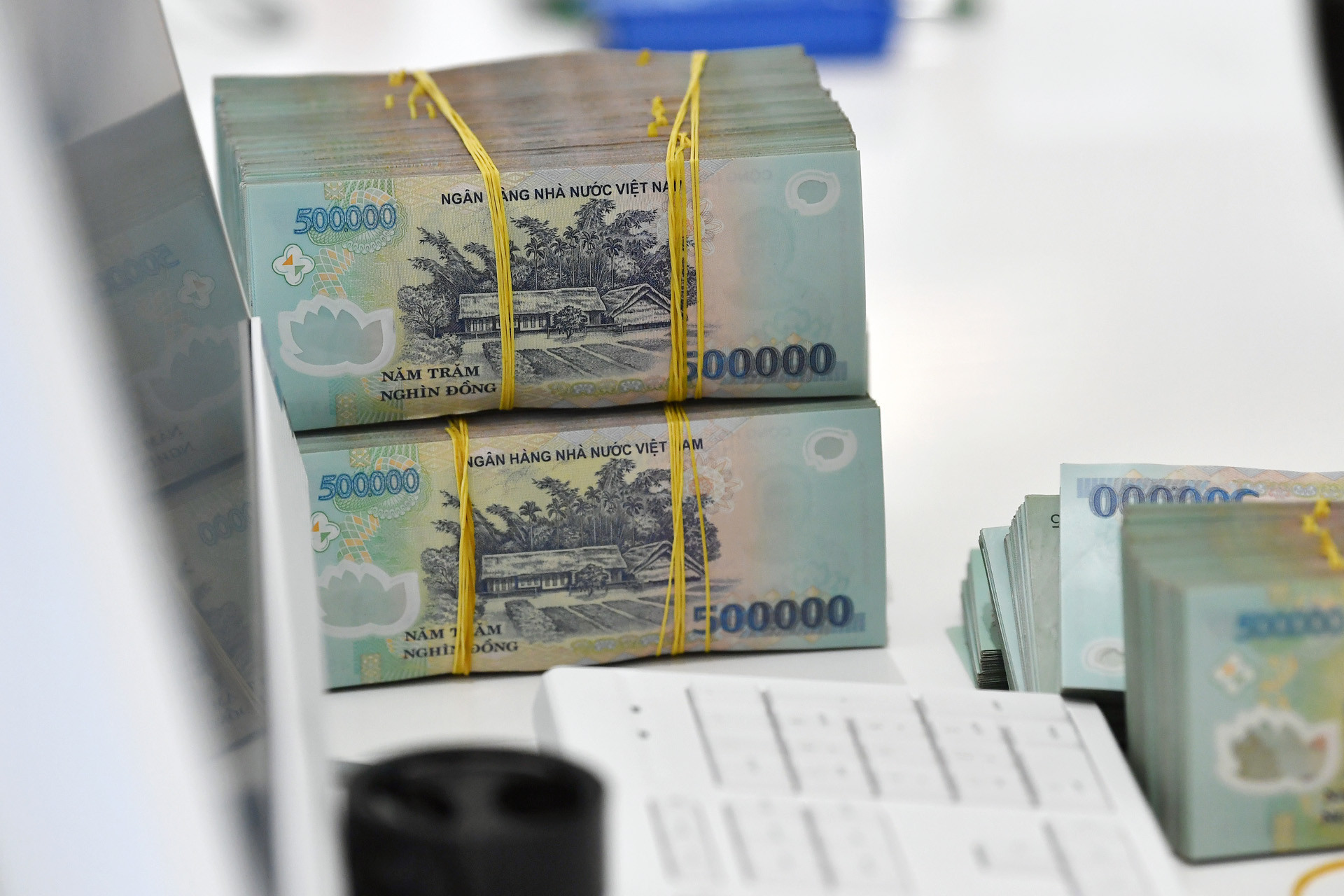
Under the notice, the interest rate on the company's VND57 billion loan will rise from 10.6 percent a year to 15.3 percent a year, effective September 28, 2026.
As such, the rate will increase by 4.7 percentage points in a single adjustment, equivalent to a rise of about 44 percent from the previous rate.
The loan was only disbursed on August 28, 2026, meaning the company enjoyed the rate of 10.6 percent a year for just one month.
A company representative said the loan was secured by collateral consisting of high-value real estate.
“This is only the first notice of an interest rate increase. We don't know how the rate will fluctuate between now and the end of the loan term, while the real estate market is slowing and we are also facing considerable difficulties selling properties,” the representative said.
For businesses, higher interest rates increase the cost of capital, putting additional pressure on costs and efficiency. However, with purchasing demand for real estate still weak, passing the entire increase in costs on to selling prices is not always feasible.
For businesses with shorter capital cycles, however, interest rates may not be the biggest concern. A representative of a food import-export company said his business currently owes VND15 billion to a bank at an annual interest rate of 13 percent. The company generates monthly revenue of VND15-18 billion, with profits equivalent to 10-15 percent of monthly revenue, or VND1-2.7 billion.
“With the same amount of borrowing, a trading company needs to turn over its capital six to 12 times a year. If each cycle generates a 10 percent profit, we are not particularly concerned about interest rates. What matters is identifying market trends correctly so that our capital does not become tied up,” the representative said.
When will interest rates fall?
Nguyen Anh Khoa, Director of Research at Agriseco Securities, said interest rates are unlikely to fall from now until the end of the year. The main reason is that demand for capital in the economy remains high, while deposit growth has not fully kept pace with demand for funds.
When demand for capital rises faster than the ability to supply it, funding costs and overall interest rates are unlikely to fall significantly.
In the first half of the year, interest rates remained relatively high before easing at certain points. However, upward pressure on interest rates has recently emerged at some banks and in certain market segments.
Khoa said interest rates could decline selectively for certain groups of customers or loan terms through the end of the year, but overall they are likely to remain relatively high. The likelihood of a broad-based sharp increase is also low, but there is limited room for rates to fall further.
For interest rates to genuinely cool, Khoa said deposit growth must first improve. At the same time, cash flows from investment projects, particularly large-scale projects with medium- and long-term implementation periods, need to enter the economy and quickly generate capital turnover.
When money circulation improves, system liquidity becomes more abundant, and the cost of maintaining liquidity falls, banks will have more room to lower lending rates, he said.
Khoa also noted that exchange rates and inflation need to remain stable. This is an important condition for policymakers to have more room to ease monetary policy, thereby helping interest rates cool.
Nguyen Van Loc from Phenikaa University said the most important issue is not whether interest rates will rise or fall, or by how much, but rather the balance between credit growth and banks' ability to mobilize deposits. If credit continues to grow faster than deposits in the coming months, pressure on interest rates will remain.
“The fourth quarter is typically a period of high credit and liquidity demand as businesses raise working capital, stock up on goods, manufacture products and prepare for the year-end business season. Even if system-wide liquidity remains generally well managed, individual banks may face different levels of pressure to mobilize funds, leading to localized interest rate adjustments,” Loc said.
Tuan Nguyen
.svg)
