 Vietnamnet.vn

 Podcast



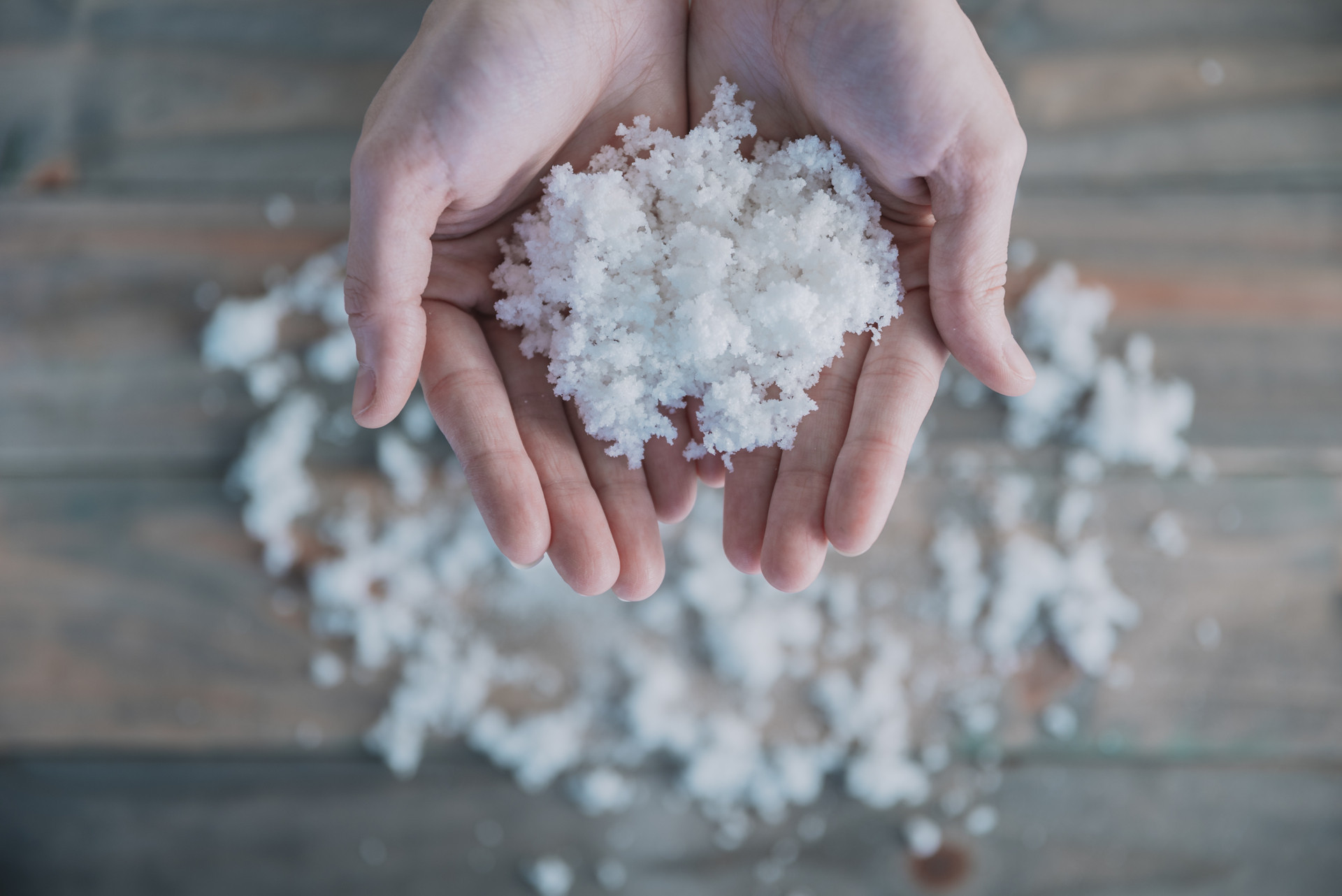
In the traditional rhythm of many Vietnamese families, whenever Tet (Lunar New Year) arrives, elders often remind their children and grandchildren: “Buy salt at the beginning of the year, lime at the end.”
Many people make it a habit, right after the stroke of midnight or early on the morning of the first day of the Lunar New Year, to purchase a small bag of salt to place in their homes. The sight of itinerant salt vendors along streets and at the gates of temples and pagodas on the first morning of Tet has become familiar, especially in northern Vietnam.
By contrast, toward the end of the year, people often buy lime to repaint houses and gates or sprinkle lime powder around gardens and entrances.
In the book Bach khoa thu lang Viet co truyen, Associate Professor Bui Xuan Dinh notes that there have long been various explanations for the origin of this folk custom. According to him, the phrase initially served simply as a reminder, either spoken aloud or kept in mind, for market-goers to remember to buy essential items for Tet, including salt and lime.
Over time, it evolved into a widely observed folk belief and customary practice.
Dr Dinh Duc Tien, a lecturer at the Faculty of History, University of Social Sciences and Humanities, Vietnam National University, Hanoi, explains that salt is an indispensable ingredient used throughout the year in every household.
In traditional belief, salt, with its salty nature, is thought to ward off impurity, repel evil spirits and bring good fortune to the family. Its salty taste also symbolizes warmth and strong bonds, representing the cohesion among family members.
Lime, meanwhile, is used to cleanse during house cleaning, eliminate mold and bacteria, and refresh walls or damp, mossy areas, helping beautify the home before Tet arrives.
In addition, “buying lime at the end of the year” is believed to dispel bitterness and misfortune accumulated over the past year, making way for auspicious beginnings in the new one.
Dr Luu Huyen Trang, lecturer in Vietnamese Cultural Foundations and Cultural Theory at the Academy of Journalism and Communication, also believes the custom carries a profound philosophy about human relationships and the traditional Vietnamese perception of time.
“Salt symbolizes depth, attachment and enduring affection. Buying salt at the beginning of the year is a way to pray for family harmony and good relationships. Lime symbolizes cleansing, renewal and construction. Buying lime at the end of the year means tidying up, repairing and closing the old chapter. This reflects the circular concept of time in traditional Vietnamese thinking: endings go hand in hand with purification, and rebirth is tied to new beginnings.
All Tet customs, from New Year’s Eve rituals to ancestral offerings, from picking lucky buds to buying salt, reflect a fundamental feature of Vietnamese culture: Tet is not merely a ritual, but a ‘social rebirth ceremony’ where people renew themselves, renew their families and express gratitude toward the past, the community and the future.
That is also why, no matter how modern society becomes, Tet rituals continue to hold enduring vitality in the Vietnamese psyche,” she said.
Another interpretation suggests that buying lime also meant replenishing the “ong binh voi” used for chewing betel during Tet and in the months that followed.
The “ong binh voi” is a ceramic container used to store lime for betel chewing, typically owned by elders who maintain the habit. It was once considered an important household item, which needed to be kept “well fed.” However, as the saying “pale as lime” implies misfortune, people traditionally added lime to it only at the end of the year, not at the beginning.
Some also argue that the custom reflects the industrious and thrifty character of Vietnamese people. Buying salt at the beginning of the year was a way for parents to remind their children to be frugal and save money, so that by the end of the year they could afford lime to build or repair a home.
Linh Trang-Ngoc Ha
.svg)
