 Vietnamnet.vn

 Podcast



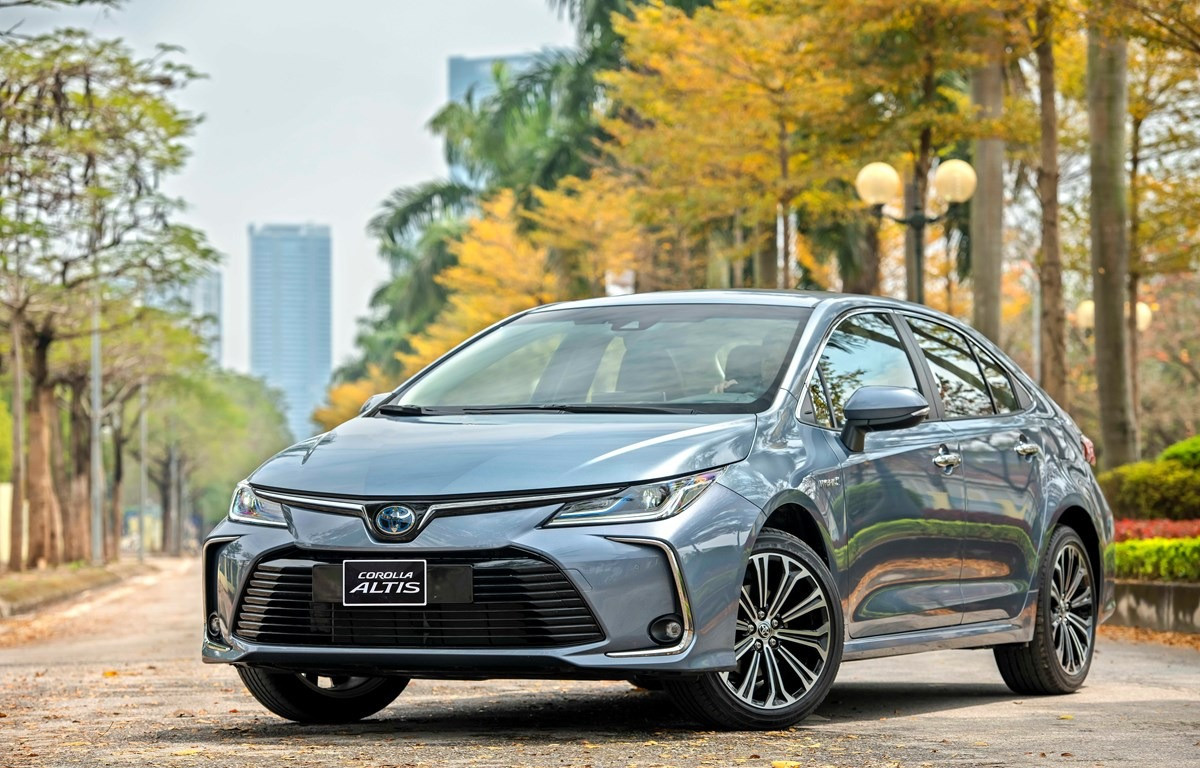
About a decade ago, the C-segment sedan was one of the most vibrant segments in Vietnam’s automotive market, featuring popular models such as Toyota Corolla Altis, Mazda3, Honda Civic, KIA K3/Cerato, Chevrolet Cruze, and Ford Focus.
Once considered a dream for many Vietnamese families, the segment has since shrunk dramatically as numerous models have disappeared from the market. Those that remain are posting only modest sales figures.
According to VAMA (the Vietnam Association of Manufacturers’ Association) and TC Motor, C-segment sedans still recorded relatively stable sales in 2023, with the Mazda3 leading at 6,718 products, followed by the KIA K3 with 3,205, Hyundai Elantra with 2,874, Toyota Corolla Altis with 1,430, and Honda Civic with 1,222.
However, sales declined sharply in 2024 and 2025, particularly during the first months of 2026.
Mazda3 remained the segment’s best-selling model, but annual sales fell to 4,958 units in 2024 and further declined to 2,969 units in 2025. During the first five months of 2026, only 1,376 Mazda3 units were sold, marking a record low for the Japanese model.
KIA K3 also lost momentum over the past year. From 3,205 units sold in 2023, sales dropped by roughly half by 2025.
In early 2026, THACO-KIA did not even report separate sales figures for the K3. Instead, KIA grouped it under an “other vehicles” category, which includes the Morning, Soluto, K3, K5, and commercial vehicles, with combined sales of just 813 units during the first five months of the year.
Other models such as the Honda Civic and Hyundai Elantra also saw steep declines, selling only 402 and 186 units, respectively, during the first five months of 2026, their lowest levels in many years.
Most notably, Toyota Corolla Altis, once regarded as the segment’s benchmark, sold only 285 units throughout 2025 and a mere 16 units in the first five months of 2026 before Toyota decided to discontinue the distribution of the model in Vietnam.
Growing pressure from high-riding vehicles
The decline is not limited to C-segment sedans. The entire sedan market has faced significant challenges over the past three to five years.
Automotive marketing expert Nguyen Van Phuong believes the decline of C-segment sedans reflects a structural shift in Vietnam’s automotive market rather than merely weak sales or model discontinuations.
First, most C-segment sedans currently available are nearing the end of their product life cycles. Many have been on the market for four to six years and have received only minor updates to equipment and features. Significant improvements in platform architecture, design, or advanced driver-assistance technologies have been limited.
At the same time, global automakers are directing resources toward SUVs, crossovers, and electric vehicles, the segments viewed as future growth drivers. As a result, C-segment sedans have gradually lost strategic importance within manufacturers’ product portfolios.
This has reduced the segment’s appeal, particularly among younger consumers who seek advanced technology, modern styling, and new driving experiences.
“The advantages of higher ground clearance, a wider field of vision, more flexible passenger space, and better adaptability to varying road and weather conditions make SUVs and crossovers better suited to the practical needs of most Vietnamese customers,” Phuong said.
“This is why B- and C-segment crossovers have flourished and consistently ranked among the market’s top-selling vehicles in recent years. The segment under the greatest pressure is the C-segment sedan, which occupies a similar price range.”
The competition facing C-segment sedans comes not only from rival brands but also from within the same manufacturers’ lineups.
With prices ranging from VND600 million to VND800 million, buyers now have numerous SUV, crossover, and MPV options from the same brands at only slightly higher prices.
For example, the Toyota Corolla Altis competes directly with both the Yaris Cross and Corolla Cross, while the KIA K3 faces pressure from the Sonet and Seltos.
When the price difference amounts to only a few tens of millions of dong, many buyers choose high-riding vehicles in exchange for greater practicality, more versatile performance, and what they perceive as stronger overall value.
Phuong said the rapid expansion of the mass-market electric vehicle sector is also adding pressure to internal-combustion-engine sedans.
Hoang Hiep
.svg)
