 Vietnamnet.vn

 Podcast



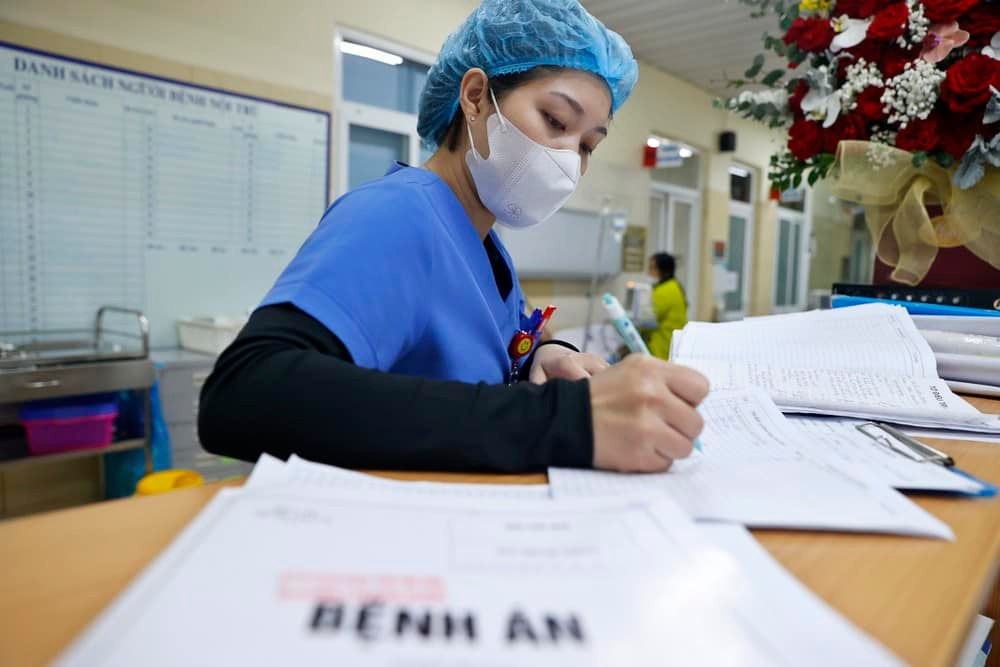
Before each new chemotherapy cycle, she is constantly torn by the thought: "Continue or stop the treatment journey?"
VND100 million per month to stay alive
N.T.T, 52, from Hai Phong shared through tears about her journey treating stage 4 lung cancer, which has metastasized to the liver, bones, and lymph nodes. Following her diagnosis, she began a treatment regimen combining targeted therapy and immunotherapy.
"After using the medication for a year, I saw my health improve and my appetite return, so I thought a year of treatment would be enough. Because I wasn't advised early on, I didn't realize this was a long-term treatment that would essentially last a lifetime," T. said. This initial lack of foresight left her family unprepared for the financial demands of the long road ahead.
In reality, for late-stage cancer, maintaining continuous treatment is decisive in controlling the disease. Stopping the medication carries a high risk of rapid progression. T. has fallen into a state of total financial exhaustion.
According to the treatment protocol, T. must receive an infusion every 21 days. The immunotherapy drug pembrolizumab (Keytruda) alone costs about 60 million VND per 100ml dose. Even with the "Buy 1 Get 1" support program, the total cost for each infusion ranges from 77 to 100 million VND due to additional expenses such as anti-allergy drugs, anti-nausea medication, detox infusions, vitamins, and necessary tests. Furthermore, every three months, she must undergo a full-body CT scan to evaluate the treatment response, further driving up the costs.
According to N., health insurance only covers hospital bed fees and one PET/CT scan per year. Most of the medications she uses require out-of-pocket payment.
“After more than a year of treatment, my family has spent nearly VND2 billion. Now we truly have no ability to continue,” T. said bitterly.
Therefore, each time an infusion date approaches, she falls into a state of anxiety, torn between the desire to live and the reality of having run out of money. What troubles her most is whether there are other treatment options that are suitable, effective, but less expensive, and especially whether she can rely more on health insurance to reduce the burden.
Many other cancer patients are also facing a life-or-death dilemma closely tied to the enormous cost of treatment.
28 new drugs
The Ministry of Health’s proposal to add 76 drugs to the list covered by health insurance has brought hope.
Notably, cancer drugs account for the largest proportion, with nearly 28 types, reflecting the increasing demand for treatment and the financial burden patients face.
The list of cancer drugs to be added includes 22 targeted therapy drugs, 6 immunotherapy drugs, as well as chemotherapy and detox medications used after radiation for common cancers such as breast, lung, liver, stomach, and some blood cancers.
On the sidelines of a cancer-focused conference, Le Van Quang, Professor and Doctor, Director of K Hospital in Hanoi, said these drug groups were all proposed by specialized oncology treatment facilities to be included in the health insurance coverage list. The reason is the very high demand for their use, while treatment costs are so high that many patients cannot afford to follow long-term regimens.
When covered by Health Insurance, the patient's co-payment will decrease significantly, opening up treatment opportunities for more people.
According to Quang, targeted therapy drugs have developed to the third generation, acting directly on the genetic mutations of cancer cells. As a result, patients can shorten hospital stays and reduce dependence on long infusion sessions. Statistical data shows that targeted therapy can help extend progression-free survival up to 36.8 months, a very significant figure in cancer treatment.
Assoc. Prof. Pham Cam Phuong, Director of the Center for Nuclear Medicine and Oncology at Bach Mai Hospital (Hanoi), noted that current cancer treatment costs are immense. Many young patients lack the economic conditions to access new-generation drugs.
Each time doctors consult with patients, they must carefully weigh financial factors for each individual. For patients in severe hardship, doctors sometimes have to work through social work departments to call for community support, but this is only a temporary solution for a small number of individual cases.
Expanding the list of cancer drugs covered by health insurance is seen as a positive signal, helping reduce the financial burden on patients’ families while improving access to advanced treatment methods. With timely and adequate treatment, many cancer patients can return to normal life and continue to contribute positively to society.
Phuong Thuy
.svg)
