 Vietnamnet.vn

 Podcast



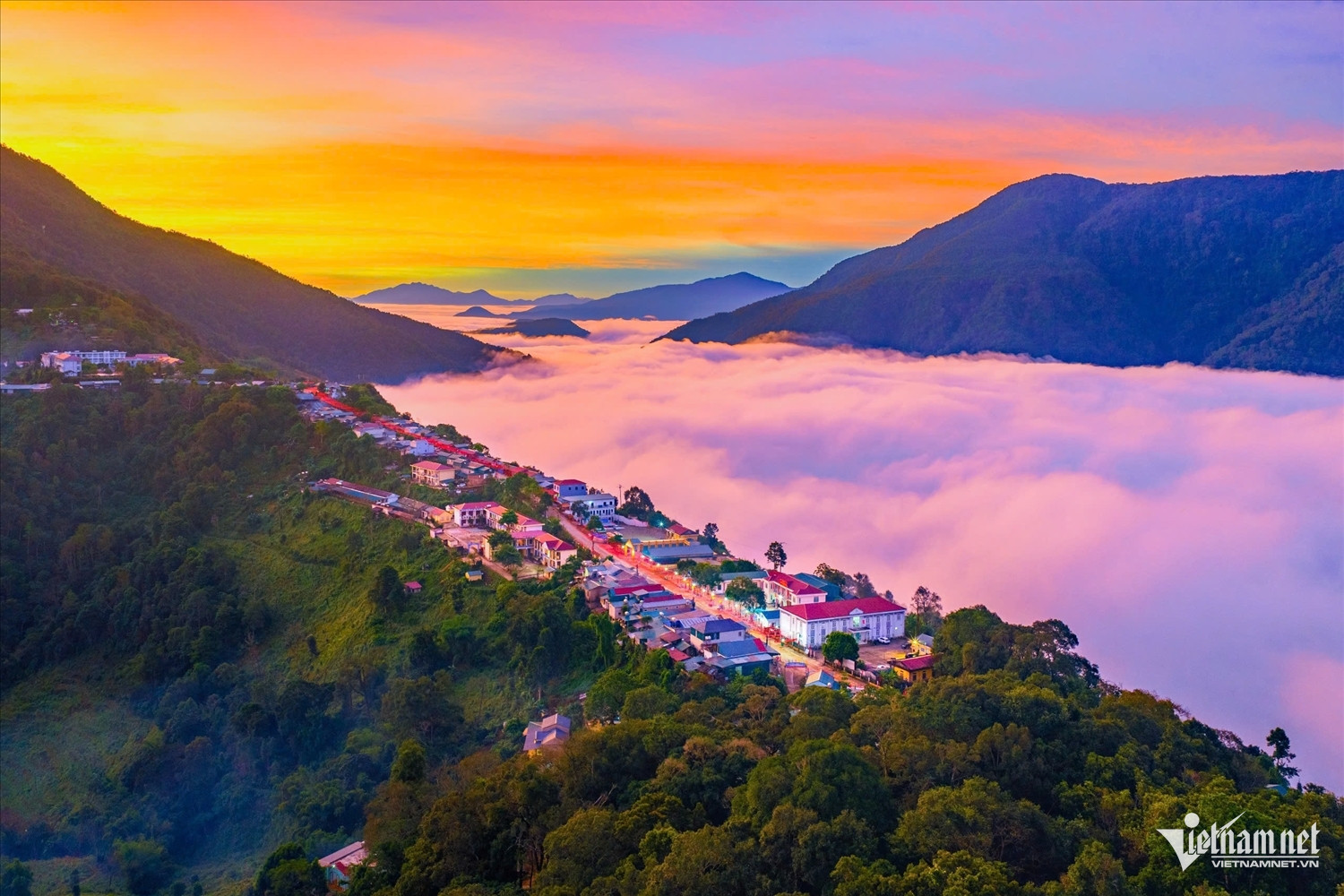
Few would have imagined that less than two decades ago, this area was still mired in poverty, with treacherous roads and livelihoods dependent solely on maize fields and rice paddies.
Today, from halfway up the mountain, one can clearly see rows of red tin-roofed houses, concrete roads winding around the village, and even two-story homes belonging to “cardamom millionaires.”
Dubbed the “kingdom of cardamom,” U Ma has up to 210 hectares of cardamom. Smaller households own 2–3 hectares, while larger ones have 5–6 hectares.
Every August, villagers head to the forest to dry cardamom and sell it to Chinese traders at prices ranging from VND180,000 to VND280,000 per kilogram of dried product. Laborers may spend weeks or months in the fields, but return with pockets full of money.
Tan Cu Luon, U Ma Village Party Secretary, said the village is mainly inhabited by Dao people. Today, there are no temporary houses left. All households have purchased modern amenities such as refrigerators, televisions, and motorbikes.
Household heads like Tan Cua Luon, Tan Ken, and Tan Kieu are all considered dong millionaires. Tan Ken’s two-story house is equipped like an urban home, with indoor bathrooms, tiled water tanks, and shower systems. His family alone owns two two-story houses, not counting those of his two sons.
Meanwhile, Pa Thang village, where 100 percent of households are Ha Nhi ethnic people, is also changing day by day. More than 10 years ago, the road to the village was tough, and the lives of the people were poor. Today, concrete roads run around the village, and the people grow medicinal plants, raise livestock, and engage in vibrant trade.
The “root of prosperity,” as locals put it, lies in the forest. As long as old-growth forests remain, cardamom remains, and livelihoods remain. Forest protection, reforestation, and sustainable cardamom cultivation are a shared awareness among residents of U Ma, Pa Thang, and Thu Lum.
Village ‘twinning’, deeper bonds
U Ma and Pa Thang have not grown prosperous from cardamom alone. The prosperity of border communities here also stems from long-standing friendly relations with residents across the Vietnam-China border.
Tan Pinh in U Ma said that every month he goes to the market in China 4-5 times to buy necessities: "The people over there help a lot; if I don't know the language, they translate for me. Going to the market is increasingly easy and safe."
Also thanks to twinning, the awareness of sovereignty, borders, and landmarks of residents on both sides has clearly improved.
Major Nguyen Minh Chuc, Political Officer of the Thu Lum Border Guard Station, said that the twinning model has helped "eliminate slash-and-burn practices near the border, as well as encroachment on cultivation or residence; landmarks are absolutely respected."
The new pace of life in the border area is also nurtured by border markets, where trade, culture, and cuisine blend into colorful market sessions. The Ya Khau Suoi Thang trading market (near landmark 29) has been operating since 2012.
In Phong Tho, markets like Dao San, Si Choang, and Si Lo Lau are not only trading venues but “cultural meeting points.” Amid the colorful dresses of Mong, Dao, and Ha Nhi people, the sounds of flutes and pipes echo through the mountains, and many couples have found their life partners at these very markets.
Ma Lu Thang border gate economic zone
Beyond the prosperity of individual villages, Lai Chau is pursuing a broader vision: developing the Ma Lu Thang Border Gate Economic Zone into a strategic trade hub for the Northwest region.
Under the master plan for the Ma Lu Thang Border Gate Economic Zone through 2045, the area covers more than 26,600 hectares, including Ma Li Pho, Huoi Luong, Muong So communes, and Phong Tho town (now Phong Tho commune). The plan divides the zone into five functional areas, ranging from border trade and border-gate urban areas to multi-sector industrial zones, ecological tourism zones, and eco-agricultural and forestry areas.
The goal is to develop Ma Lu Thang International Border Gate under a digital and smart border gate model; establish an international logistics center; expand modern residential areas; build industrial zones for processing agricultural, forestry, mineral, and rare earth products; and strengthen connectivity with Chinese and ASEAN markets.
Cao Thi Anh
.svg)
