 Vietnamnet.vn

 Podcast



Once considered a “dead canal,” Nhieu Loc – Thi Nghe canal has now become a green public space in the heart of Ho Chi Minh City.

Catholic communities along both sides of Nhieu Loc – Thi Nghe canal have contributed to preserving the urban landscape after restoration.
Along both banks, Catholic parishes have actively contributed to environmental preservation and maintaining the urban landscape.
Over the past half century, Ho Chi Minh City has undergone dramatic changes in infrastructure and urban appearance.
Within that transformation, the Nhieu Loc – Thi Nghe canal area stands out as one of the city’s most remarkable examples of renewal, evolving from a severely polluted waterway into a lively public and community space.
Along the canal, Catholic parishes have not only remained long-established residential communities but have also participated in efforts to preserve the environment and sustain the area’s appearance after restoration.
A canal woven into the city’s memory
Stretching nearly 10km, Nhieu Loc – Thi Nghe canal was once an important waterway for Saigon – Gia Dinh.
However, from the second half of the 20th century onward, rapid urbanization led to severe pollution, with makeshift housing crowding the banks and garbage accumulating throughout the area.
By the late 1980s and 1990s, many sections had fallen into a state described as “dead water,” with environmental conditions deteriorating heavily.
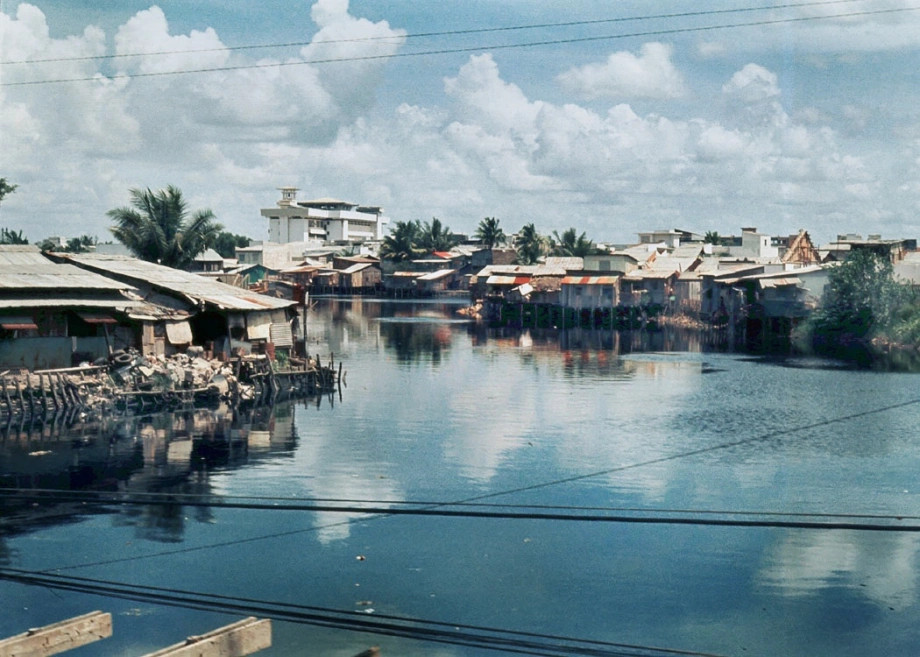
Nhieu Loc – Thi Nghe canal once suffered from severe pollution during the late 1980s and 1990s. Photo: Archive
In 1993, city authorities launched plans to renovate the canal and construct roads along both banks.
A decade later, the Nhieu Loc – Thi Nghe environmental sanitation project officially began with a total investment of nearly VND8.6 trillion ($331 million).
More than 7,000 households were relocated.
Millions of cubic meters of mud were dredged while interceptor sewers, embankments and the Hoang Sa – Truong Sa roads were constructed.
After more than a decade, water quality and the surrounding landscape improved dramatically.
The canal became cleaner, while parks and the Hoang Sa – Truong Sa boulevards gradually emerged as popular public spaces for residents.
Parish communities and environmental stewardship


Today, more than 10 Catholic parishes and residential Catholic communities line the canal, including Tan Hoa, Tan Chi Linh, An Phu, Bui Phat, Cong Ly, Xom Lach, Thi Nghe and Thanh Gia.
Following the canal’s restoration, parish communities have maintained numerous activities aimed at preserving the local environment.
According to Father Vinhson Nguyen Thanh Tin, head of the Environmental Pastoral Committee under the Archdiocese of Ho Chi Minh City, environmental protection efforts are implemented as a long-term program rather than a short-term campaign.


Alongside residents’ self-management efforts, these activities are carried out through cooperation between local authorities and the Church, and are regularly integrated into parish life along the canal.
At the same time, environmental ethics programs have been incorporated into catechism classes for different age groups, helping spread environmental awareness from families into the wider community, particularly in canal-side neighborhoods.
At Vinh Son Parish, representatives of the parish council said reminders about not littering, sorting waste at source and reducing single-use plastics are regularly repeated during Mass and community gatherings, gradually shaping everyday habits among parishioners.


Nguyen Van Phuoc, an 80-year-old Catholic resident living near the canal in Phu Nhuan ward, said he had witnessed the canal’s transformation through many stages.
“In the past, the canal was black and heavily polluted with garbage everywhere. Now it is much cleaner, with green spaces where people can walk and gather. Everyone wants to help preserve the landscape and the living environment,” he said.
Nguyen Van Thoi, 72, caretaker of Cong Ly Church in Xuan Hoa ward, said the embankment area in front of the church is regularly decorated and cleaned not only during holidays and festivals but throughout the year.
“Parishioners voluntarily collect garbage and help maintain cleanliness, so the area is always tidy,” he said.
Several other parishes also continue regular cleanup activities, waste reduction campaigns and efforts to maintain public spaces along the canal.
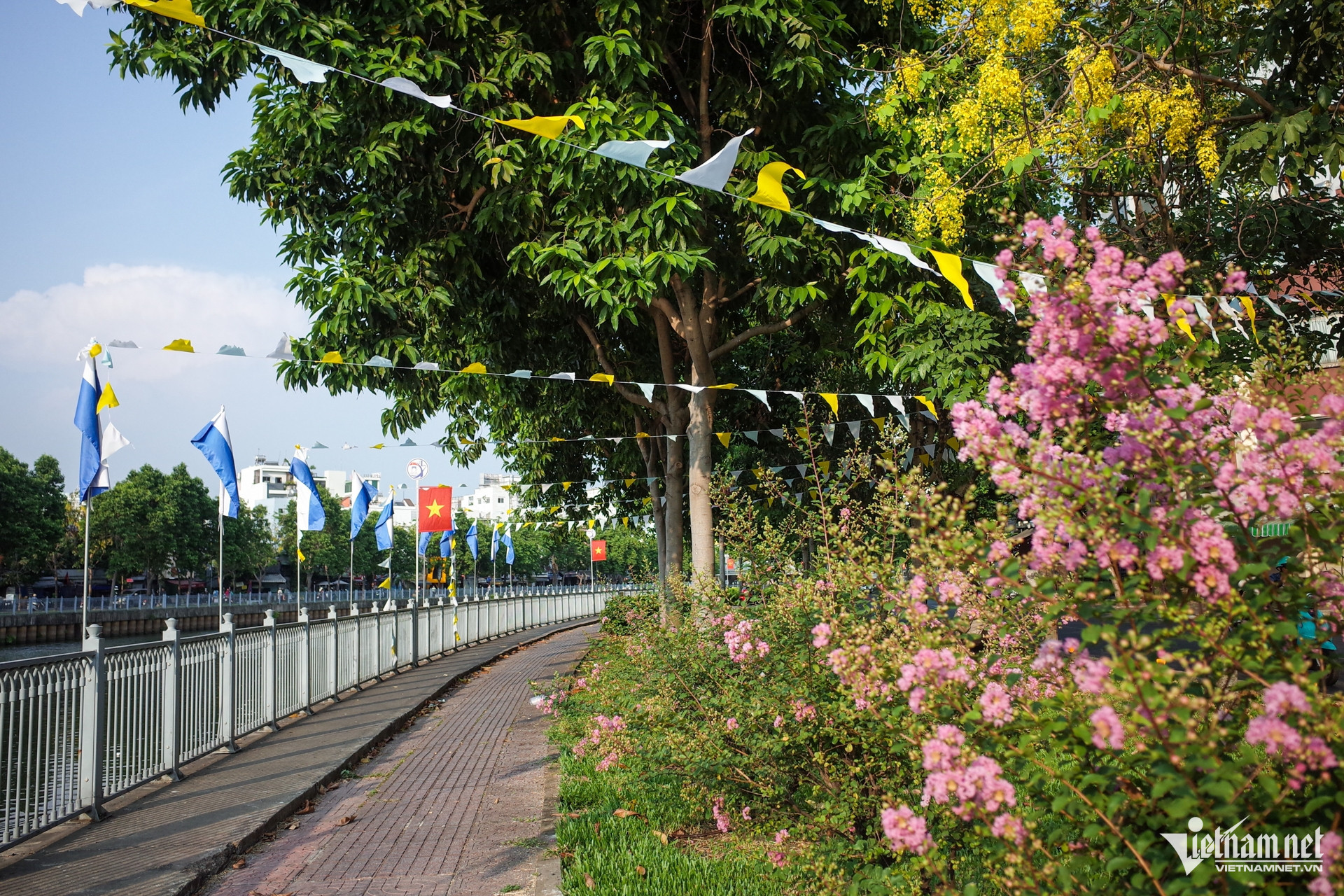

Today, Nhieu Loc – Thi Nghe canal and the Hoang Sa – Truong Sa roads have become familiar public gathering spaces where residents walk, exercise and spend leisure time.
Morning exercise scenes on pedestrian bridges crossing the canal have become part of daily life in the city.
The transformation of Nhieu Loc – Thi Nghe canal is widely seen as the result of long-term infrastructure investment combined with active participation from local communities.
Among them, the Catholic parishes along the canal continue playing an important role in preserving the living environment after restoration.


Nguyen Hue - Tuan Hung
.svg)
