 Vietnamnet.vn

 Podcast


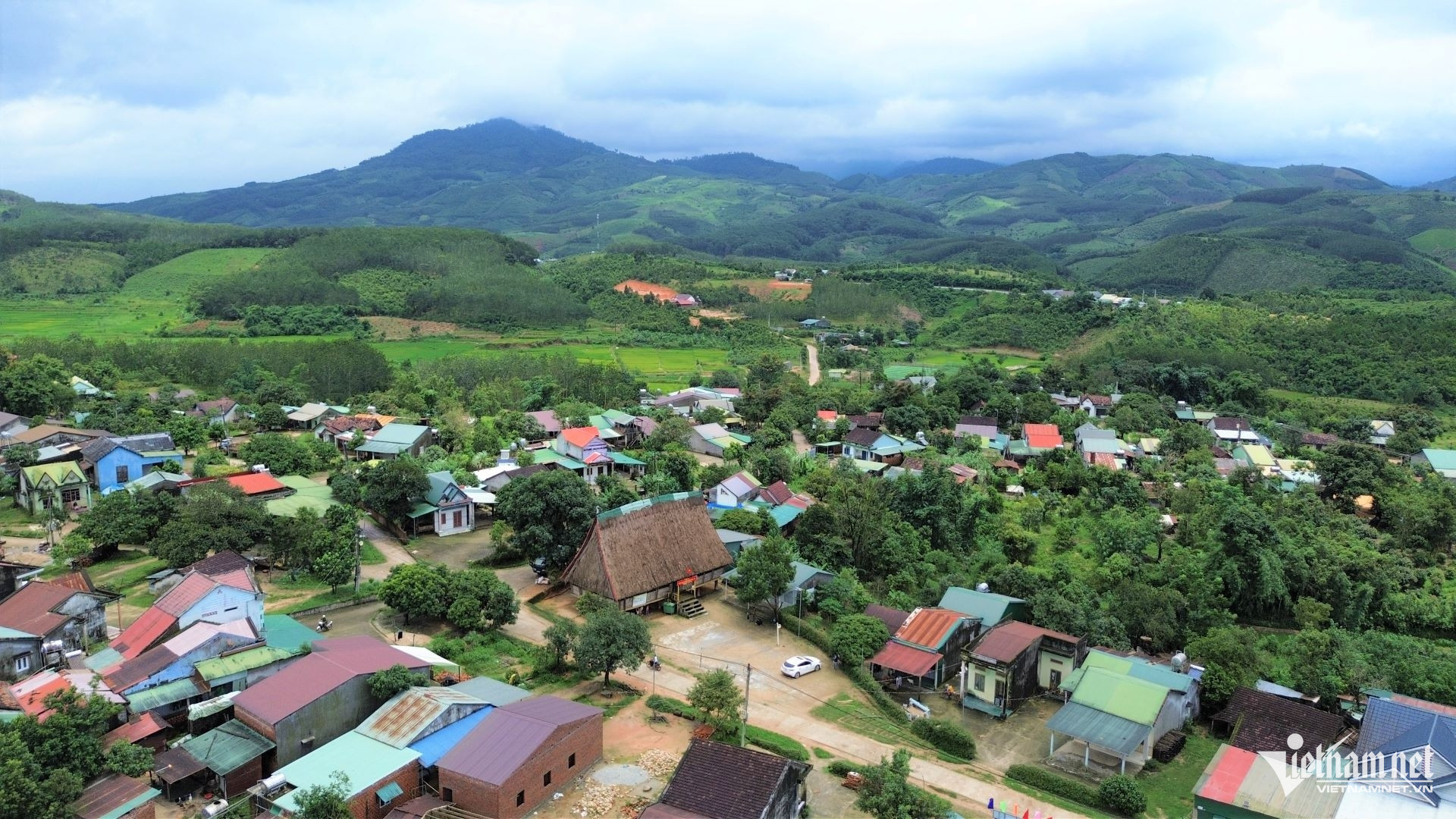
Krong Duan Village in the economically disadvantaged Dak Pxi Commune, in Quang Ngai Province, once received investment for a gravity-fed water system serving over 260 Xo Dang ethnic minority households.
Following years of operation, the facility has deteriorated. Shifting stream flows and dwindling water intake fail to satisfy household operational needs, particularly during dry months.
Y Chinh, a resident of Krong Duan Village, noted that her family experiences severe water shortages during the dry season. Water for bathing and washing must be retrieved from an irrigation canal running alongside rice paddies, while drinking and cooking water relies on neighborly donations from households with private wells.
"I must request water 4-5 times daily to satisfy basic needs. My family attempted to dig wells in multiple locations but repeatedly struck bedrock. Well drilling incurs high costs beyond our financial means," Y Chinh said.
Beyond shortages, residents also express concern about water quality. Headwater areas host many agricultural farming plots using crop protection chemicals, creating risks of chemical runoff entering residential water flows.
A Xim, Head of Krong Duan Village, said the village lacks a centralized clean water system, leaving over 50 households facing routine dry-season water shortages. The legacy facility draws directly from mountain streams, posing safety and health concerns.
Deteriorated infrastructure, outdated technology
Beyond gravity-fed systems, Quang Ngai retains multiple centralized water supply networks constructed decades ago that use outdated treatment technology yet remain in operation.
A notable example involves the water supply system in Dak Rve Commune, constructed in 1997. The facility draws headwater from mountain streams into filtration basins for treatment before supplying roughly 4,000 fee-paying households.
After nearly 30 years of operation, the infrastructure has severely degraded, yielding turbid water following heavy rainfall.
Luu Thi Thuy Phi, a resident of Village 1 in Dak Rve Commune, said her household purchased preliminary filtration equipment out of concern that water quality might impact health.
"Residents hope authorities build a modern clean water system to ensure a safer supply," Phi said.
Operating units have repeatedly intensified sedimentation filtration and storage tank cleaning; however, turbidity recurs following heavy rainstorms.
Le Duy Manh, Deputy Director in charge of the Dak Rve Commune Public Utility Center, explained that headwater collection during heavy rain carrying soil and gravel increases water turbidity, while aging treatment infrastructure can no longer process high sediment loads effectively.
The Dak Rve Commune People's Committee submitted recommendations requesting Quang Ngai Province to invest in a replacement domestic water supply system.
Securing sustainable water sources
The Central Highlands has substantial water resource potential, yet routinely faces droughts, pollution, and declining groundwater tables.
A primary cause stems from highly uneven seasonal rainfall distribution. Roughly 80 to 90 percent of annual rainfall and streamflow concentrates within the six-month rainy season, leaving merely 10 to 15 percent across the six-month dry season.
Consequently, there is surplus water in rainy seasons and severe scarcity in dry seasons across numerous localities.
This imbalance explains why numerous gravity-fed water systems built for ethnic minority areas operate effectively during rainy months but face water depletion when dry spells prolong.
Phan Van Cuong, Chair of the Dak Pxi Commune People's Committee, noted that the stream water system serving over 260 households in Krong Duan Village was effective for years, but the facility has degraded as source yields decline.
Beyond uneven seasonal distribution, factors such as climate change, headwater deforestation, agricultural groundwater extraction, and environmental pollution exacerbate pressures on domestic water supply security.
Phan Chi Thien, Chair of the Ya Ly Commune People's Committee, said future water supply investments for ethnic minority communities require larger-scale, systematic planning.
"The paramount priority involves surveying and identifying sustainable water sources. Establishing a stable water source ensures post-investment facilities function effectively," Thien emphasized.
Addressing water supply challenges for ethnic minority communities in the Central Highlands requires looking beyond building additional infrastructure.
Prior to investment, authorities must conduct thorough assessments of water reserves, quality, and dry-season yield sustainability, and select appropriate treatment technologies and operational models. Resolving the foundational water source equation remains essential to ensuring long-term facility operation and avoiding repetitive post-investment failures.
Ngoc Chi

