 Vietnamnet.vn

 Podcast



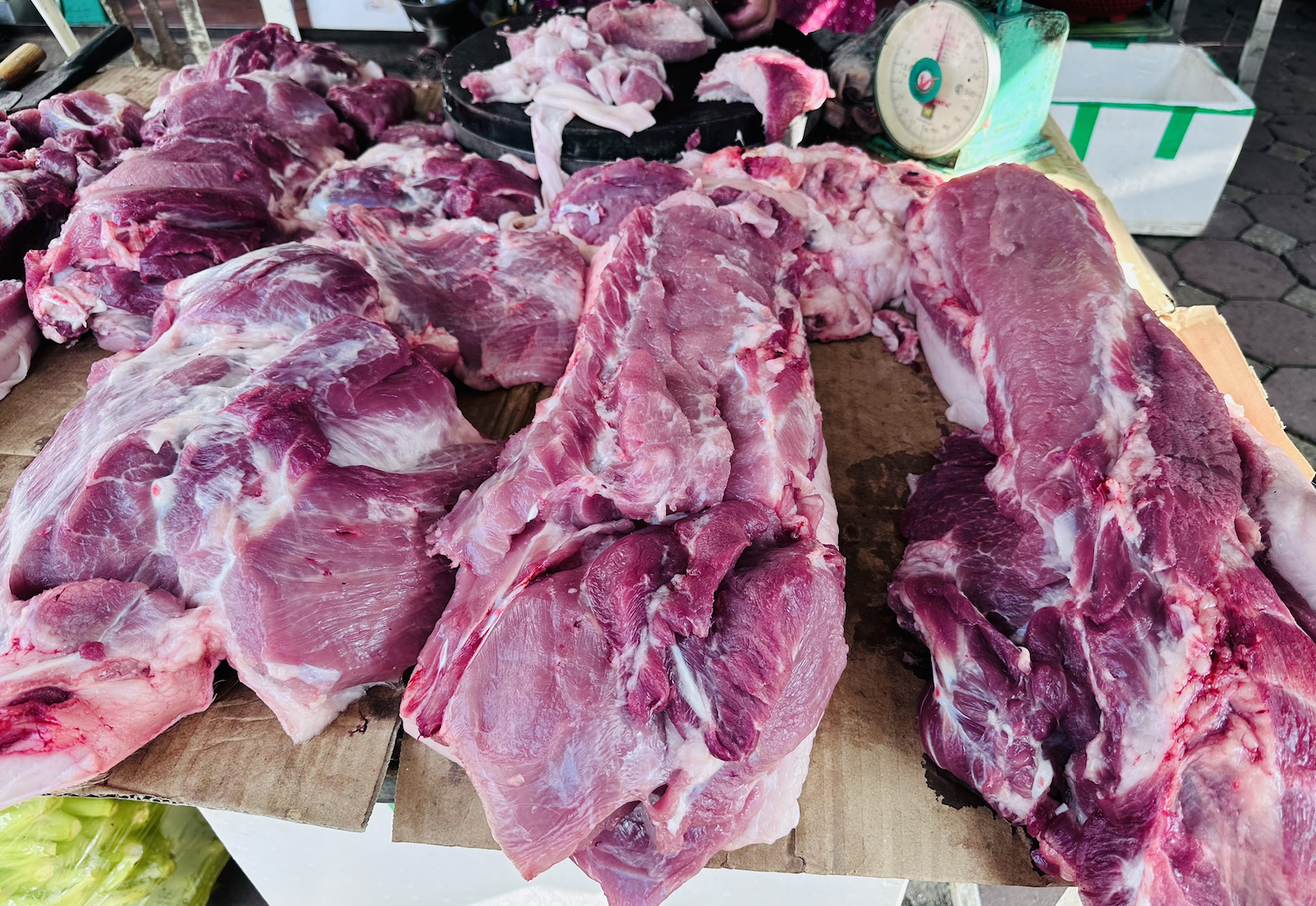
Citing data from the Customs Department, the Ministry of Industry and Trade's Agency of Foreign Trade said Vietnam imported 658,700 tonnes of meat and meat products worth $1.91 billion during the first eight months of 2026.
Compared with the same period last year, imports rose 5.6% by volume and surged 26.3% in value.
India remained Vietnam's largest supplier of meat and meat products, accounting for 20.39% of the country's total import volume. Vietnam imported 134,200 tonnes from India worth $580.8 million during the eight-month period, up 17% in volume and 43.8% in value from a year earlier.
By product category, meat and edible offal from poultry under heading 01.05, whether fresh, chilled or frozen, accounted for 36.33% of import volume and 12.75% of value during the first eight months of 2026.
Fresh and frozen buffalo meat ranked next, accounting for 18.9% of volume and 28.88% of value.
Edible offal from pigs, buffaloes and cattle represented 15.22% of volume and 7.06% of value, while beef accounted for 5.81% of volume and 13.64% of value.
Fresh, chilled or frozen pork alone represented 18.85% of import volume and 11.08% of value. Vietnam spent $212.64 million importing 124,100 tonnes of pork during the eight-month period.
Compared with the same period last year, pork imports increased 18.8% in volume but fell 23.8% in value, while the average import price dropped 35.9%.
The average price of imported pork stood at just $1,712 per tonne, equivalent to about VND45,000 ($1.71) per kilogram, down 35.9% from the same period in 2025.
Imported poultry was also inexpensive, averaging only about VND27,800 ($1.06) per kilogram.
The combination of low prices and large import volumes is putting pressure on Vietnam's livestock industry, particularly as domestic supply is rising strongly while consumer demand remains weak.
The Ministry of Agriculture and Environment's latest report showed that Vietnam's total pig herd at the end of September 2026 was estimated to have increased 5.4% year on year.
Farmers, however, are facing difficulties as animal feed prices were raised several times during the first nine months of the year, increasing input costs and squeezing the profitability of livestock production.
Farm-gate hog prices have notably fallen to their lowest levels of the year, while prices are forecast to continue edging lower or remain flat in the short term.
As of Oct. 5, live hog prices in northern and southern Vietnam ranged from VND54,000-56,000 ($2.05-2.13) per kilogram, while prices in the central region stood at VND55,000-56,000 ($2.09-2.13) per kilogram.
Similarly, the country's poultry population at the end of September 2026 was estimated to have increased 3.1% from a year earlier.
Live poultry meat output was estimated at 2.02 million tonnes, up 5.3% year on year, while poultry egg production reached nearly 15.71 billion eggs, an increase of 1.9%.
Purchase prices for white-feathered broiler chickens in northern Vietnam fell by VND5,000 per kilogram to VND32,000 ($1.22).
In central and southern Vietnam, meanwhile, farm-gate prices for industrial chickens stood at VND27,000 ($1.03) per kilogram, below production costs.
Chicken egg prices across Vietnam's three regions were also only VND1,730-1,880 ($0.07) per egg.
At current selling prices, pig and industrial chicken farmers are facing significant pressure. Multiple increases in animal feed prices during the first nine months of the year have pushed industrial chicken production costs to around VND30,000-32,000 ($1.14-1.22) per kilogram, while pig production costs are close to VND60,000 ($2.28) per kilogram.
Tam An
.svg)
