 Vietnamnet.vn

 Podcast



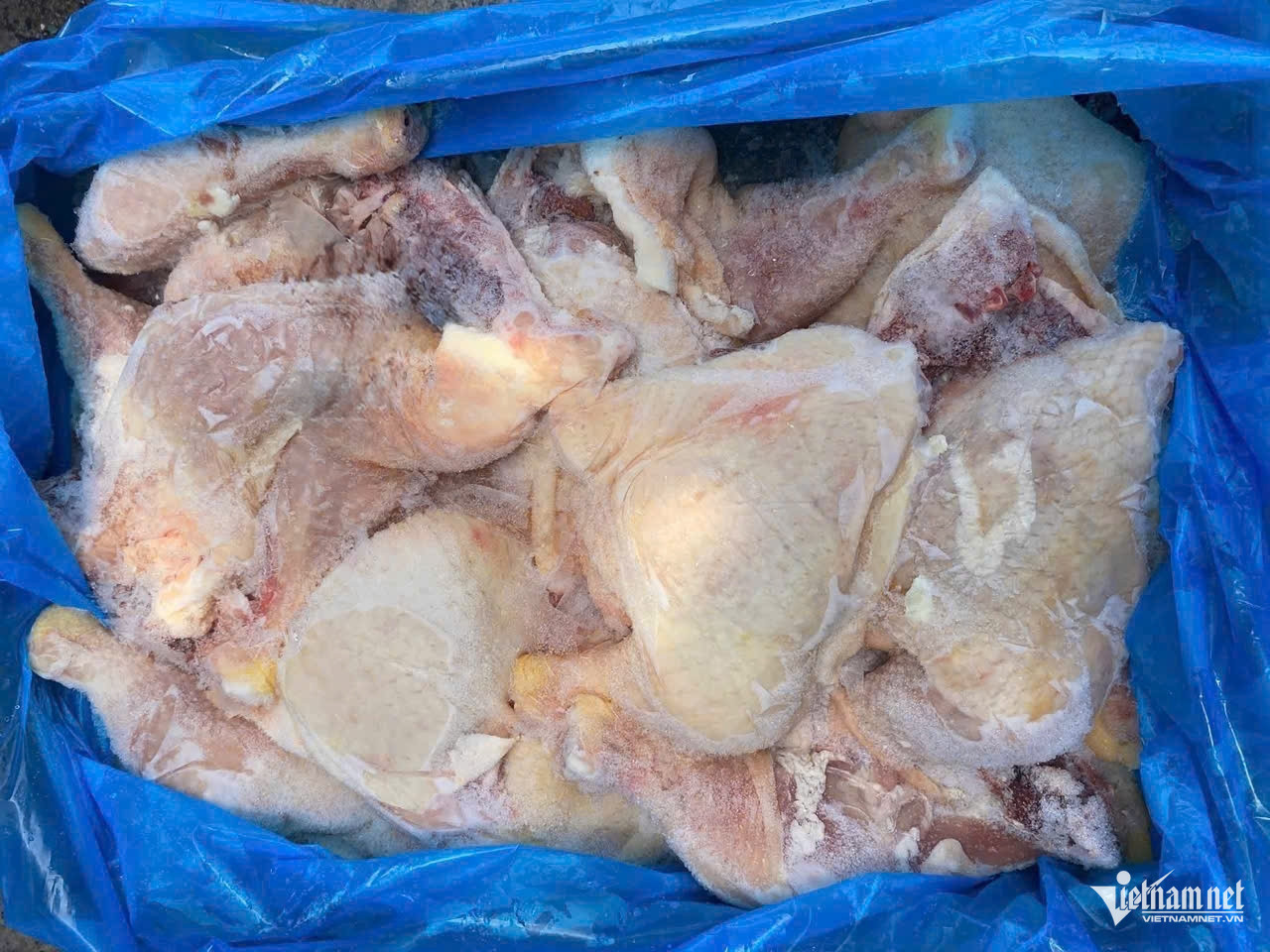
Vietnam's meat imports continued to surge in the first half of 2026, even as growing domestic production and sluggish consumer demand drove down prices for locally raised livestock and poultry.
Preliminary statistics from the Customs Department show that Vietnam imported 271,100 tonnes of meat and meat products worth an estimated $810.1 million in the second quarter of 2026, up 21.5% in volume and 24.1% in value from the previous quarter.
Compared with the second quarter of 2025, imports of this food category increased 14.4% in volume and as much as 46.9% in value.
For the first six months of 2026, Vietnam imported 494,300 tonnes of meat and meat products worth about $1.46 billion, representing year-on-year increases of 9.6% in volume and 36.4% in value.
The country mainly imported poultry meat and edible offal; edible offal from pigs, buffaloes and cattle; fresh, chilled or frozen buffalo meat; fresh, chilled or frozen pork; and fresh, chilled or frozen beef.
Notably, despite higher sea freight costs in the first half of the year due to geopolitical conflicts around the world, the average price of imported meat remained relatively low at just $2.95 per kilogram, considerably cheaper than many domestically produced meat products.
Chicken accounted for a significant share of the imports.
A report by the Vietnam Poultry Association on poultry production and trade in the first half of the year showed that Vietnamese businesses spent an estimated $190-250 million importing around 185,000-195,000 tonnes of various chicken products during the first six months of 2026.
The import value of meat and edible slaughter by-products increased sharply, rising between 26% and 37.6% from the same period last year as tariff reductions under free trade agreements continued to take effect.
According to the association, Vietnam's chicken imports consist primarily of frozen cuts and edible offal.
Frozen chicken legs made up the largest proportion, totaling around 130,000-140,000 tonnes, or nearly 71.5% of all imported chicken. Their low import prices put them in direct competition with domestically raised white-feather broiler chickens, particularly in the institutional catering market.
Frozen chicken wings totaled around 22,000-25,000 tonnes, accounting for about 12% of imports and primarily supplying fast-food chains and restaurants.
Chicken feet and other edible offal amounted to approximately 16,000-18,000 tonnes, or around 8.7%, while whole frozen chickens represented the smallest share at about 3,500-5,000 tonnes, equivalent to roughly 2%.
In terms of supply, the report identified the US, the European Union and Brazil as Vietnam's three main sources of imported chicken.
Chicken imports from the US reached approximately 115,000-120,000 tonnes in the first half of the year, accounting for 61.8% of the market. Low-priced chicken leg quarters were the main product imported from the US.
Vietnam imported another 28,000-30,000 tonnes from the EU during the period. Notably, Vietnam is the EU's second-largest poultry importer in Southeast Asia.
A further 24,000-26,000 tonnes of chicken came from Brazil, primarily wings and leg quarters.
Cheap imports meet abundant domestic supply
While Vietnamese businesses are spending hundreds of millions of dollars on imported meat and meat products, prices in the domestic livestock and poultry market have been far less encouraging.
With both imported supplies and domestic meat production increasing while consumer demand remains weak, prices of several locally produced livestock products have fallen to low levels.
A report by the Ministry of Agriculture and Environment showed that live hog purchase prices declined across Vietnam in July.
In northern Vietnam, prices fell by about $0.13 per kilogram from June to around $2.36-2.44 per kilogram. In the central and Central Highlands regions, prices dropped by roughly $0.11 per kilogram to $2.28-2.36, while southern prices stood at about $2.28-2.36 per kilogram after falling around $0.04.
The latest figures show live hog prices nationwide have fallen further to approximately $2.21-2.36 per kilogram. Businesses say these are the lowest levels recorded since the beginning of the year.
“Live hog prices have fallen due to pressure from abundant supply while purchasing power has yet to improve,” the Ministry of Agriculture and Environment said in its report.
The poultry market faces similar pressure.
According to the Vietnam Poultry Association, rapid growth in the country's poultry flock from late 2025 into early 2026 has resulted in widespread oversupply.
Short-cycle white-feather broiler chickens have been hit particularly hard. In southern Vietnam, prices at one point plunged to about $0.84-0.91 per kilogram, below production costs.
Prices for longer-cycle colored-feather chickens have remained slightly higher than at the beginning of the year but are still below the levels recorded during the same period last year.
Chicken prices continued to fluctuate in July. Colored-feather chickens were priced at around $1.79-1.83 per kilogram, while industrial broiler chickens traded at approximately $1.22-1.33 per kilogram.
The director of a livestock company said pork and chicken supplies remain abundant while consumer demand is still weak. Combined with pressure from inexpensive imported products, this has pushed domestic prices even lower.
With animal feed prices remaining high while pork and chicken prices stay low, farmers face shrinking profit margins and could even suffer losses if productivity falls short of expectations, the executive stressed.
Chicken exports rise as producers move into processed products
Despite pressure in the domestic market, Vietnam's poultry exports recorded strong growth in the first half of 2026.
Total poultry meat exports during the six-month period were estimated at 4,800-5,200 tonnes, a sharp increase from the same period in 2025. Chicken exports alone generated an estimated $45-48 million.
Cooked and processed chicken products, including stewed chicken, fried chicken and frozen grilled chicken breast, accounted for more than 85% of export value.
The dominance of processed products reflects an industry shift away from raw exports toward higher-value processing linked to closed-loop 3F production chains.
Japan remained Vietnam's largest poultry export market, accounting for more than 50% of the total, followed by Hong Kong (China), Cambodia and countries in the Middle East.
In April 2026, Vietnam and South Korea officially announced the opening of the South Korean market to Vietnamese processed chicken products, a move expected to create additional room for the industry's exports.
Thu Ha - Tam An
.svg)
