 Vietnamnet.vn

 Podcast



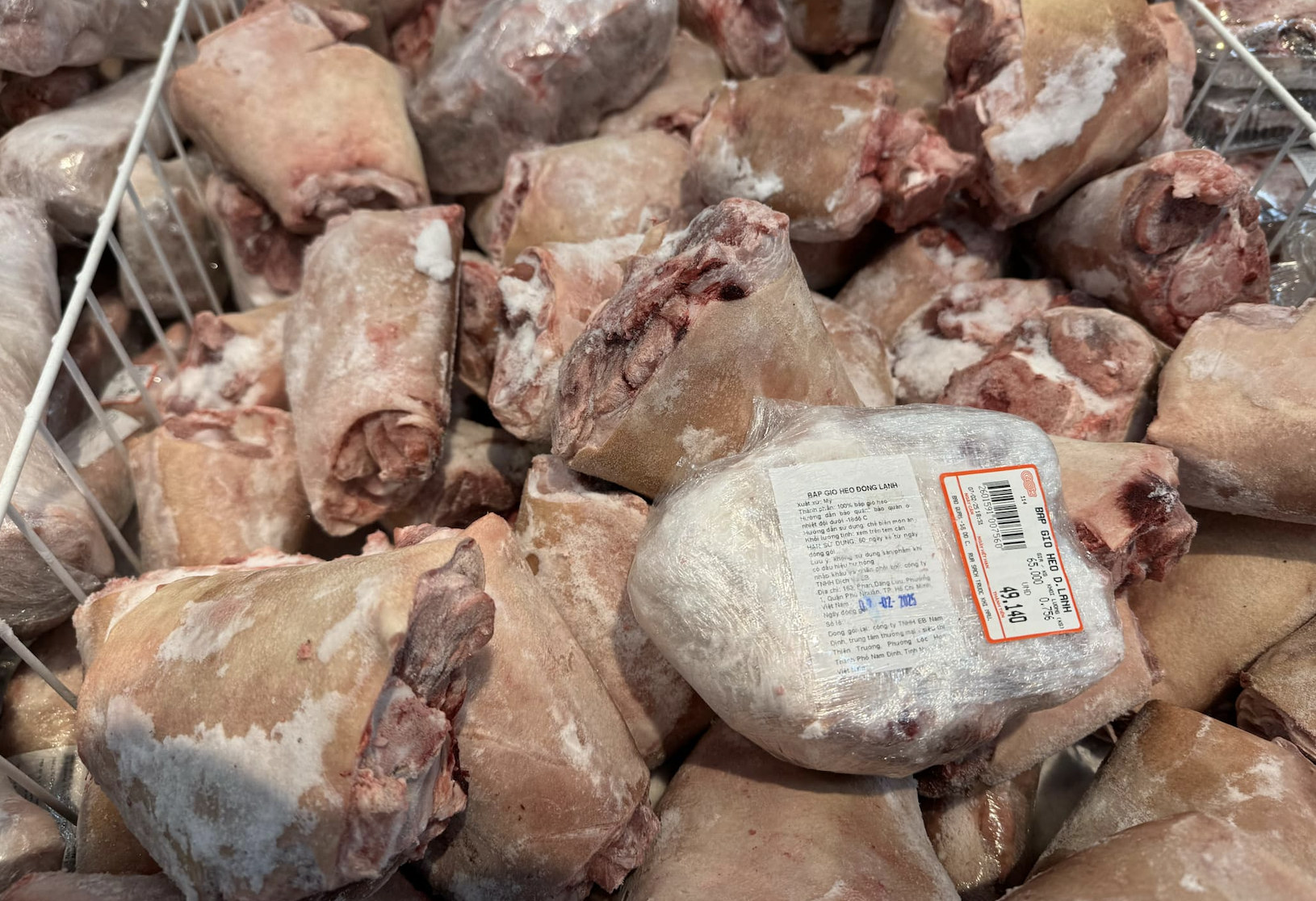
According to the Agency of Foreign Trade under the Ministry of Industry and Trade, Vietnam spent $185.54 million importing 112,090 tonnes of fresh, chilled or frozen pork in the first seven months of 2026. Compared with the same period last year, imports jumped 27.1% in volume but fell 20.9% in value.
Vietnam imported pork from 19 markets. Brazil was the largest supplier, accounting for 44.5% of total imports, followed by Russia with 21.41%, Spain with 20.54%, Germany with 4.58%, and other markets with around 8.97%.
Notably, the average import price of fresh, chilled or frozen pork during the seven-month period was just $1,638 per tonne, or about $1.63 per kg, down sharply by 38.4% from the same period in 2025.
That price is strikingly low compared with live hog prices in Vietnam.
A report by the Ministry of Agriculture and Environment showed that domestic live hog prices declined in August 2026. Compared with July, prices in northern Vietnam fell by about $0.17 per kg to $2.24–2.28 per kg. Prices in the central and Central Highlands regions dropped by about $0.17 per kg to $2.17–2.21, while those in southern Vietnam fell by about $0.13 per kg to $2.17–2.21.
Speaking to VietNamNet, Nguyen Kim Doan, vice chairman of the Dong Nai Livestock Association, said the seventh lunar month is typically a low season for Vietnam’s pork market as more people switch to vegetarian diets.
At the same time, the growing supply of cheap imported meat is putting additional pressure on domestic pork and contributing to the decline in live hog prices.
Doan noted that live hog prices in Brazil, Vietnam’s largest source of imported pork, are only about half those in Vietnam. As a result, the domestic livestock industry is facing intense competition from low-cost imported pork.
“In fact, live hog prices at farms have fallen to around $1.98–2.09 per kg, down roughly $0.38 per kg in August,” Doan said.
According to the Dong Nai Livestock Association vice chairman, authorities have recently inspected and discovered several farms using banned lean-meat agents in pig farming. Fearing detection, some farms specialising in fattening pigs rushed to sell their herds, sharply increasing market supply.
He explained that once the banned substances are discontinued, pigs may begin accumulating fat again, prompting farmers to sell them earlier to minimise risks.
With market demand remaining weak, the increase in supply has continued to put downward pressure on live hog prices, Doan stressed.
The Ministry of Agriculture and Environment forecasts that live hog prices will edge up within a narrow range in the short term as summer ends. Demand from institutional kitchens and traditional markets is expected to recover, providing some support for prices.
Tam An
.svg)
