 Vietnamnet.vn

 Podcast



Competing on volume and price is no longer enough
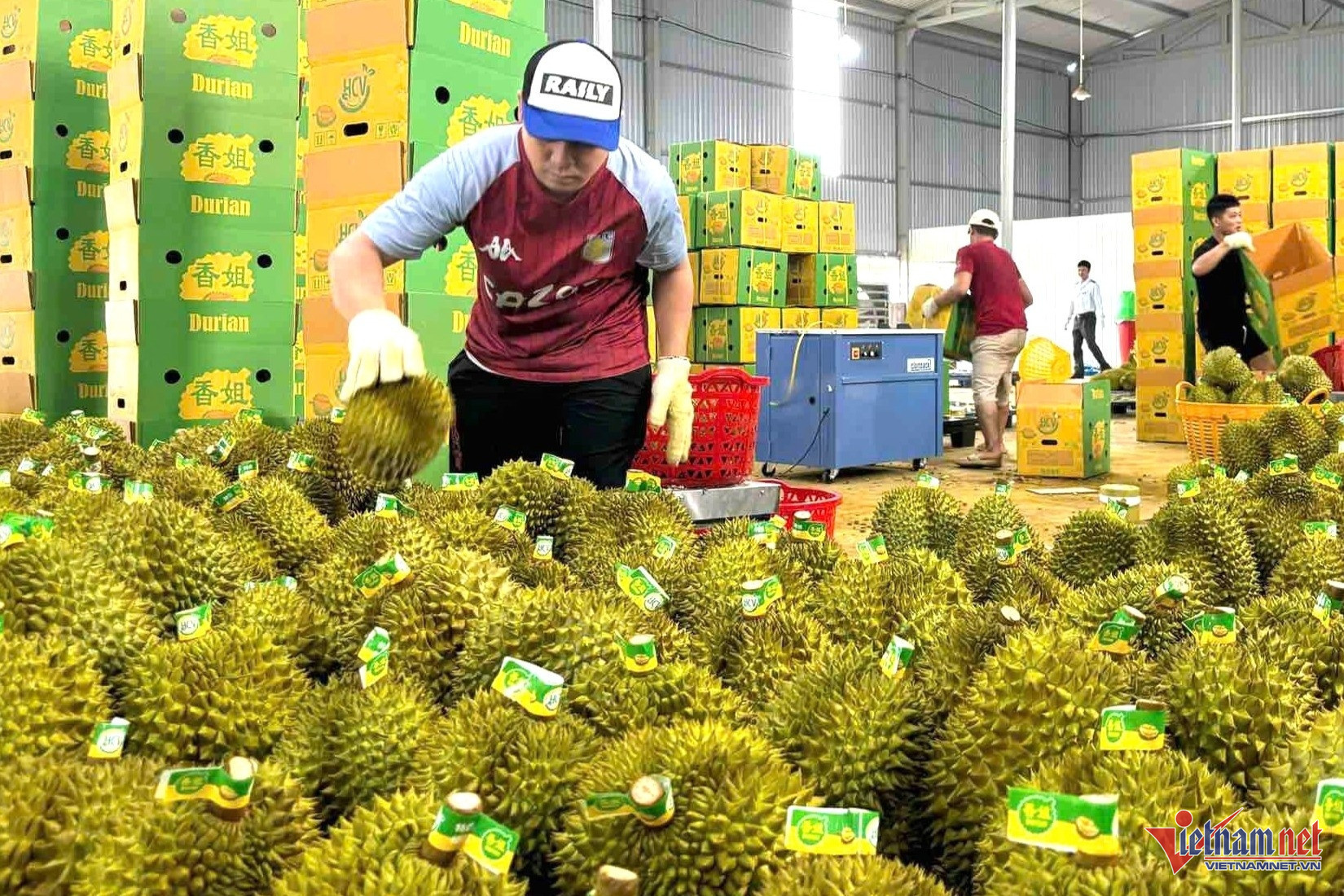
Speaking at the first Vietnam-China Agricultural Trade Connectivity Forum on June 24, Nguyen Quoc Manh, Deputy Director of the Department of Crop Production and Plant Protection under the Ministry of Agriculture and Environment, said durian has been Vietnam's fastest-growing fruit export.
Between 2021 and 2025, Vietnam exported more than 3 million tonnes of fresh durian and nearly 190,000 tonnes of frozen durian. More than 95% of those exports were shipped to China. During the same period, Vietnam exported more than 3.2 million tonnes of jackfruit, with 99% destined for the Chinese market.
These figures highlight the enormous potential for Vietnam's fruit industry in the market of 1.4 billion consumers.
However, Manh noted that importing countries are imposing increasingly stringent requirements. China, in particular, has tightened controls over growing area codes, packing facilities and plant quarantine standards.
According to Vu Ba Phu, Director General of the Vietnam Trade Promotion Agency under the Ministry of Industry and Trade, Chinese demand for tropical fruit continues to grow strongly. New export protocols covering chili peppers, passion fruit, rice bran, edible bird's nests and jackfruit, along with newly opened access for pomelos and lemons, have created fresh opportunities for Vietnamese agricultural products.
At the same time, however, regional competitors are strengthening their presence in the Chinese market. The Philippines has established a dominant position in pineapple exports, while Vietnamese products face intense competition from Thailand, Laos and other ASEAN countries across multiple categories.
Phu said the success of Vietnamese durian demonstrates the country's considerable potential in China, but that success cannot automatically be replicated across other products. Continued reliance on raw commodity exports and price competition will steadily reduce opportunities for future growth.
Nguyen Thanh Binh, Chairman of the Vietnam Fruit and Vegetables Association, said China's expanding middle class is increasingly prioritizing premium products, food safety and clear product origins, making quality rather than price or volume the key competitive factor.
Trust in quality is the foundation
According to Binh, companies seeking to expand market share must simultaneously meet requirements for growing areas, packing facilities, plant quarantine, product traceability and quality standards.
Products including durian, dragon fruit, bananas, jackfruit, pomelos and coconuts have already established strong positions in the Chinese market. However, future growth will depend not on expanding production indiscriminately but on improving quality and increasing value. This will require the industry to move from fragmented production toward integrated supply chains and from meeting short-term demand to complying with long-term market standards.
Binh emphasized that businesses must shift from competing on production volume and geographical proximity to competing on quality, food safety and transparency. Trade should also transition from informal cross-border exports to official export channels to achieve more sustainable growth.
Nguyen Dinh Tung, Chairman and Chief Executive Officer of Vina T&T Group, proposed creating a "green lane" mechanism for businesses, growing areas and packing facilities with strong compliance records that have successfully adopted green production models and traceability systems. Reducing physical inspections at border checkpoints would shorten customs clearance times and help preserve product quality until goods reach consumers.
He also proposed that authorities from both countries develop a shared digital database capable of providing real-time updates on growing area codes. Such a system would improve transparency, make verification easier for businesses and help prevent fraud involving counterfeit production codes.
Luong Duc Vinh, representing the Southwest regional office of China Certification and Inspection Group (CCIC), said harmonizing inspection standards, strengthening traceability and expanding digital technologies would be key to improving agricultural trade between Vietnam and China.
According to Vinh, the main obstacles facing agricultural exports are not market demand but differences in inspection standards, quality assessment methods and regulatory requirements.
One initiative currently being implemented by CCIC is an AI-powered traceability system for Vietnamese durian exports to China. The platform digitizes the entire supply chain, from cultivation and packing to transportation and customs clearance, while connecting data directly with customs management systems.
As a result, many durian shipments are now processed within 24 hours, with some cleared in as little as three hours. CCIC said the model will be expanded beyond durian to cover additional agricultural and seafood products.
Tam An
.svg)
