 Vietnamnet.vn

 Podcast



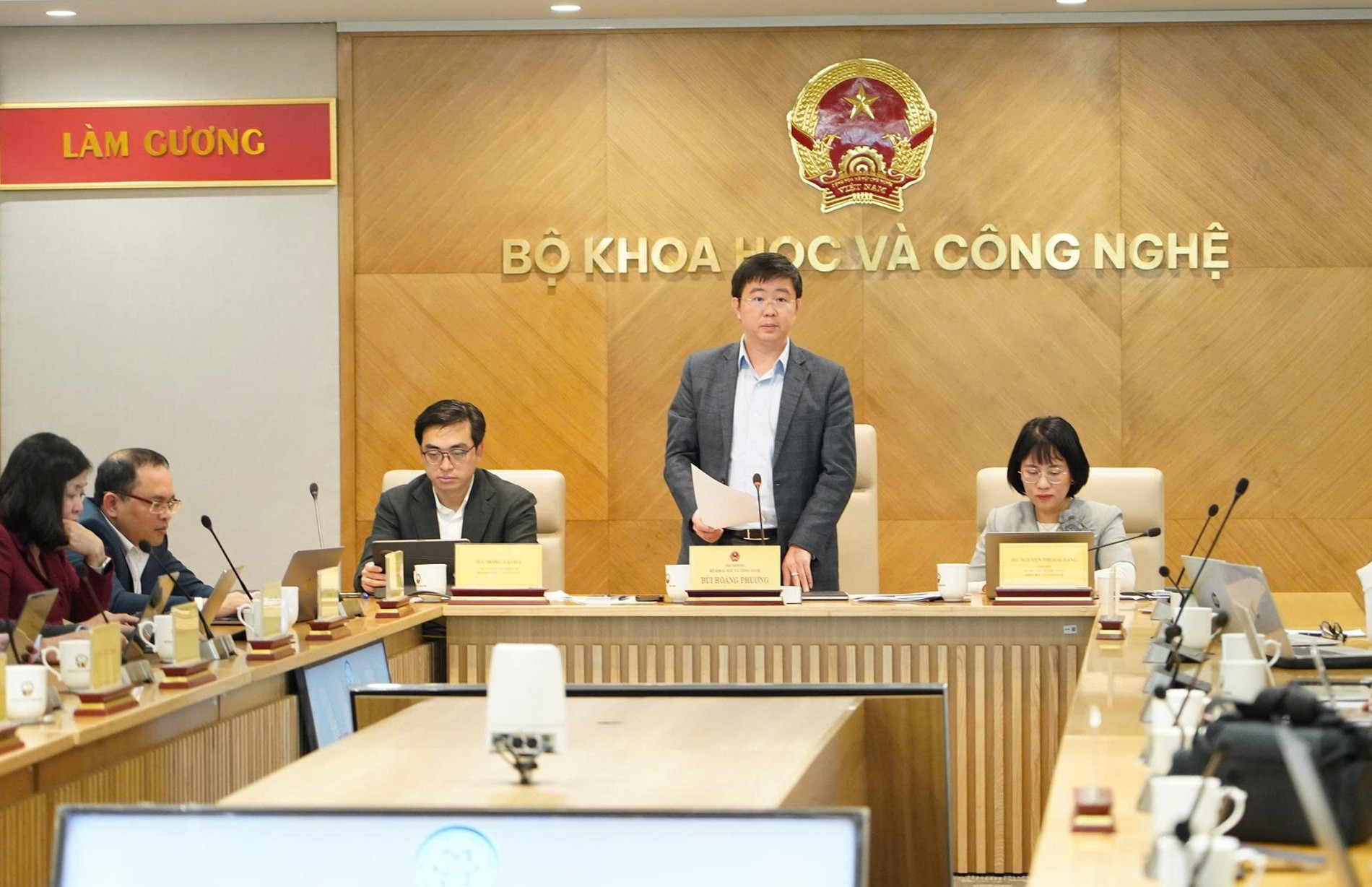
At the regular press conference of the Ministry of Science and Technology (MST) on January 29, Deputy Minister Bui Hoang Phuong emphasized two bright spots of the information technology industry in early 2026. First is Viettel Group inaugurating a high-tech semiconductor chip manufacturing plant on January 16.
Pointing out that Vietnam has many enterprises operating in the field of semiconductor chip design and has many foreign chip packaging and testing plants—but "not yet a semiconductor chip manufacturing plant", the Deputy Minister noted that "this is a very large event in the field of the information technology industry."
In the global semiconductor value chain, the chip fabrication stage is an important step of the industry due to technological complexity and a large level of investment. Recently, Vietnam has participated in five out of six stages including product definition, system design, detailed design, packaging - testing, and integration - validation. However, the fabrication stage is the most key step to turn drawings on paper into real chips that remain missing.
Accordingly, the commencement of the plant at Hoa Lac on an area of 27 hectares is a step to complete and close this entire production process within the country. A semiconductor chip fabrication plant is not only significant economically but also carries the weight of developing national cyberspace.
Lieutenant General Le Minh Thai, Director of the Military Technical Academy, said: “Chip technology is not something others will transfer to us. We have to conduct our own research and production. Therefore, breaking ground on the first semiconductor chip fabrication plant is a very important step and a foundation for us to be capable of mastering the production of specialized chips in a proactive, modern, and dual-use manner.”
In addition, self-reliance in chip supply will help Vietnam remain resilient amid unpredictable fluctuations in the global supply chain. Nguyen Dong Giang, PhD, a semiconductor technology R&D expert at HSIC Lab, UIUC, recalled a costly lesson: “When the global chip supply market declined, many technology companies took nearly two years to procure products. The launch of the plant will help Vietnam become more self-reliant in supply.”
Viettel’s project is expected to become a “magnet” attracting Vietnamese intellectual talent from around the world to return home.
Alongside Viettel, another major player, FPT Group, is also accelerating the investment in infrastructure. The company has just announced the establishment of a semiconductor chip packaging and testing plant and committed that it will begin production within the next three months.
“The scale may still be small and output limited, but this is a very important first step. When Vietnam has all the elements in place: design by Vietnamese companies, manufacturing by Vietnamese plants, and packaging and testing by Vietnamese plants, we can gradually lay the groundwork to master semiconductor technology,” Phuong said.
Raising the age limit for used semiconductor equipment imports
To support infrastructure for enterprises as well as universities and research institutes, MST has just issued Circular 30/2025 on criteria for importing used machinery and production lines.
A new point of the circular is allowing the import of machinery serving semiconductor production with a maximum age of 20 years, double the 10-year limit under the previous regulation.
According to Nguyen Anh Tuan, Head of the Quality Management Division at the Authority of Information Technology Industry, this time limit was set after consultations with technology corporations and assessments of the actual needs from institutes and universities.
For training and research institutions, Circular 30 is even more flexible by exempting them from applying criteria on equipment age and performance and energy consumption.
This aims to encourage the investment in infrastructure at a time when Vietnam’s semiconductor industry is still in its early stages.
In terms of technical conditions, equipment and production lines must meet three general criteria: not falling under lists of outdated, low-quality, or polluting technologies in the exporting countries; not listed in Vietnam’s lists of technologies banned or restricted from transfer; and complying with Vietnamese standards and regulations on safety, energy efficiency, and occupational safety. In cases where Vietnam does not yet have relevant standards, G7 standards may be applied.
Under the new circular, the import process will fully shift to a post-inspection mechanism. Enterprises will self-declare, provide documentation, and submit written commitments proving compliance with criteria for customs to consider import clearance, instead of having to undergo pre-inspection administrative procedures as before.
Du Lam
.svg)
