 Vietnamnet.vn

 Podcast



A strong message from the central government
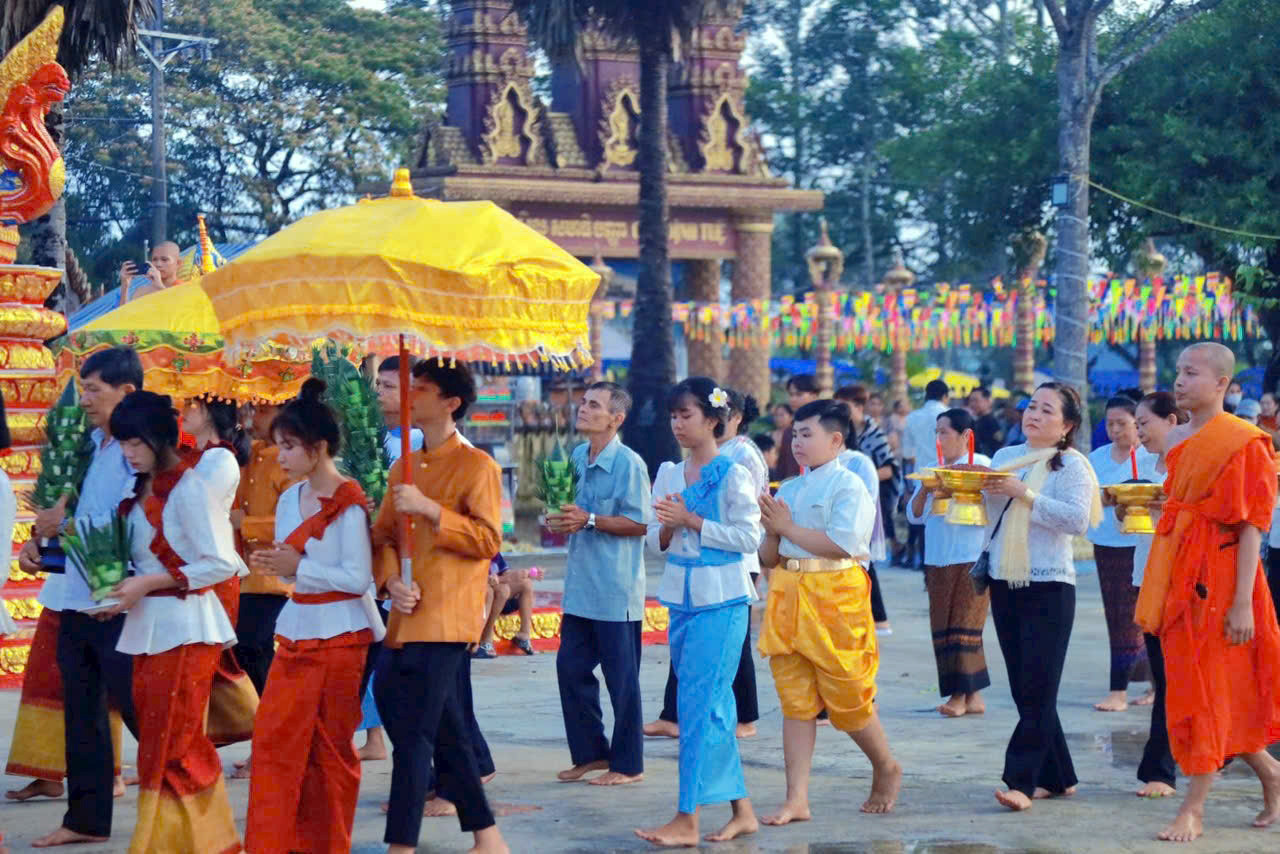
This year’s festival was marked by clear signs of attention from the central government toward the Khmer community. On April 10, the Prime Minister sent a congratulatory letter to Khmer compatriots, officials and Buddhist monks, extending warm wishes for the New Year.
Beyond its ceremonial value, the message reaffirmed a consistent principle: the Khmer community is an inseparable part of the great national unity bloc, always receiving attention and support from the Party and the State.
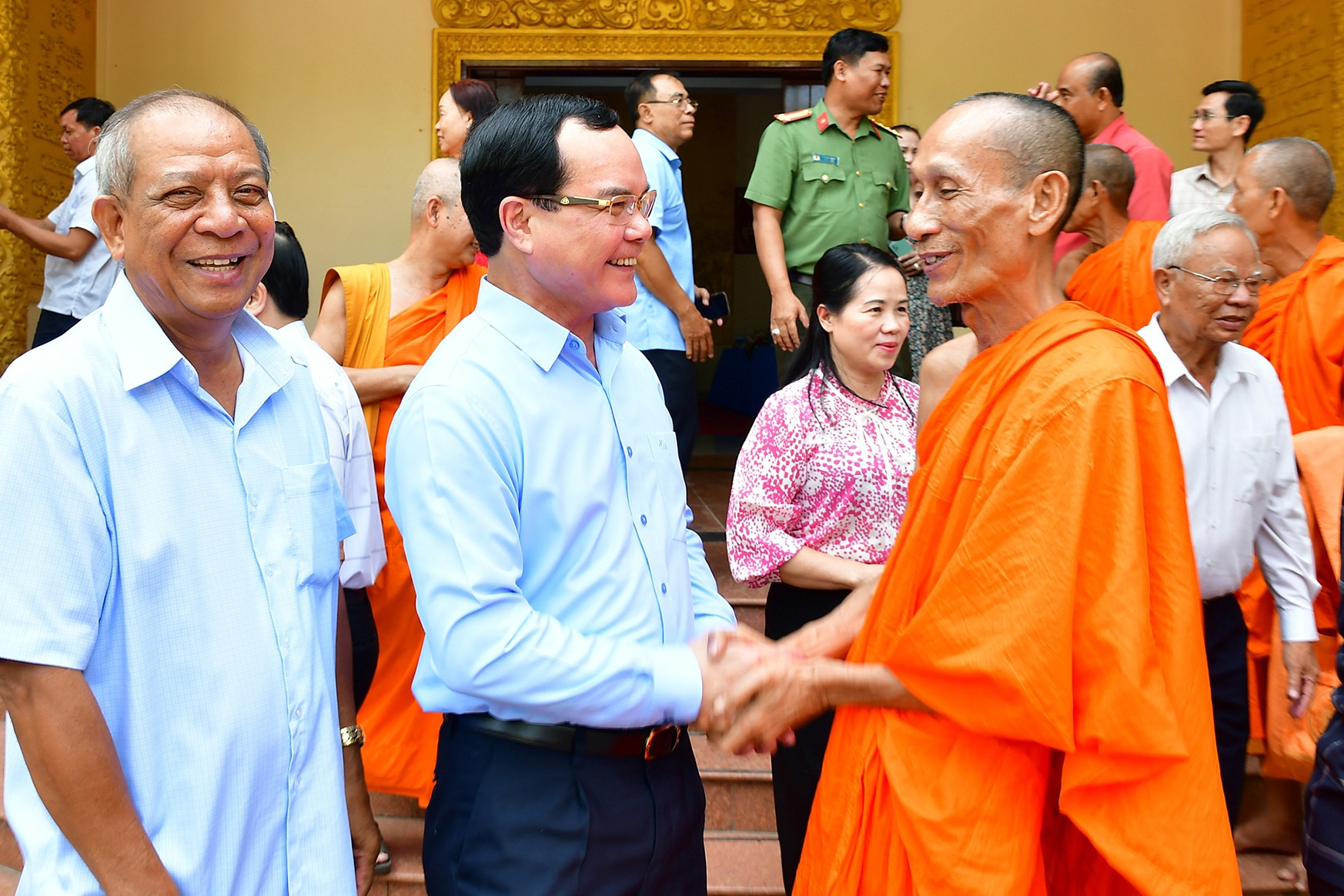
Alongside this, the Ministry of Ethnic and Religious Affairs organized multiple working delegations to localities with large Khmer populations. From April 10 to 13, ministry leaders visited and extended New Year greetings and gifts in Ca Mau, Can Tho, An Giang, Vinh Long and Ho Chi Minh City.
During these visits, leaders met with Khmer Buddhist dignitaries, respected community figures, disadvantaged households and local officials. The activities went beyond gift-giving, focusing on understanding livelihoods and listening to community concerns - helping ensure that ethnic policies are implemented in a more substantive and effective manner.
Local initiatives bring policies to life
At the local level, authorities across southern provinces proactively developed early plans to care for Khmer communities during the festival, with diverse and large-scale initiatives.
In Can Tho, the city launched a comprehensive program under Plan No. 141 to celebrate Chol Chnam Thmay. The “Military-Civilian Tet” initiative mobilized more than VND18 billion (approximately US$730,000) for community projects.
These included installing 140 solar-powered lights, building three rural bridges, upgrading and clearing over 60 km of roads, and delivering 120 gift packages to Khmer Buddhist temples. In addition, 950 gifts were distributed to policy beneficiary families, while 1,200 residents received free medical check-ups and medicines. The program also awarded 360 scholarships and 500 bicycles to disadvantaged Khmer students.
An Giang similarly stood out with large-scale efforts. The province organized gatherings with the participation of officials, soldiers, religious dignitaries, respected individuals and outstanding Khmer students.
Through its own “Military-Civilian Tet” program, An Giang mobilized over VND8 billion (US$325,000). The initiative built 50 houses for poor and near-poor households, completed eight rural bridges, and supported access to clean water. It also provided free healthcare services, distributed around 1,000 gifts, and awarded scholarships and bicycles to students.
Across other localities with significant Khmer populations, similar efforts were carried out, reflecting a coordinated and widespread approach.
A festival that deepens trust and connection
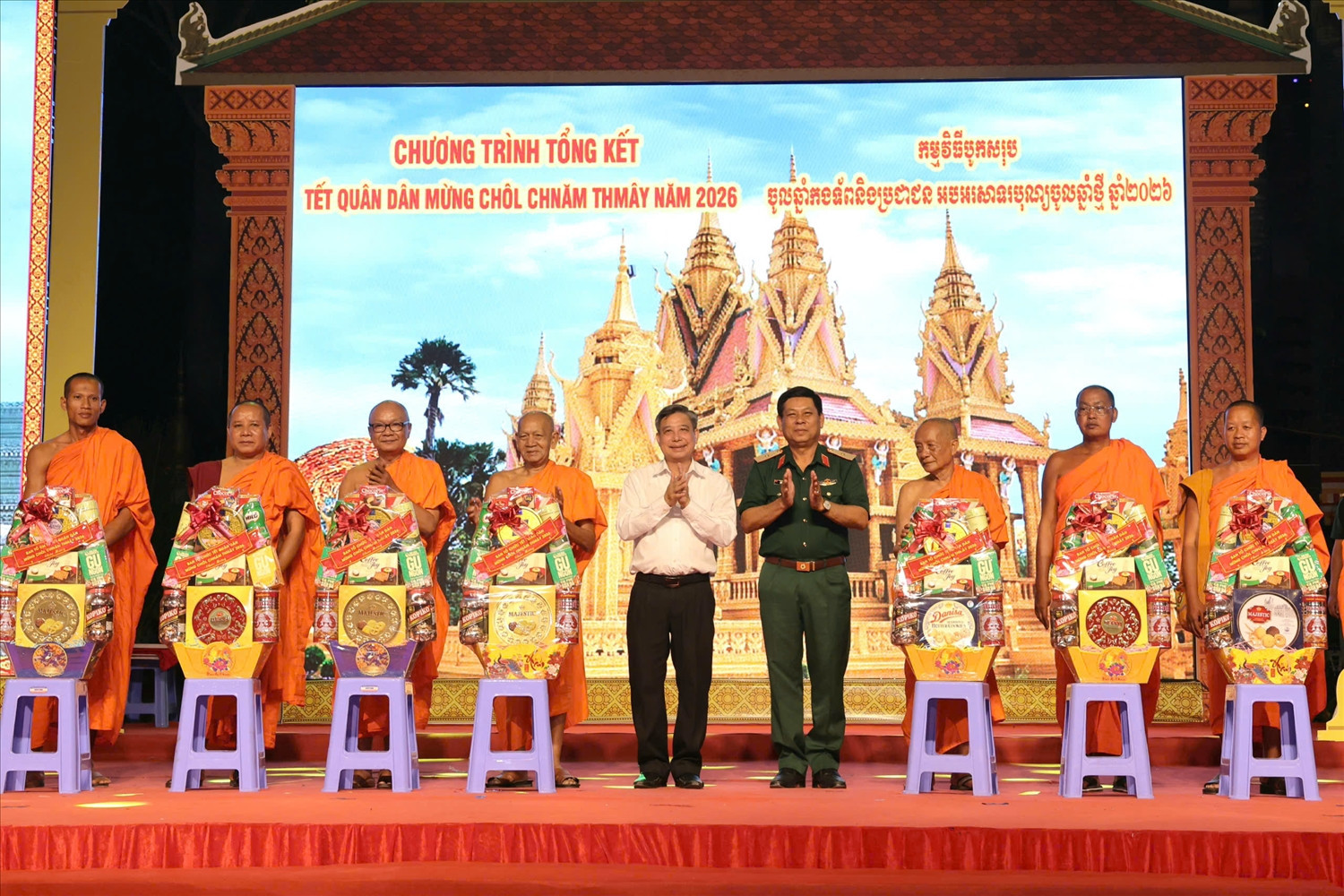
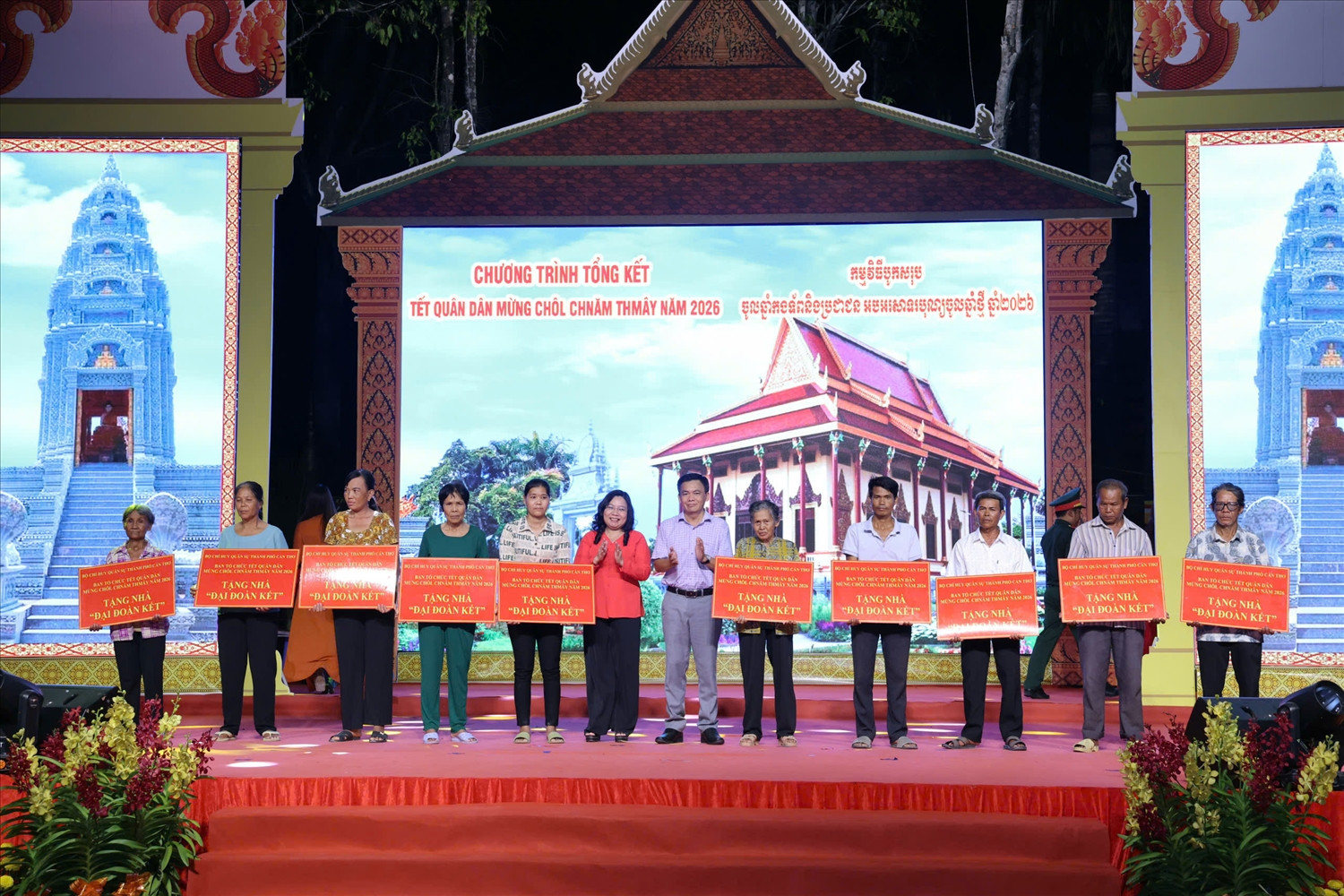
From central-level attention to local-level action, the care for Khmer communities during Chol Chnam Thmay 2026 was implemented in a synchronized and meaningful way.
These efforts extended beyond festive support, integrating social welfare, infrastructure development, education and healthcare. Through such tangible actions, both material and spiritual living standards have been improved, while public trust in Party and State policies has been further strengthened.
In this way, Chol Chnam Thmay continues to serve not only as a cultural celebration, but also as a bridge - reinforcing solidarity and nurturing the enduring spirit of national unity in modern Vietnam.
Thai An
.svg)
