 Vietnamnet.vn

 Podcast



Nhu Tam
At the heart of this festival lies a distinctive New Year’s Eve ritual - one that does not follow a fixed midnight moment. Instead, the transition between the old and new year is determined through an ancient system of celestial calculation, alongside the belief in rotating heavenly guardians. Together, these elements form a unique cultural expression that continues to shape the spiritual life of the community.
A unique New Year moment guided by ancient astronomy
Each year in mid-April, the Khmer community joyfully celebrates Chôl Chnăm Thmây, marking the passage of time according to its traditional calendar.
Beyond family reunions and communal festivities, the celebration is deeply rooted in Theravada Buddhist traditions, reflected in solemn rituals imbued with humanistic meaning.
One of the most distinctive features of this New Year is the way its exact moment is determined. Unlike the Lunar New Year of the Kinh majority, which begins at midnight, the Khmer New Year is calculated based on an ancient astronomical system.
Achar elders and Buddhist monks observe the sun’s movement along the zodiac to determine the precise transition. As a result, the New Year can arrive at any hour of the day, varying from year to year.
According to Venerable Ly Duc, abbot of Som Rong Pagoda, the New Year in 2026 begins at 10:48am. This moment marks the arrival of the heavenly guardian Rakkhāsādevi - the third daughter among the seven princesses of King Kabil Maha Phrom, a celestial ruler in Khmer mythology. It is a sacred moment, prepared with devotion and reverence by the community.
The belief in heavenly guardians - a cycle of protection and renewal
Closely tied to the New Year transition is the belief in heavenly guardians, a defining aspect of Khmer spiritual life.
According to folk belief, each year a different deity descends to oversee the human world. This rotation reflects not only the cosmic order but also a deep-seated faith in renewal, balance and divine protection.
Venerable Ly Hung, abbot of Pitu Khosa Rangsay Pagoda, explains that each guardian has a distinct name, symbolism and characteristics, passed down through generations. As the New Year arrives, people gather in pagodas to welcome the new guardian, praying for favorable weather, abundant harvests and a peaceful, prosperous life.
The legend of King Kabil Maha Phrom further enriches this ritual. According to tradition, after his passing at Mount Meru, one of his seven daughters takes turns each year to guard the world, both to prevent calamities and to honor their father. This enduring belief has shaped the ritual of welcoming the heavenly guardian - a vivid symbol of continuity and cultural preservation.
Preserving tradition in a changing world
Amid the currents of modern life, the Khmer community continues to preserve the New Year’s Eve ritual of Chôl Chnăm Thmây in its original form.
Beyond its spiritual significance, the ritual serves as a bridge between generations, passing on cultural values and reinforcing ethnic identity in an era of integration.
The New Year moment in Chôl Chnăm Thmây is not merely a point in time. It is a sacred beginning, a living source that nourishes Khmer cultural identity.
Preserving and promoting these traditions not only enriches Vietnam’s cultural diversity but also affirms the Khmer community’s vital role in safeguarding heritage within the rhythm of contemporary life.
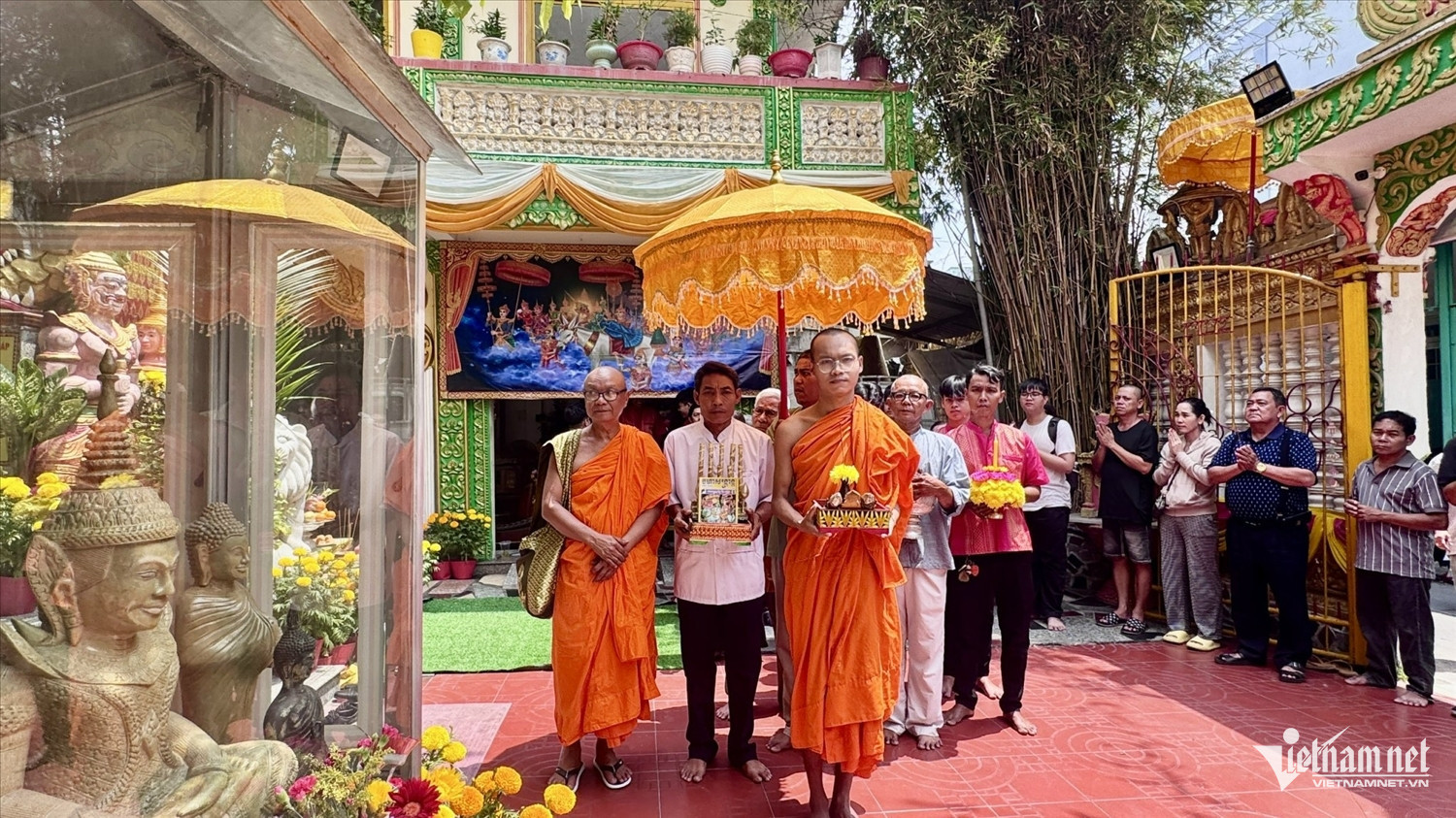
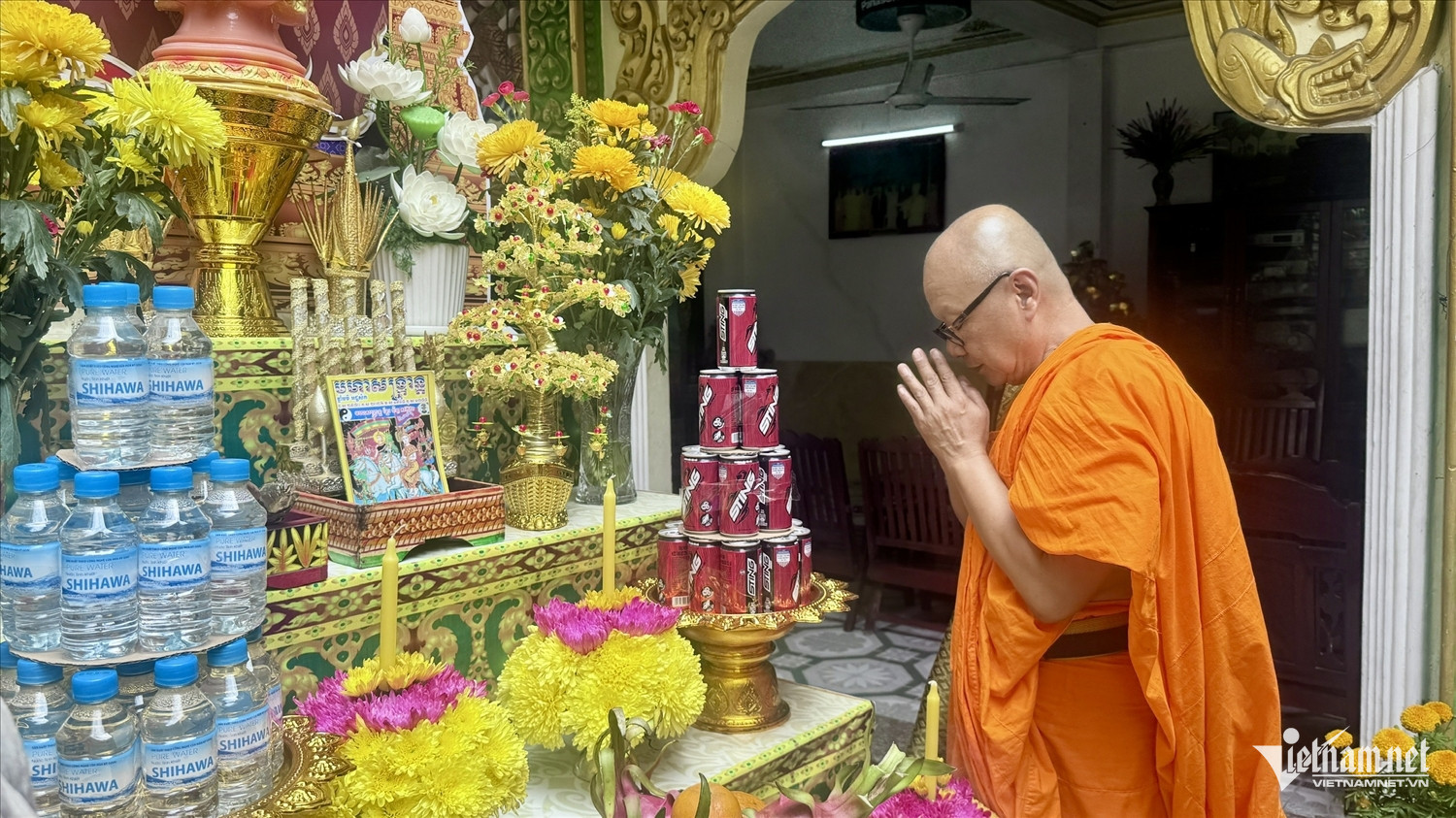
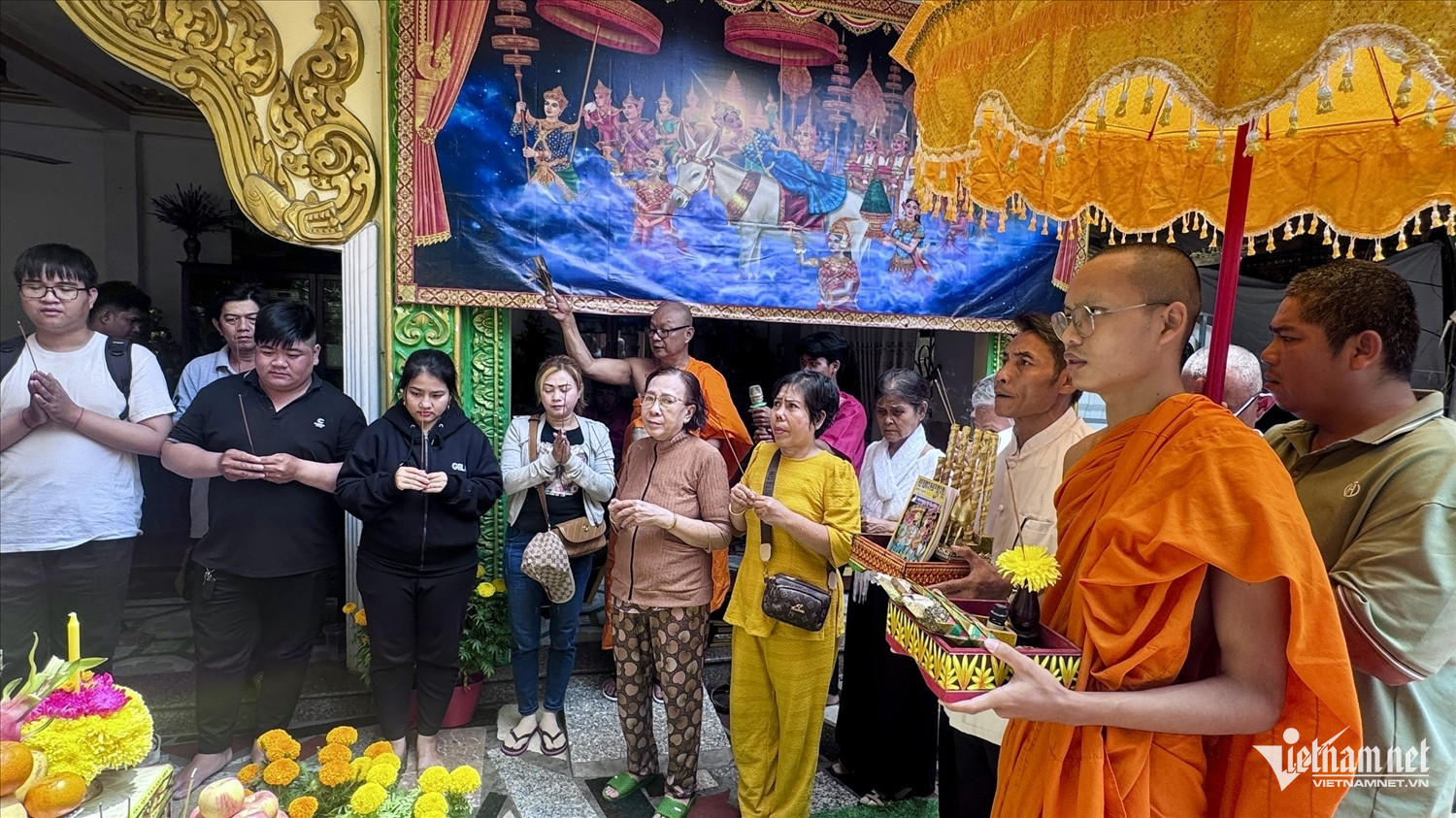
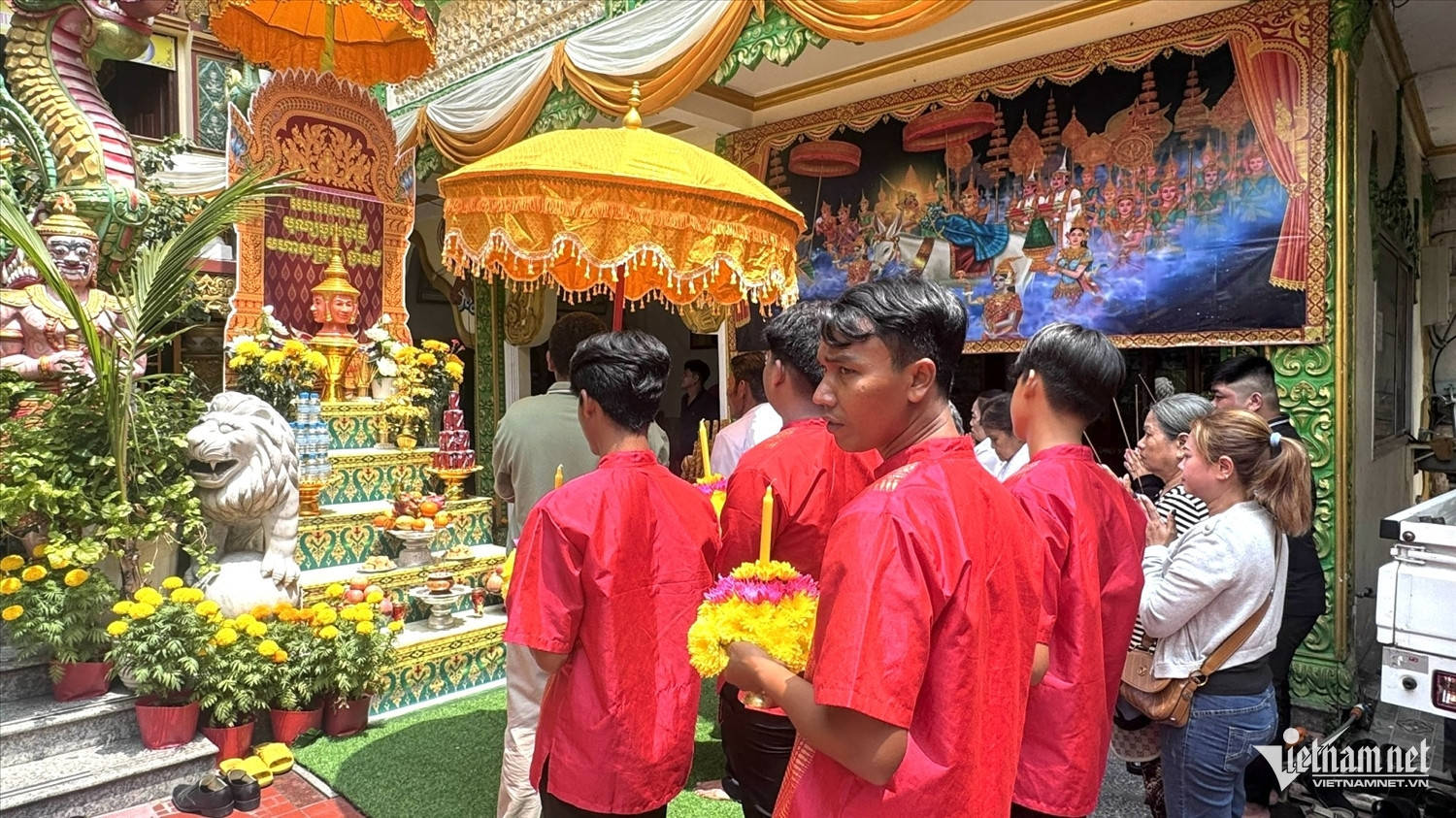
Khmer pagodas hold rituals to welcome the celestial guardian of 2026 - the deity Rakkhāsādevi.
.svg)
