 Vietnamnet.vn

 Podcast



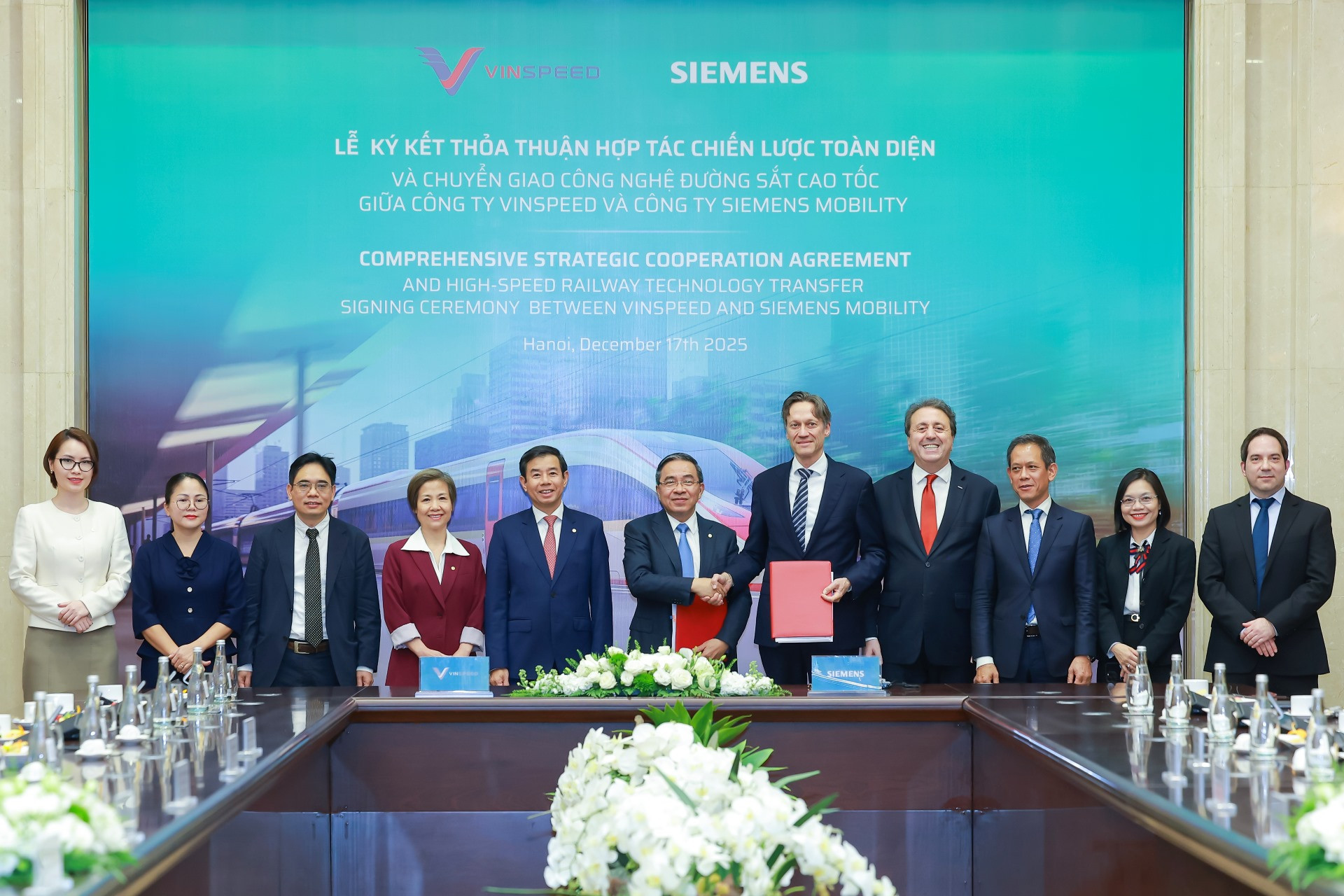
Tuan noted that choosing technology and partners "at the highest level" from the start will create a foundation for Vietnam to not only develop high-speed rail but also have the opportunity to participate more deeply in the global value chain.
Tuan discusses the topic in depth below:
VinSpeed has just officially signed a comprehensive strategic cooperation agreement with Siemens Mobility to develop two high-speed rail lines: Hanoi - Quang Ninh and Ben Thanh - Can Gio. How do you assess this partnership?
This is very good news, extremely good news. Siemens Mobility is one of the world’s leading names in modern railways. VinSpeed’s decision to cooperate with the “giant” Siemens Mobility is a practical and long-term step in Vietnam’s strategic direction, allowing direct access to the most advanced technologies and creating the most transformative breakthroughs for the country. This also aligns with the spirit of the Politburo’s Resolution No57 on breakthroughs in science, technology, innovation, and national digital transformation, as well as Resolution 68 on private-sector economic development.
What exactly is the practical and long-term vision VinSpeed is pursuing by choosing Siemens Mobility?
In my view, it is a practical, well-structured, and long-term vision. For national-scale infrastructure projects, especially high-speed rail, the key factor is not only capital or timelines, but the mindset behind choosing technology and partners from the very beginning.
Choosing Siemens Mobility means VinSpeed chooses to “play at the highest level” from day one. Partnering with a world-class enterprise is not only about acquiring modern technology, but also about accessing high technical standards, governance processes, safety practices, and risk control capabilities. This also creates motivation and pressure for Vietnamese enterprises themselves to innovate and enhance technological capacity.
A “top-level” partner surely comes with the “highest costs.” Do you think VinSpeed is “overreaching”?
It is true that the costs may be very high. To become a partner of a global corporation with top-tier German standards like Siemens Mobility, VinSpeed naturally has to invest in commensurate resources.
Choosing a reputable partner with the world’s highest standards demonstrates VinSpeed’s dedication to this critical infrastructure project. This mindset is reasonable if Vietnam wants to build a sustainable high-speed rail industry with strong internal capabilities, rather than taking small, fragmented steps.
Siemens Mobility plans to supply Velaro Novo trains, the latest high-speed rolling stock with the speed of 350 km/h, high passenger capacity, and lower energy consumption, along with related systems for the Hanoi – Quang Ninh and Ben Thanh – Can Gio projects. However, the most advanced technology also means higher costs and potentially lower operational efficiency. Do you have concerns about this?
Optimal does not mean the cheapest option, but the best and most advanced one. VinSpeed has certainly calculated this very carefully. High-speed rail is a specialized field that requires extremely high safety standards, advanced technology, and long-term operational efficiency. Using the best technology ensures competitiveness from the start. If you make a large investment but choose mid-level technology that quickly becomes obsolete, it will be very difficult to adjust later.
Cooperating with reputable global partners like Siemens Mobility is a way to reduce risks and ensure quality and international standards from the outset. This is a very sound approach by VinSpeed.
With the VinSpeed – Siemens Mobility cooperation, what opportunities does Vietnam have to build its own high-speed rail industry?
The partnership between VinSpeed and Siemens Mobility is not just a conventional cooperation agreement, but a comprehensive one that includes technology transfer. The significance of this is enormous. In the past, in many collaborations with international partners, Vietnamese enterprises mainly participated in processing or assembly stages, with little access to core technologies.
With high-speed rail projects involving VinSpeed, technology transfer combined with workforce training will help Vietnamese enterprises gradually access and master source technologies. This will not only enable one enterprise to grow, but also help form a network of supporting enterprises, building a foundation and moving toward maximum localization of the domestic high-speed rail industry.
I believe this is extremely meaningful, especially as Vietnam has not deeply integrated into the global value chain for many reasons, including limited technology transfer from foreign enterprises. Therefore, I am confident that the technology transfer agreement between VinSpeed and Siemens Mobility will address this core weakness.
Vu Diep
.svg)
