 Vietnamnet.vn

 Podcast



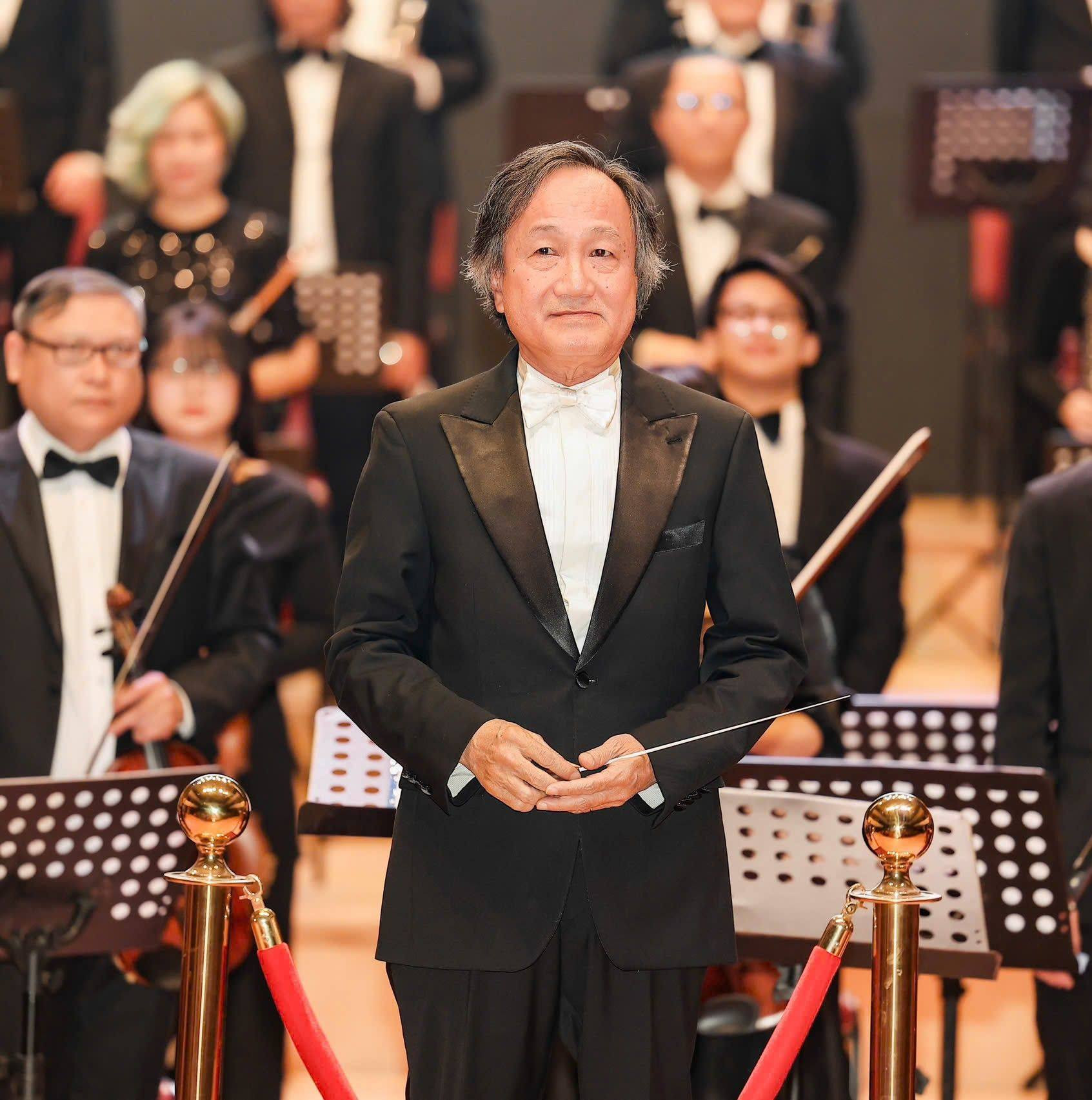
Talking with VietNamNet, he shared that he performs regularly for the HCMC Ballet Symphony Orchestra and Opera (HBSO), the HCMC Conservatory of Music, and various symphony orchestras in the North.
His teaching tenure at the HCMC Conservatory of Music remains steadfast. Upon graduating from the Saigon National Conservatory of Music and Drama (currently the HCMC Conservatory of Music) in 1984, he was retained by the institution as a lecturer. In 1996, after completing his studies abroad, he returned to the school and has served as a guest lecturer ever since.
He also holds the position of Vice President of the Vietnam Musicians' Association. He is now focusing on a major research project. Despite being retired, he remains healthy, passionate, and driven to contribute to his craft.
What are you researching?
I am channeling all my energy into a research project titled The Theory of Vietnamese Music. My peers and I within the industry all recognize that Vietnam currently lacks a solid theoretical foundation.
Our nation comprises 54 ethnic groups across diverse regions, influenced by the cultural intersections of China, India, Malaysia, Oceania, and Champa. All of these have shaped our musical identity and need to be examined systematically.
Using Western music as the sole yardstick has led a segment of the population to believe that Vietnamese music fails to meet international standards. In the long run, the younger generation will truly believe that our ancestors' music was inferior.
Not to mention that relying solely on the Western equal temperament scale for composition over time will gradually erase Vietnamese musical identity.
To address this issue, I have to conduct research in many dimensions, not only music but also history, culture and geography.
Conductors have told me that the symphonic scene in the 2000s was very primitive. For the 1980s and 1990s generation like yours, it must have been almost prehistoric?
I still vividly remember that very beautiful period of my life.
Back when I studied at the National School of Music and Drama of Saigon, everything related to symphonic and chamber music was confined within the school campus at No112 Nguyen Du Street. There was no independent orchestra, no independent theater, and notable names like Nguyen Phung and Nghiem Phu Phi were very scarce.
In 1990, I was among the first self-funded overseas students after Vietnam “opened up.” When I submitted my documents, the passport officer asked in surprise: “What is orchestra conducting? How can you make money from this? Why not study economics?” (laughs)
Yet I still went. Studying at the Royal Conservatory of Liege alone was not enough, so I also enrolled at the Maastricht Conservatory, which was why it took me six years.
In 1994, when I returned home for a visit, I attended the inauguration of the Symphony and Opera House (now HBSO), and from that moment I decided that when I came back to Vietnam, I would work with this orchestra.
In 1996, I returned home. At that time, the orchestra had just over 10 musicians, including musician Phu Quang.
The symphonic scene in HCMC at that time truly had almost nothing. We had to borrow a performance room from the Department of Culture as an office, borrow the auditorium of the HCMC College of Culture and Arts as a rehearsal venue; we arranged chairs, music stands, copied sheet music ourselves, etc.
Later, when I joined the Symphony and Opera House, I was determined to build a professional orchestra according to European standards.
I set a goal of completing it within five years, but unexpectedly it took more than 10 years.
What is your life outside work like?
I wake up at 6.30am, sometimes at 5am when inspired. After breakfast, I sit down immediately to research and work. It seems I do not have many hobbies outside work.
I have just established a company and started a business at the age of 65 (laughs). I have spent my whole life working in symphonic music, and now I want to go deeper into chamber music. So I partnered with the HCMC Museum of Fine Arts, taking advantage of the French architecture to build a true chamber music space with around 100 seats.
Tinh Le
.svg)
