 Vietnamnet.vn

 Podcast



Apple appears to have rethought smartphone navigation with the iPhone Duo's outer display, to the point that the conventional practice of placing key interface elements at the top of today's phones can suddenly seem rather inconvenient.
iPhone Duo tackles the big-screen smartphone dilemma
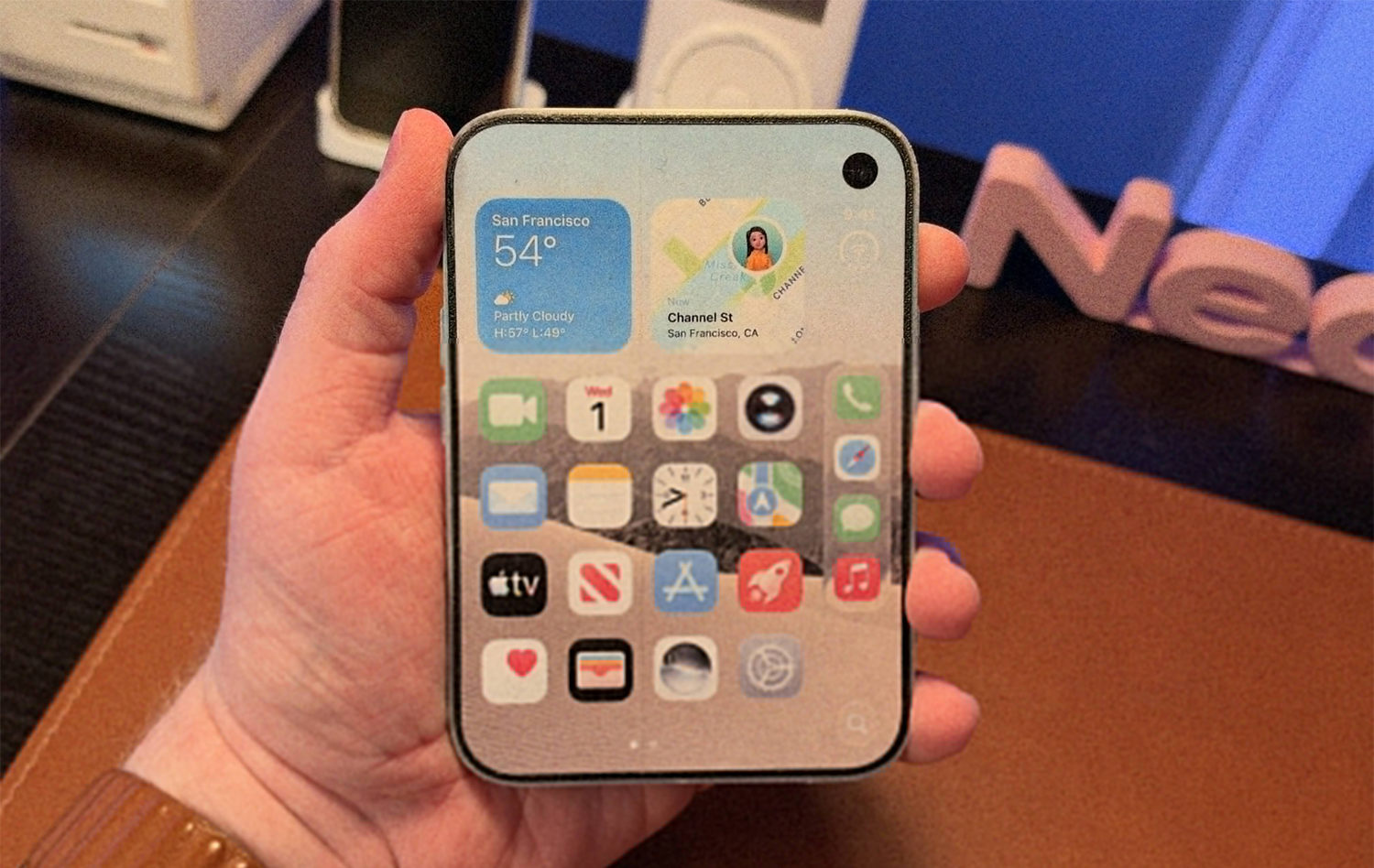
Many people still miss the compact phones of the past, largely because everything on their screens was within easy reach.
As smartphones have grown larger, one-handed operation has become increasingly difficult, particularly when users need to stretch a finger toward the top of the screen.
Smaller phones, however, come with an obvious disadvantage: limited display space. Meanwhile, the way people use smartphones has changed considerably.
Content has become more diverse, video more prevalent, and users increasingly need larger screens for both work and entertainment.
The iPhone Duo offers an approach designed to address both problems at once.
Rather than forcing users to choose between a large display and convenient operation, the device places a relatively wide rectangular content area on the left, while the dock and navigation elements sit on the right.
The arrangement creates a markedly different experience. Users still have ample room to view content, while the controls they interact with most frequently remain within easy reach of the thumb.
Since Apple introduced the design, some technology enthusiasts have begun discussing an intriguing concept: an "iPhone Solo."
In essence, it would be an iPhone with a screen similar in size and aspect ratio to the iPhone Duo, but without a foldable design.
Whether Apple would actually launch such a product remains difficult to predict. As a concept, however, an iPhone Solo is not implausible.
If the iPhone Duo receives a positive market response, Apple could conceivably bring the same design philosophy to a large-screen device without a folding mechanism.
Notably, the shape of today's smartphones is partly the result of a series of changes that emerged almost incidentally during the evolution of mobile devices.
Early smartphones commonly used 16:9 displays. Manufacturers then began eliminating screen bezels and Home buttons while steadily expanding usable display space.
The result was a generation of increasingly tall and narrow smartphones. Larger displays allow more content to be shown, but they also make interface elements at the top of the screen harder to reach with one hand.
iPhone Duo could point to a new direction
What makes the iPhone Duo particularly interesting is that Apple did not simply place the conventional iOS interface on its outer display and consider the job done.
Instead, the company rethought how the interface should be arranged for a screen with a different shape and usage pattern.
That could be the most important aspect of the iPhone Duo's design. Apple has not merely changed the size of the screen; it has also questioned how a smartphone should be used.
After experiencing such an approach, some users may begin to notice just how inconvenient today's phones can be.
An excessively tall smartphone often forces users to adjust their grip or use both hands simply to reach areas near the top of the display.
It remains too early to know whether the iPhone Duo's design will become a broader industry trend. But if users respond positively to its outer display, the idea of an iPhone Solo may no longer seem so far-fetched.
Hai Phong
.svg)
