 Vietnamnet.vn

 Podcast



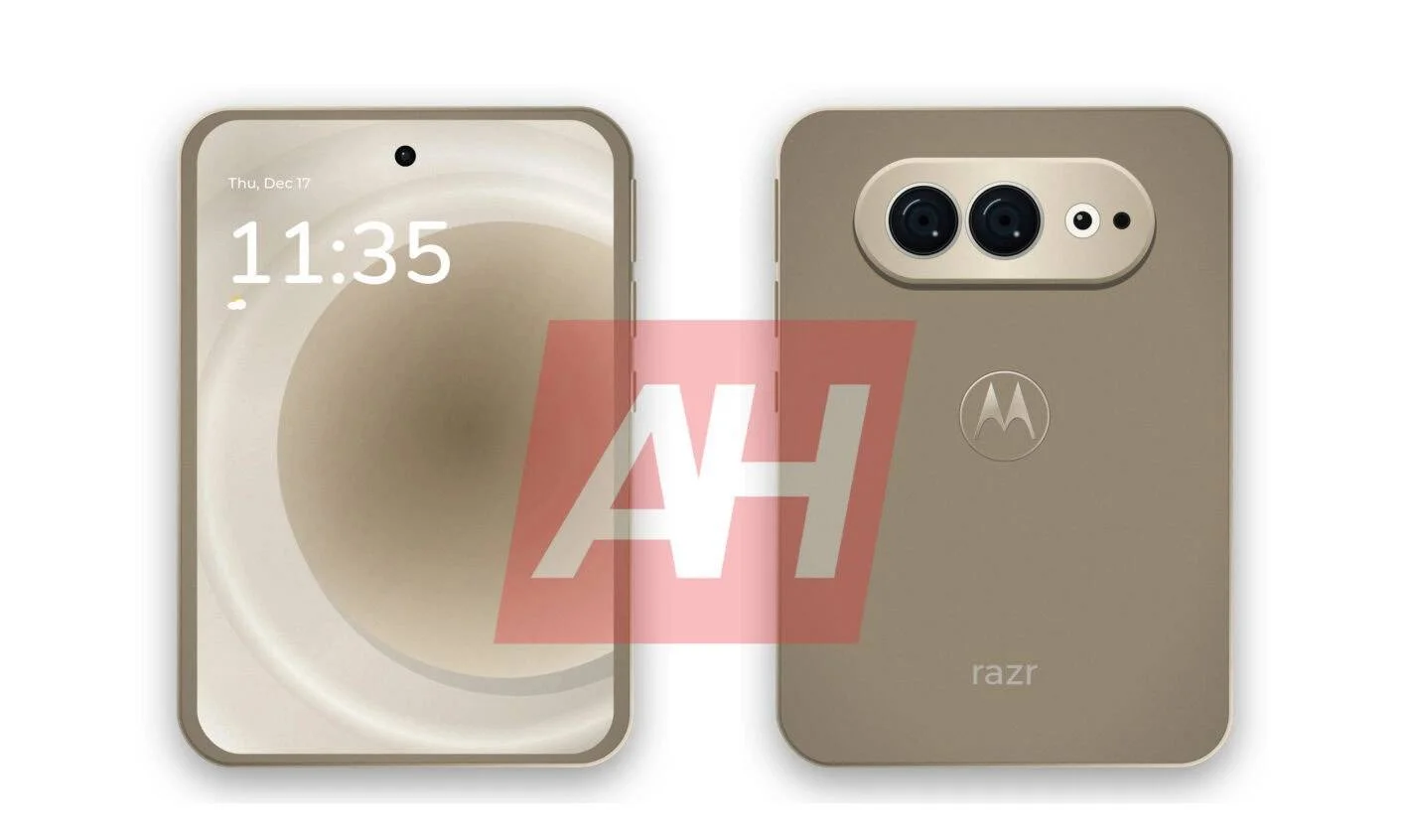
A passport-style foldable smartphone with a shorter, wider design has emerged in new leaks, suggesting Motorola is preparing a more compact alternative to Apple’s iPhone Duo and Samsung’s Galaxy Z Fold 8.
The latest leaks surrounding the razr flex, including specifications and renders, suggest Motorola may have found a compelling formula for a new generation of compact foldables as it prepares to compete with the iPhone Duo and Galaxy Z Fold 8.
Motorola razr flex prioritizes design over flagship specifications
Not long after Apple unveiled the iPhone Duo, Motorola teased its own take on a passport-style foldable smartphone.
The initial short teaser video offered only a brief glimpse of a device resembling a smaller version of the Razr Fold.
According to new information, Motorola is developing the device under the internal name “razr flex”, with the codename “Parker.”
It would mark another step in Motorola’s push into book-style foldables, this time with a shorter and wider form factor.
Motorola entered the foldable smartphone market in 2020 with its clamshell Razr lineup.
In April this year, the company introduced its first book-style foldable, the Motorola Razr Fold.
Now, Motorola appears to be experimenting with another design aimed at creating a more compact device while retaining a large display when unfolded.
In terms of specifications, the razr flex is reportedly powered by Qualcomm’s standard Snapdragon 8 Gen 5 processor, paired with 12GB of RAM and 256GB of internal storage.
The device could feature a 5,000mAh battery and support 25W Qi2 wireless charging.
It is also expected to carry both IP48 and IP49 water- and dust-resistance ratings, ship with Android 17 and feature a dual 50MP rear camera system.
On paper, the razr flex appears positioned closer to the upper-premium segment rather than as a device designed to compete on specifications with the most expensive flagships.
But with a compact foldable, hardware specifications may not be the only factor determining its appeal. Design, dimensions and in-hand usability appear to be where Motorola is placing greater emphasis.
Smaller than the iPhone Duo and Galaxy Z Fold 8
The most striking aspect of the razr flex is its size.
Leaked renders suggest the device could be more pocketable than either the iPhone Duo or Galaxy Z Fold 8.
According to the leak, the razr flex will feature a 6.92-inch inner display with a refresh rate of up to 165Hz, alongside a 4.97-inch cover screen.
Both displays are smaller than those on the comparable Apple and Samsung foldables.
When unfolded, the razr flex reportedly measures around 110 x 149 x 5.8mm. Folded, it measures approximately 110 x 76 x 12.6mm.
Those dimensions suggest Motorola is pursuing a device that is significantly shorter and narrower than its rivals.
By comparison, the iPhone Duo measures 117.8 x 164.6 x 5.2mm when unfolded and 117.8 x 84.1 x 11.3mm when folded.
The Galaxy Z Fold 8 measures 123.9 x 161.4 x 4.5mm when unfolded and 123.9 x 81.9 x 9.7mm when closed.
That would make the razr flex both shorter and narrower than the iPhone Duo and Galaxy Z Fold 8, although the trade-off is a thicker profile when folded.
Weight is another notable difference.
At around 215 grams, the razr flex would be considerably lighter than the 254-gram iPhone Duo, though still heavier than the Galaxy Z Fold 8 at around 201 grams.
Motorola is reportedly planning two color options, PANTONE Coriander and PANTONE Dark Botanical Garden.
The company could officially unveil the device in mid-December.
A shorter, wider design could be its advantage
The Motorola razr flex may not outperform its rivals in every category, but its compact dimensions could give it a distinctive advantage.
With a moderate width and reduced height, the device could feel more natural to hold and operate with one hand.
Rather than feeling like a tablet that folds down into an unusually shaped phone, the razr flex appears designed to deliver the experience of a miniature book-style foldable.
That is what makes Motorola’s approach particularly interesting.
Foldable smartphones have continued to grow in size, but not every consumer wants to carry a device approaching tablet dimensions.
There is, however, an important caveat: the leaked renders may not fully reflect the final design.
Some details, particularly the display bezels, may have been idealized.
The source claims that the bezels around all four sides of the display will be uniform, but the renders may not accurately represent their real-world proportions.
Shorter, wider foldables can also evoke the appeal of once-popular compact smartphones such as the iPhone mini.
Apple has shown no indication that it plans to revive the mini lineup, but the razr flex could offer a new alternative for consumers who want a smaller phone without sacrificing the benefits of a large display.
If the leaked specifications prove accurate, Motorola is attempting to reconcile two seemingly conflicting demands: a smartphone compact enough for comfortable everyday one-handed use and a screen large enough for productivity and entertainment once unfolded.
It could represent an intriguing new direction for the foldable smartphone market, which has so far largely competed by increasing screen sizes, reducing thickness or upgrading hardware specifications.
Hai Phong
.svg)
