 Vietnamnet.vn

 Podcast



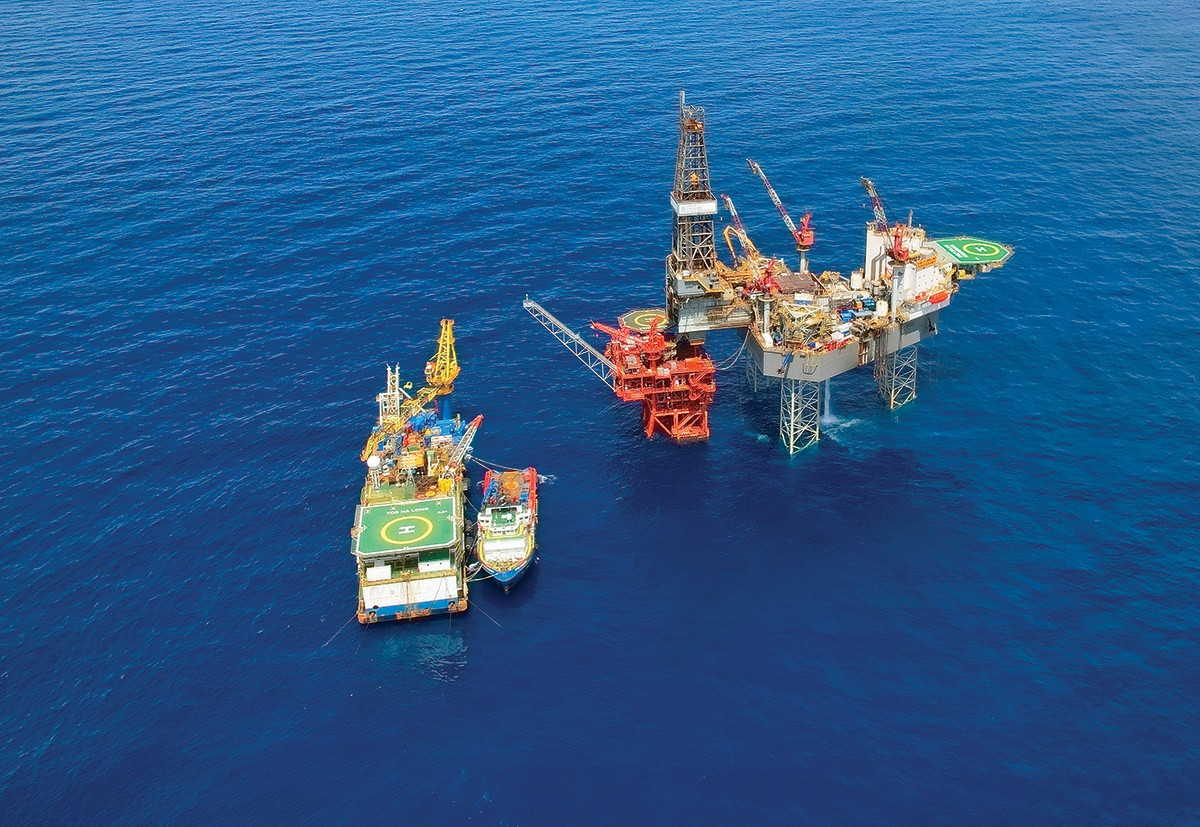
Located in the Nam Con Son Basin, the Dai Hung oil field was discovered in waters more than 100 meters deep, where exceptionally complex geological conditions made exploration and production highly challenging.
The difficult geology and high development costs prompted a succession of international oil contractors to withdraw from the project, eventually leaving it to be appraised at just $1.
Speaking at the conference "Creative and Breakthrough Applications of Science and Technology to Restore, Expand, and Enhance Exploration and Exploitation Efficiency at the Dai Hung Field" on July 30, Nguyen Xuan Ninh, director of PVEP Nam Con Son, said that, from an oil field relying heavily on the natural energy of the reservoir, Dai Hung has been transformed by modern technologies, on par with many offshore oil fields in the world.
These achievements have brought substantial economic returns while confirming Vietnamese engineers' mastery of offshore oil and gas technologies.
Ngo Huu Hai, vice chair of the HCMC Oil and Gas Association, described Dai Hung as a project marked by relentless ups and downs. American firm Mobil Oil first discovered the Dai Hung structure in 1974, and by 1988, Vietsovpetro struck oil and gas through well DH-1X.
Dai Hung stands out as an exceptional case. Renowned international energy corporations like BHP and Petronas operated the field, but in 2003, all had withdrawn after assessing the project as economically unviable, leaving a legacy with a symbolic transfer value of just $1.
Following the departure of majors like BHP and Petronas, PetroVietnam Exploration Production Corporation (PVEP) stepped in, a historical turning point marking complete Vietnamese autonomy over deepwater oil production technology.
Reviving the oil field
According to Hai, the key to reviving the field was in a revolution in seismic processing and interpretation. New technology helped eliminate noise signals, clarifying fault systems that previously caused foreign operators to misidentify reservoir structures.
More importantly, the research team went beyond applying off-the-shelf technologies; they calibrated and tailored solutions to Dai Hung's unique conditions, resolving bottlenecks that foreign operators failed to overcome.
Consequently, a project once facing closure transformed into a multi-billion-dollar revenue-generating field, contributing over $600 million to the state budget with total output projected to reach 123 million barrels of oil by 2034.
Tran Hong Nam, member of the Board of Directors of PetroVietnam, noted that Dai Hung experienced multiple revivals after being taken over for the symbolic $1 price tag.
He recalled that in 2020 plunging global oil prices brought the project to the brink of shutdown amid fears that continued production would yield growing losses. At that time, many engineers prepared to seek new employment.
"To be honest, we were deeply concerned, but we retained unwavering faith in science and technology for Dai Hung. We dared to break models that foreign corporations hesitated, allowing Dai Hung to revive through Vietnamese technology and innovation," Nam said.
Dai Hung currently contributes five of the energy group's 34 strategic technological products across areas including AI, digital twins, and big data.
Amid global energy market fluctuations, crude oil from Dai Hung helps secure feedstock for the Dung Quat Oil Refinery, strengthening national energy security while enabling domestic production of specialized fuels for submarines and fighter jets.
Symbol for the nation
Duong Ngoc Hai, former vice president of the Vietnam Academy of Science and Technology, noted that mechanically applying off-the-shelf technological models would never have solved Dai Hung's complex puzzle.
The project's success stemmed from Vietnamese scientists re-examining the entire geological profile and building solutions suited to real-world reservoir conditions, a clear testament to domestic intellectual capacity and technological strength.
Duong Ngoc Hai praised the team's research methodology, which leveraged modern global seismic analysis and modeling tools while relying on critical scientific thinking adapted to Dai Hung's specific environment.
Le Quang Duyen from the University of Mining and Geology called Dai Hung a miracle: abandoned by foreign firms for a symbolic $1, it overcame immense hurdles to reach its current trajectory toward $12 billion in value. Dai Hung has contributed significantly to national defense and energy security.
Thai Khang
.svg)
