 Vietnamnet.vn

 Podcast



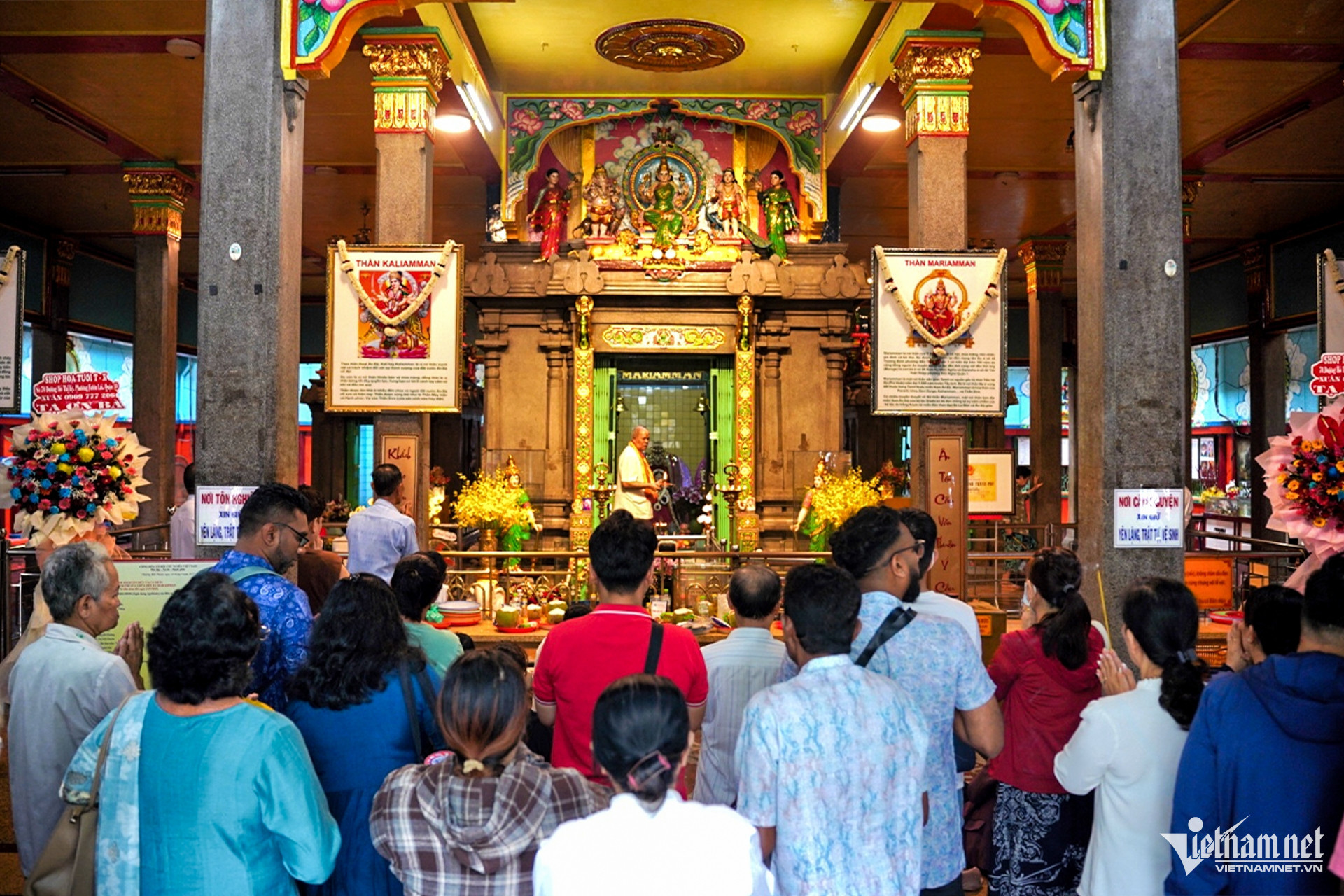
The rituals are held daily at 10:00 AM and 5:00 PM in the temple’s sanctum. Many arrive early to pray and share in the cultural and spiritual life of the Indian community living in the city.
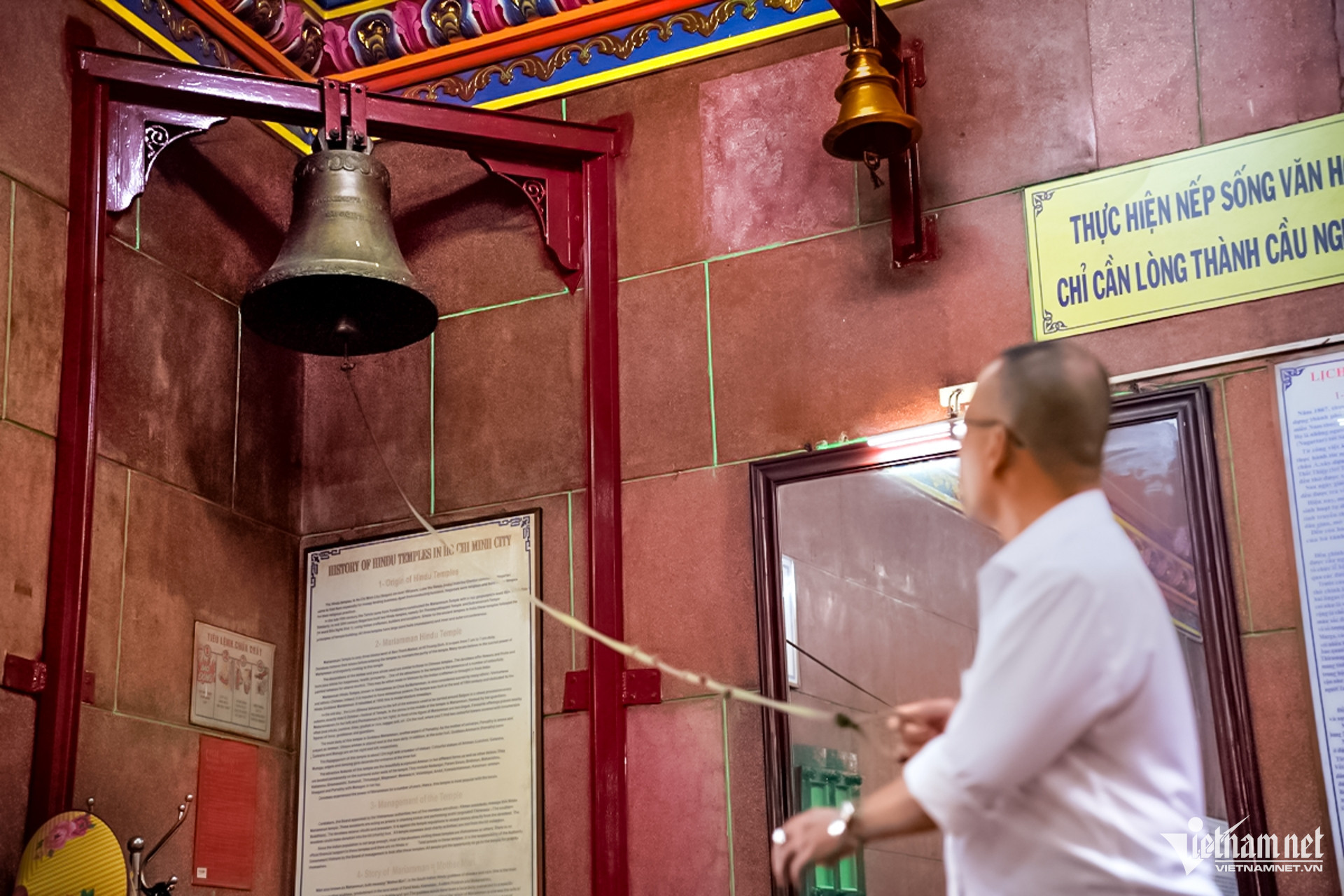
When the temple bells ring, the fire offering ceremony officially begins. Each bell chime signals worshippers to return to the main hall for sacred chanting and prayer in the warm, incense-filled space.
The sacred fire: a bridge between the divine and the earthly
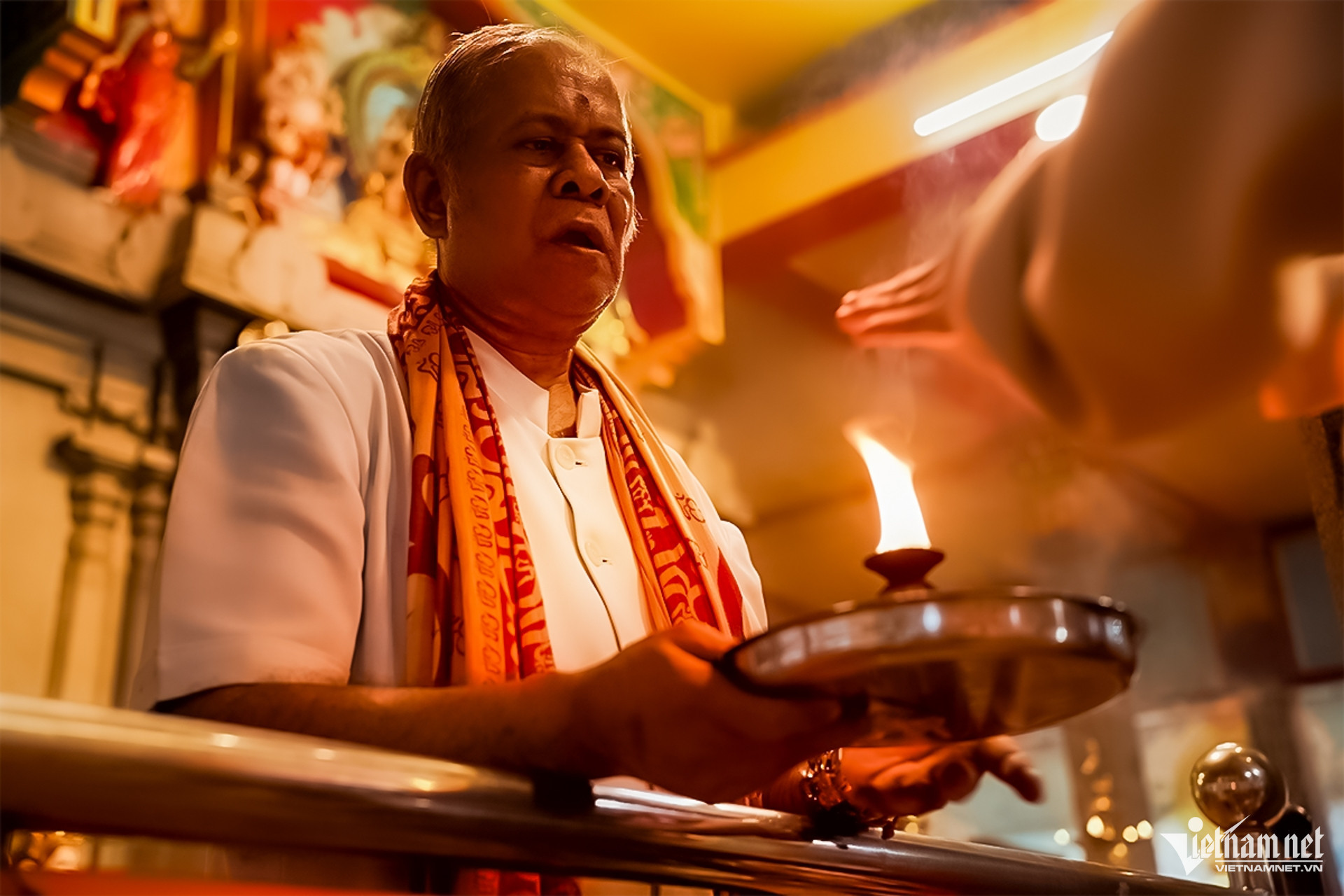
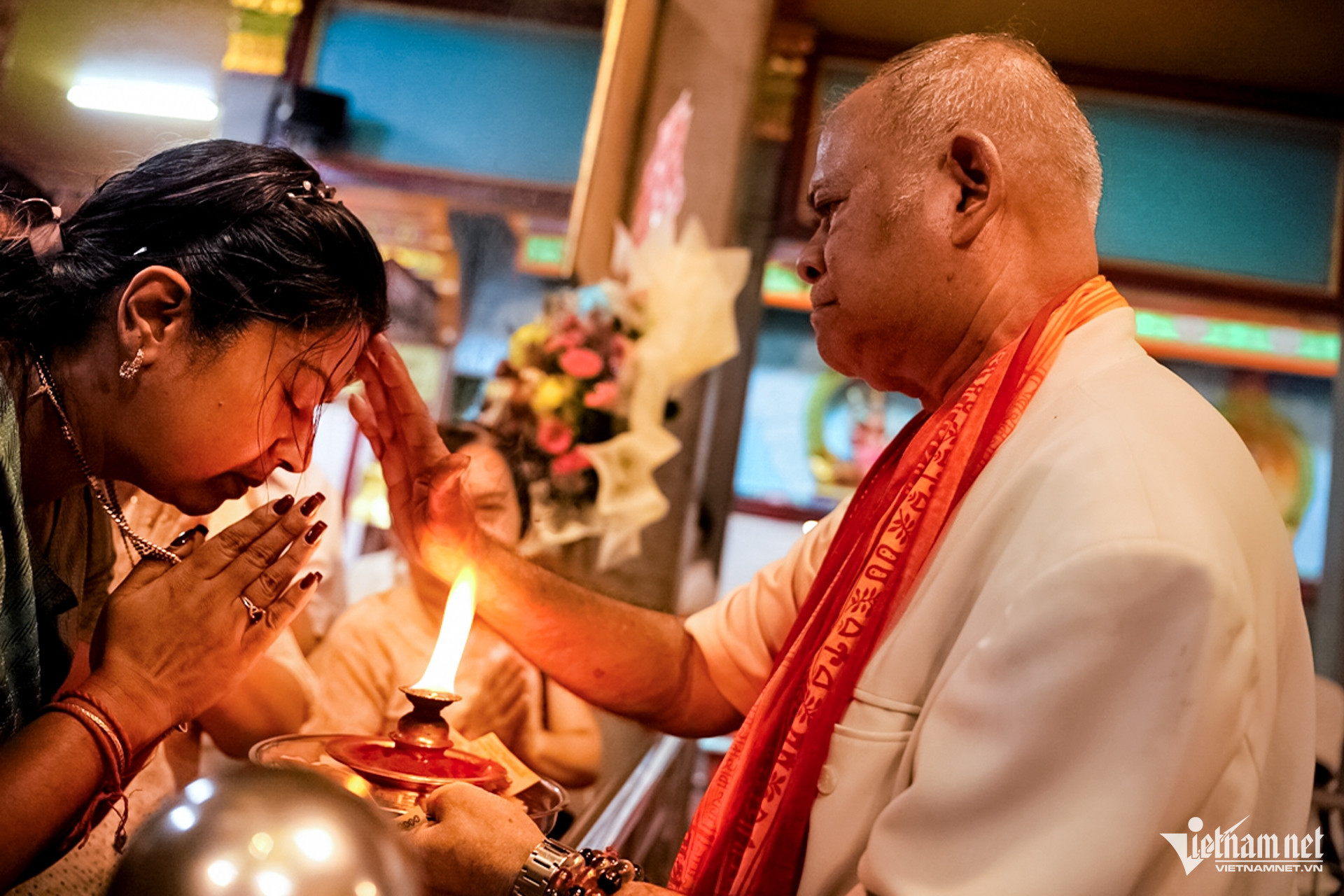
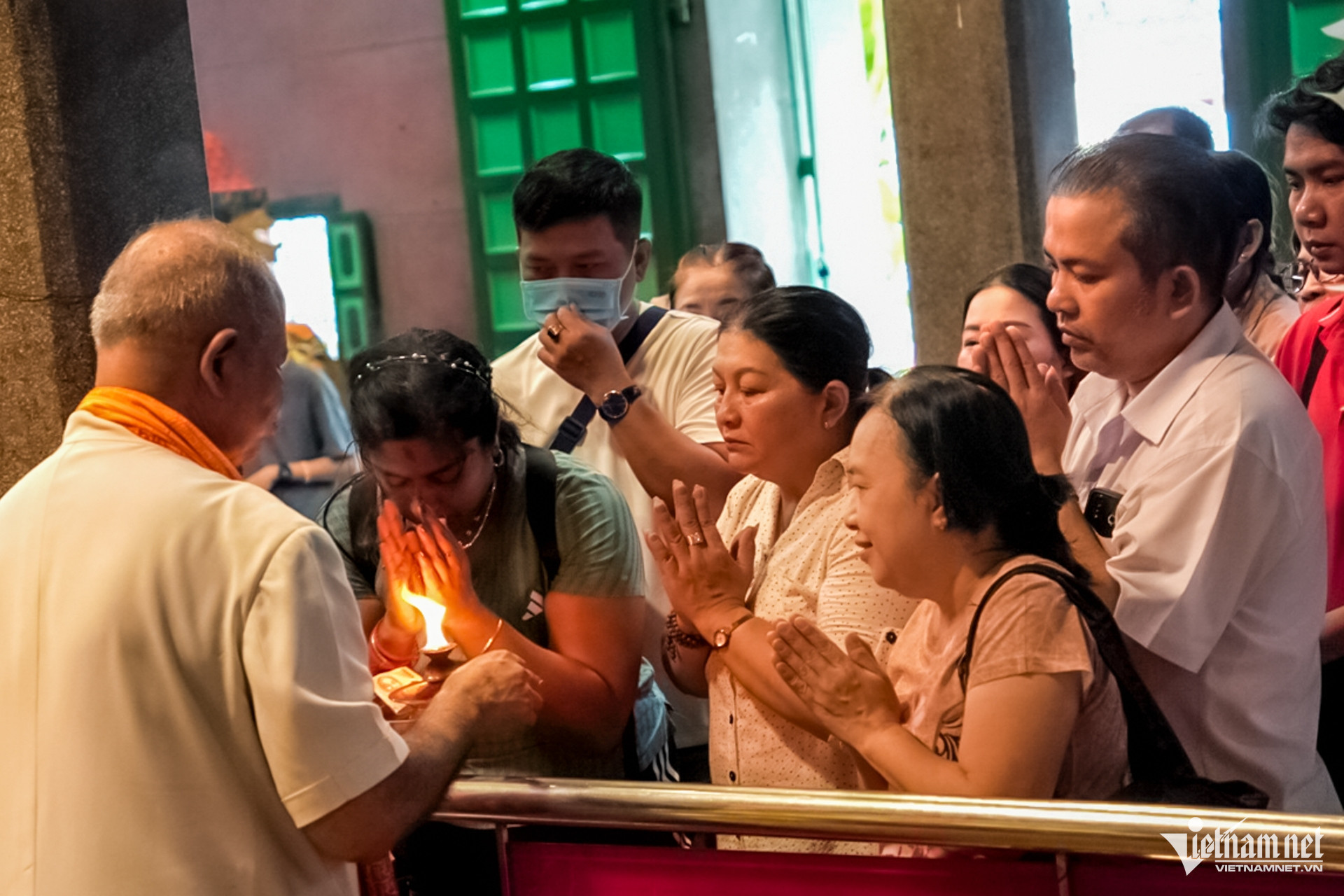
The temple priest leads the ritual, offering a holy flame to the goddess. In Hindu belief, Agni - the god of fire - serves as a divine messenger, connecting humans to the gods. Fire symbolizes purification, vitality, wisdom, and the radiant light of faith.
The priest holds a small tray of glowing charcoal, waves it gently before the deities, and recites sacred mantras. Devotees then take turns hovering their hands over the flame and gently touching their faces, invoking clarity and insight.
Fragrance, focus, and reverence
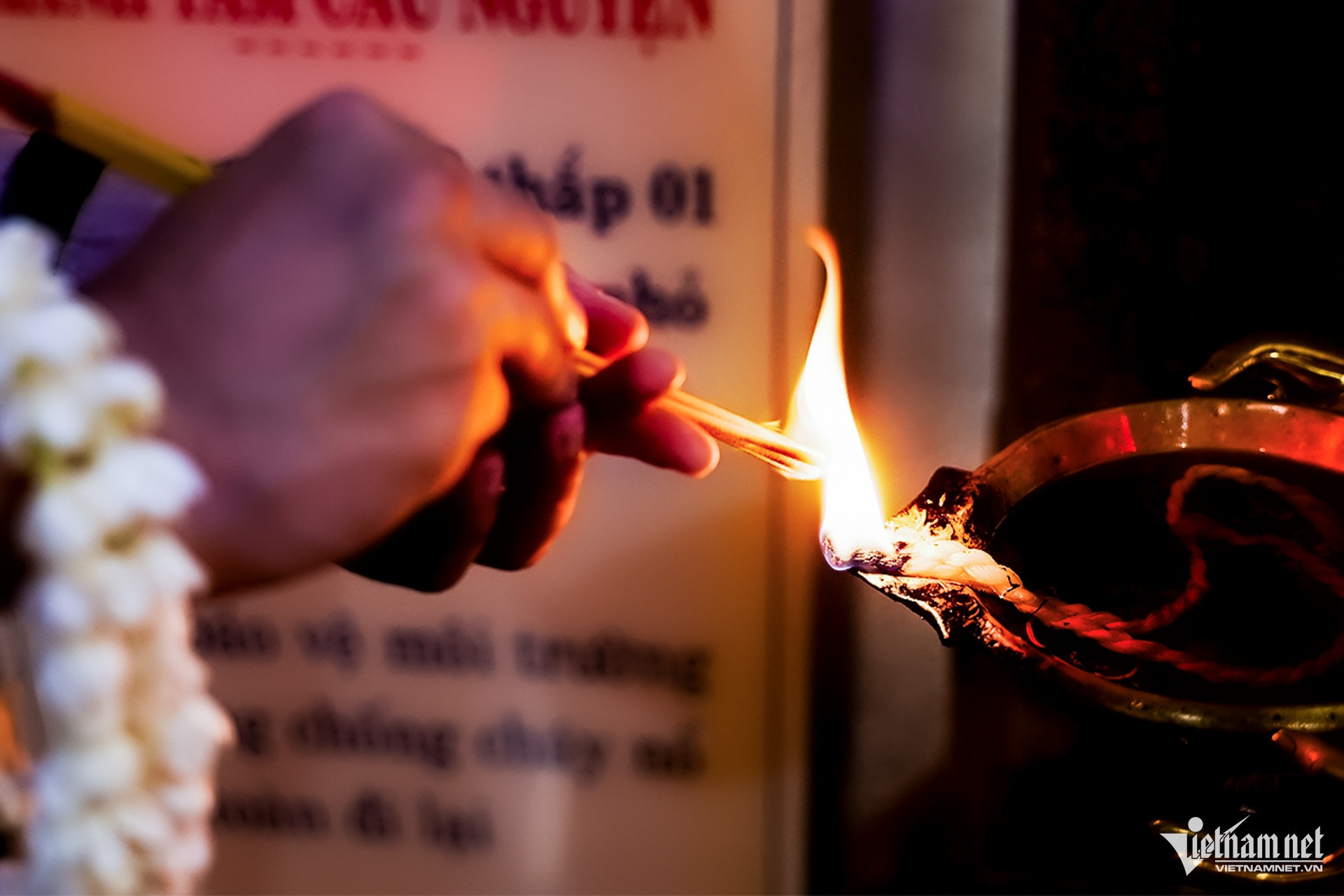
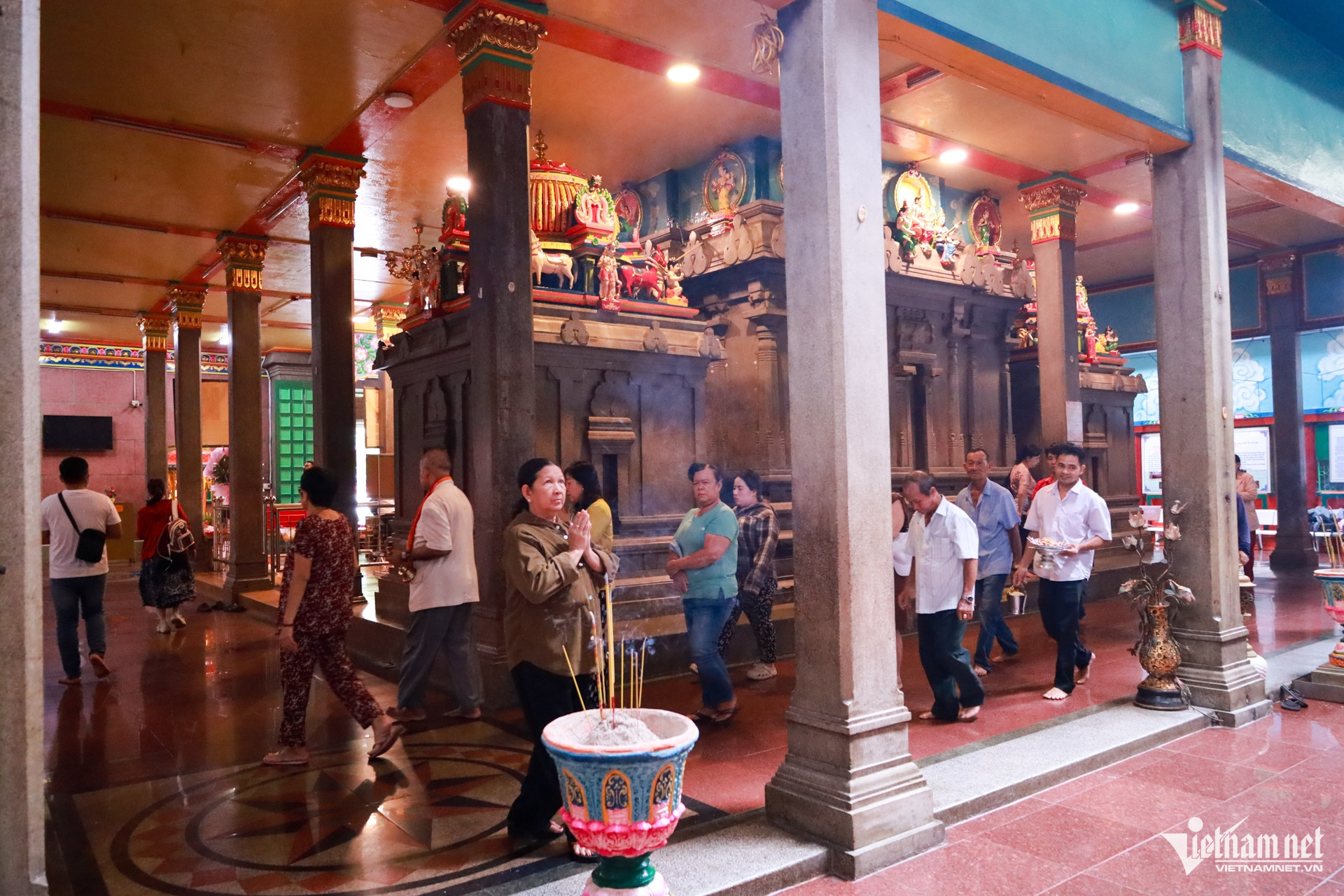
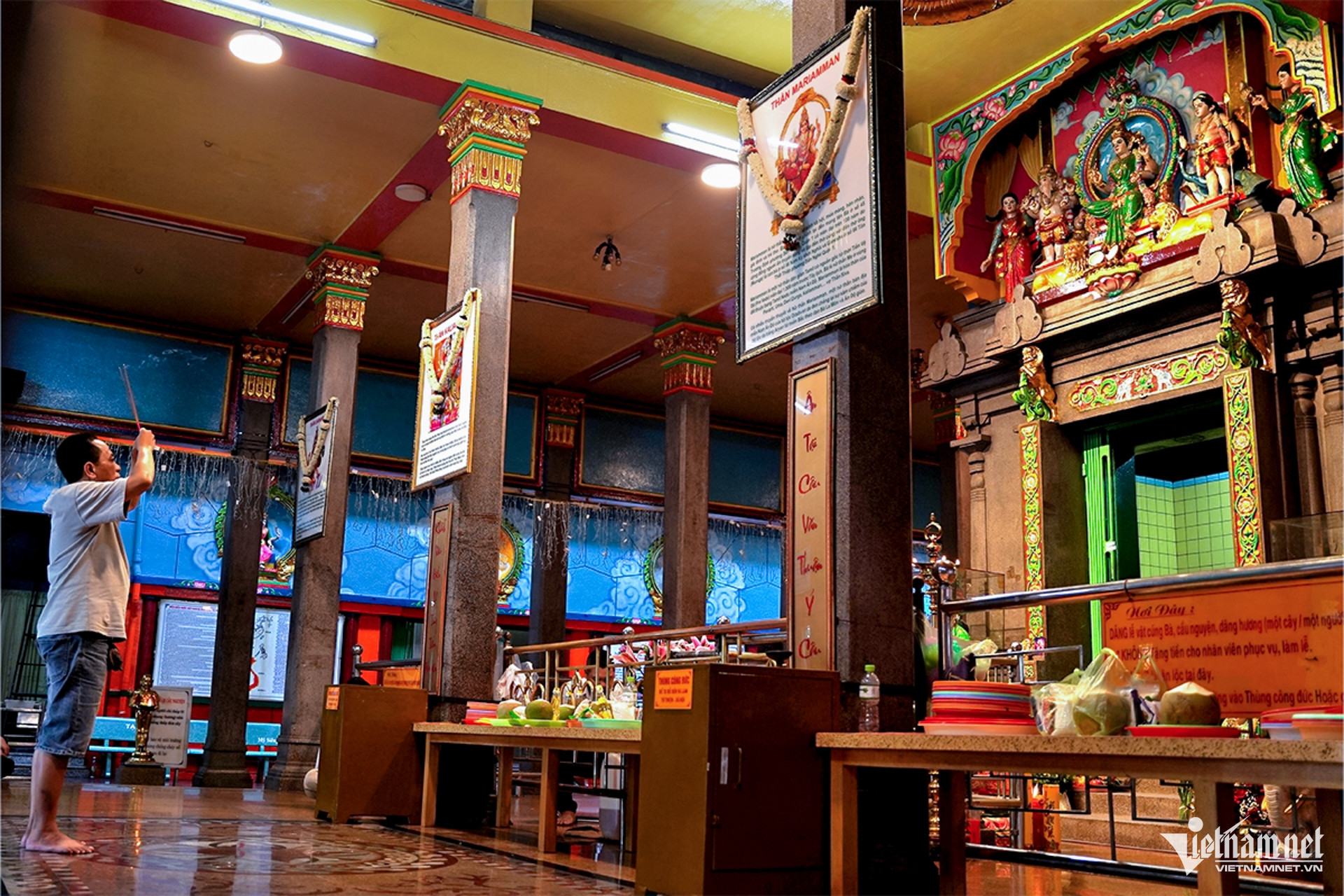
The temple uses incense made from sandalwood and agarwood, producing a warm, calming aroma. To maintain solemnity and prevent fire hazards, worshippers are encouraged to light only one stick of incense each.
At the end of the ceremony, each person receives a red dot pressed onto their forehead - a sign of divine blessing. This mark, called a Tilaka, holds deep significance in Hindu culture. It is traditionally placed between the eyebrows, known as the “third eye,” representing intuition and inner wisdom.
Inclusive, open to all faiths
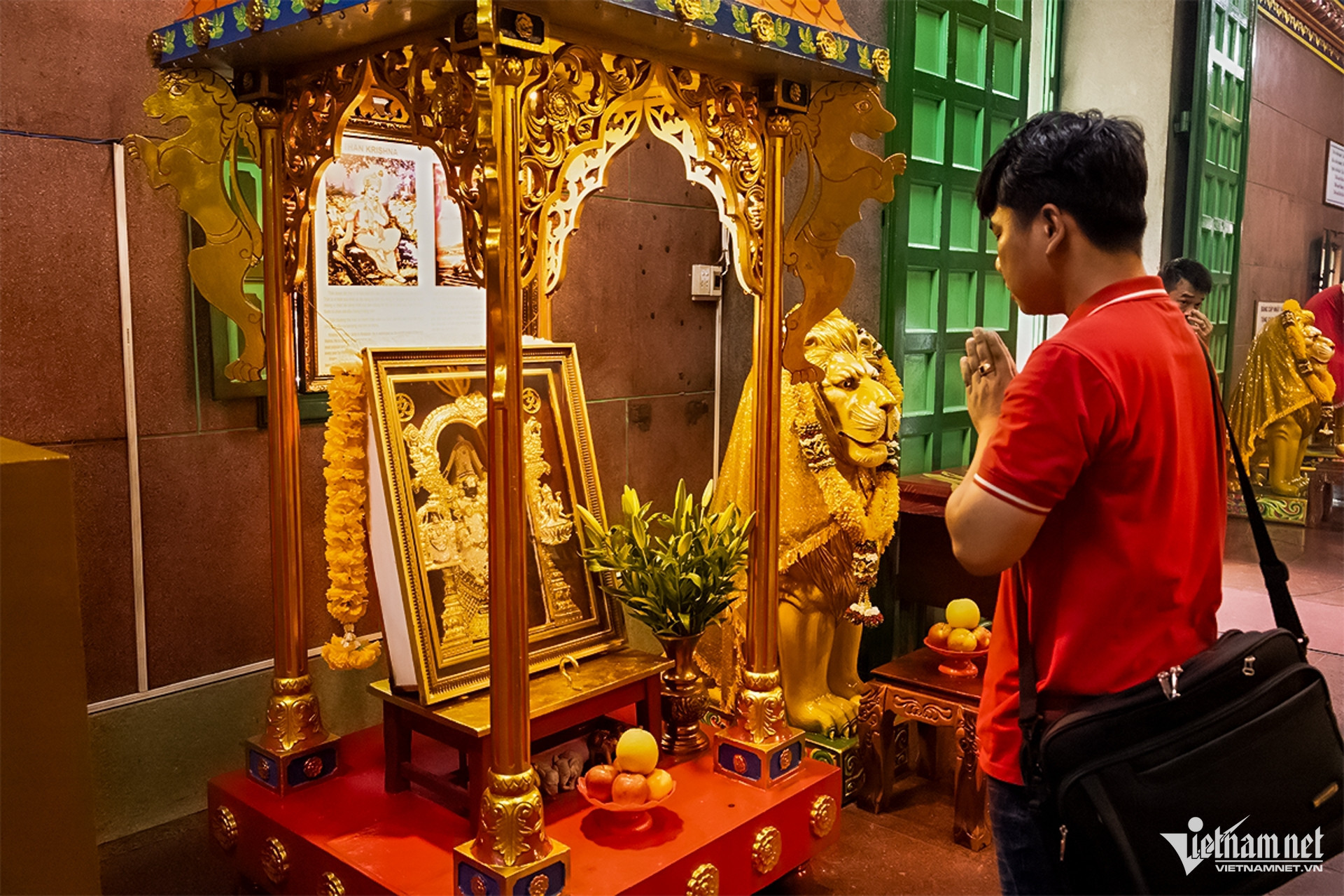
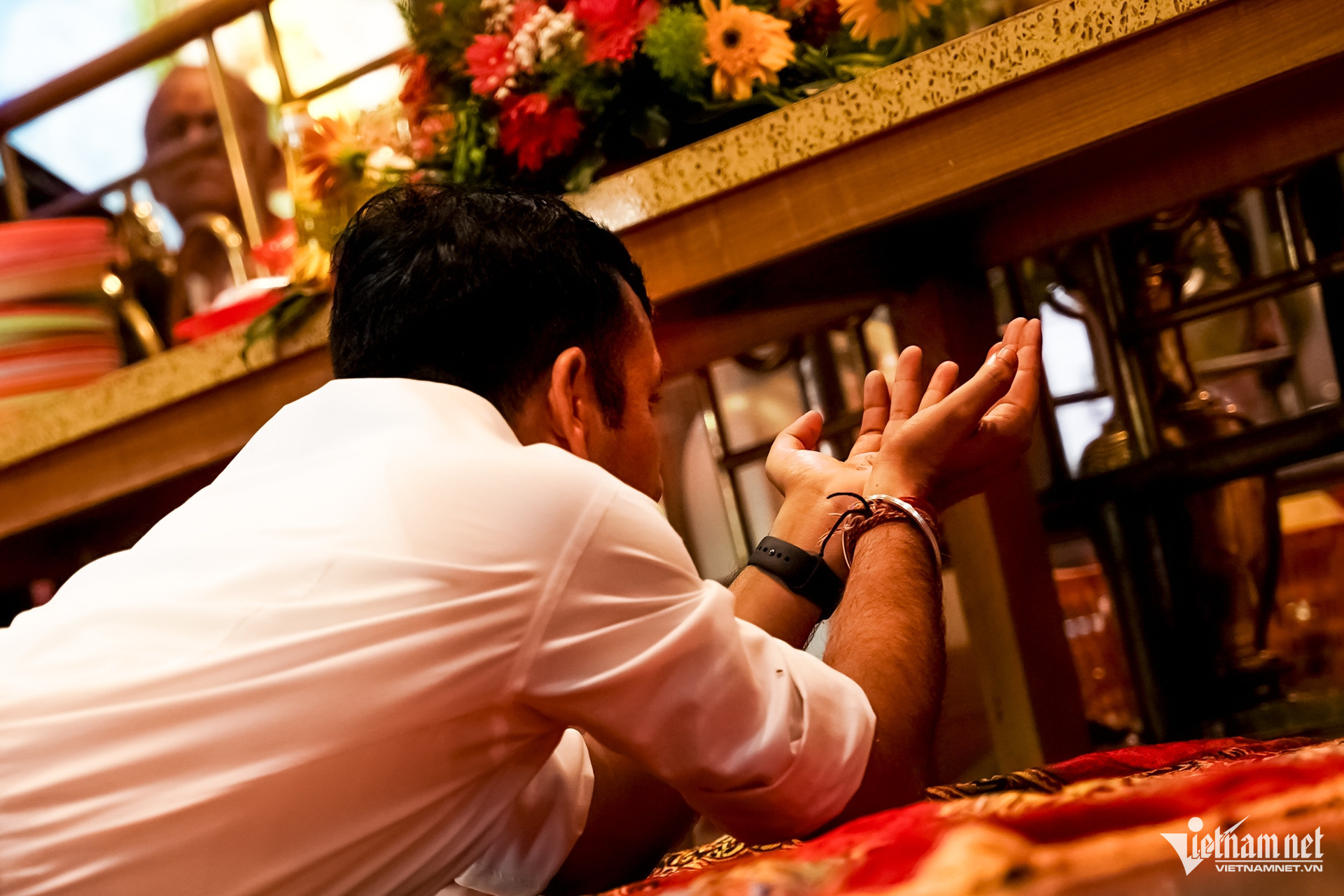
Foreign visitors are welcome to observe or participate in the rituals in a way that aligns with their own spiritual traditions. Some choose to clasp their hands in silent prayer, light incense, bow before the altar, or lie prostrate with open palms gently raised - a gesture of heartfelt devotion.
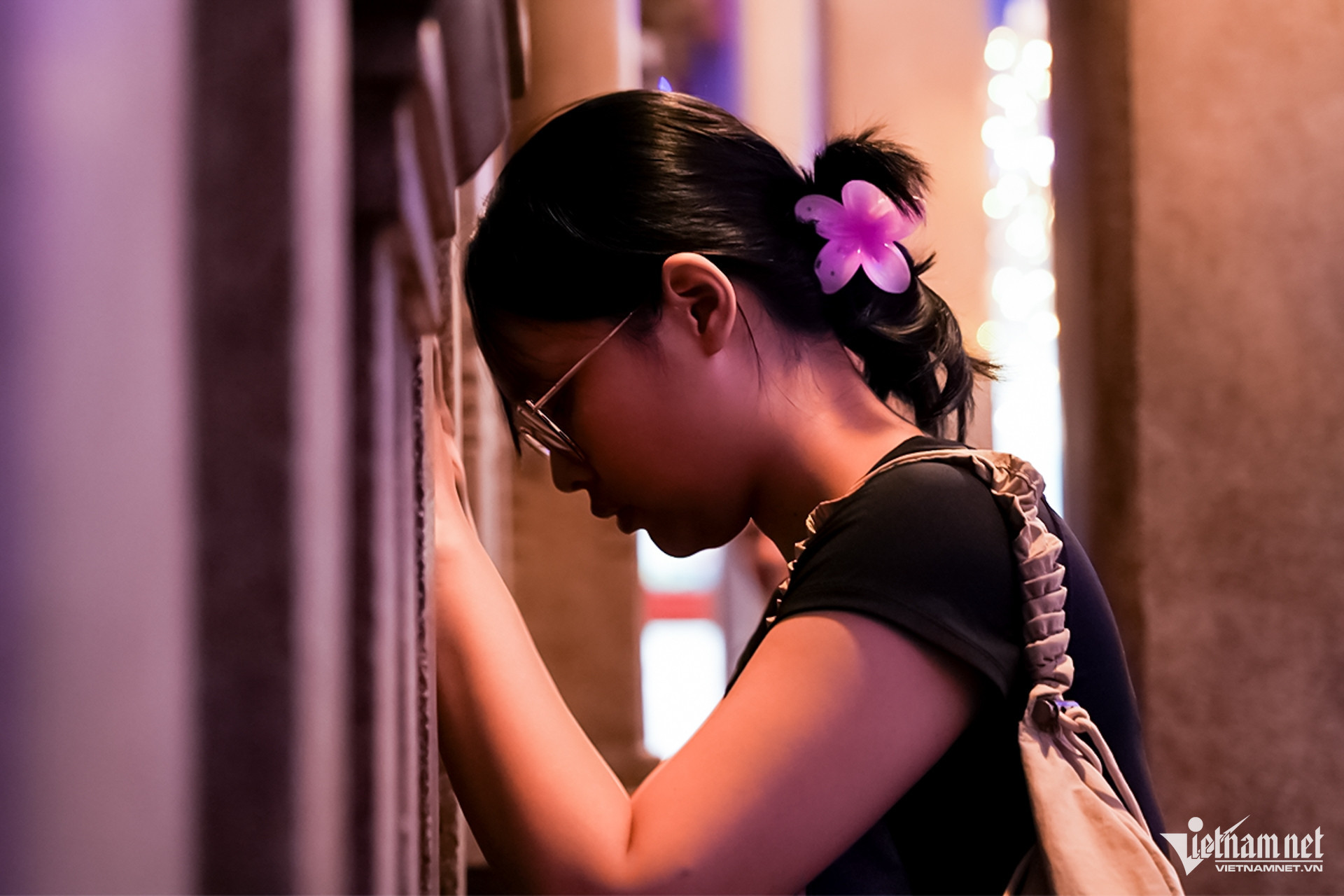
After praying in the sanctum, many devotees walk around to the back of the temple. There, they place their faces against a large stone wall, pressing their hands to its surface and quietly whispering wishes to the goddess.
Each silent movement carries a personal wish or concern. Trần Thị Thùy Trang, 29, shares: “I’ve been coming here for a long time. It feels familiar. Whenever I can, I stop by to pray for peace, success at work, and prosperity.”
Offerings of gratitude and hope
Nguyen Dang Khoa, head of the temple management board, says the daily offerings include fruits, flowers, sweet rice, and ceremonial treats.
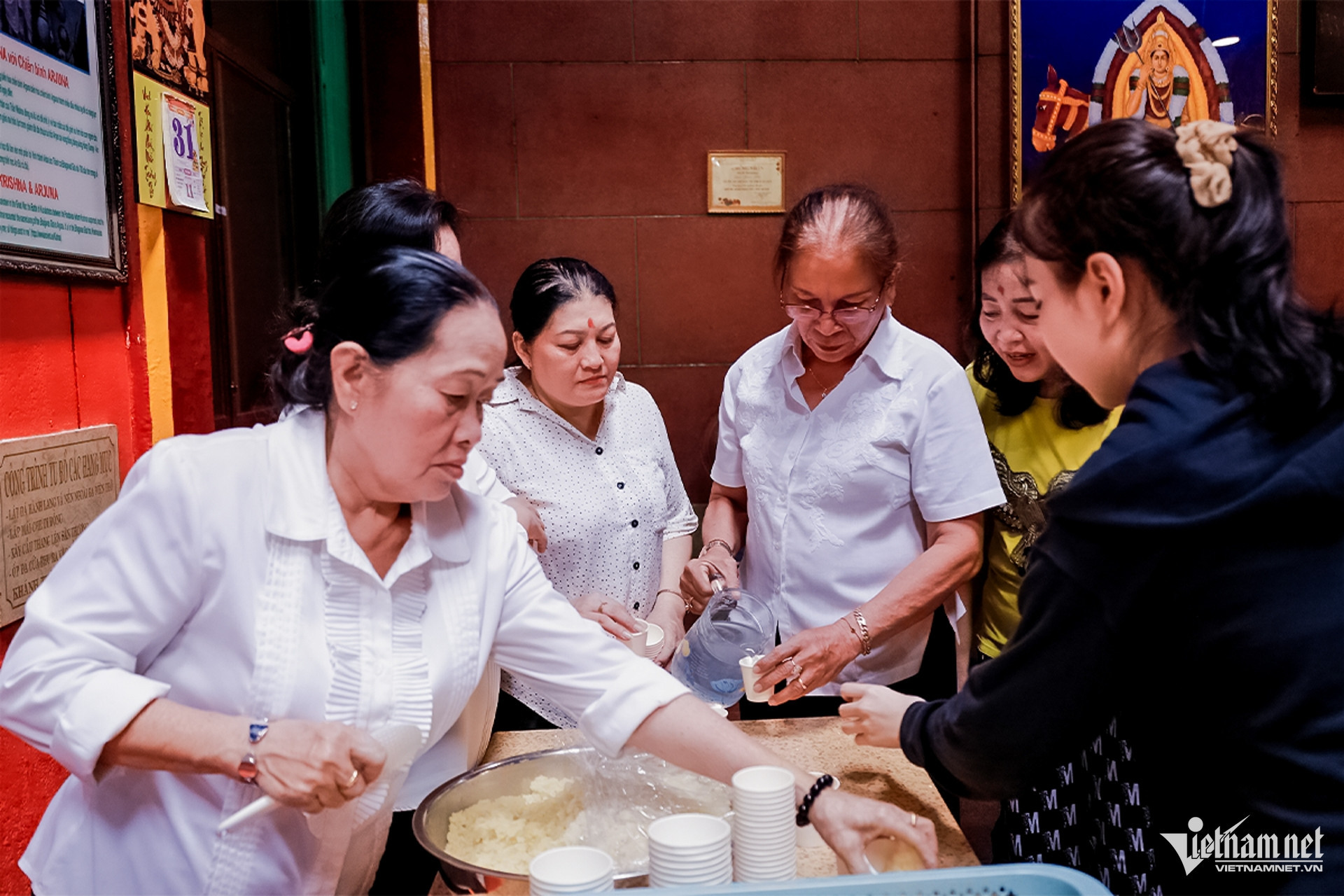
Every Friday, temple volunteers prepare special portions of sweet rice and distribute blessings to attendees. Children receive candies and biscuits, while adults are given small bags containing flowers, grains, and salt - symbols of nourishment and harmony. These tokens are called lộc, meaning spiritual gifts for health and abundance.
A sacred space with Indian roots
At the highest point of the main altar stands a statue of the goddess Mariamman. She is depicted with multiple arms, symbolizing divine power. One hand holds a trident, another a bowl of rice - signifying the bestowal of abundance and well-being.
Other Hindu deities are positioned throughout the temple grounds. Many of the statues, ornaments, and architectural elements were imported directly from India.
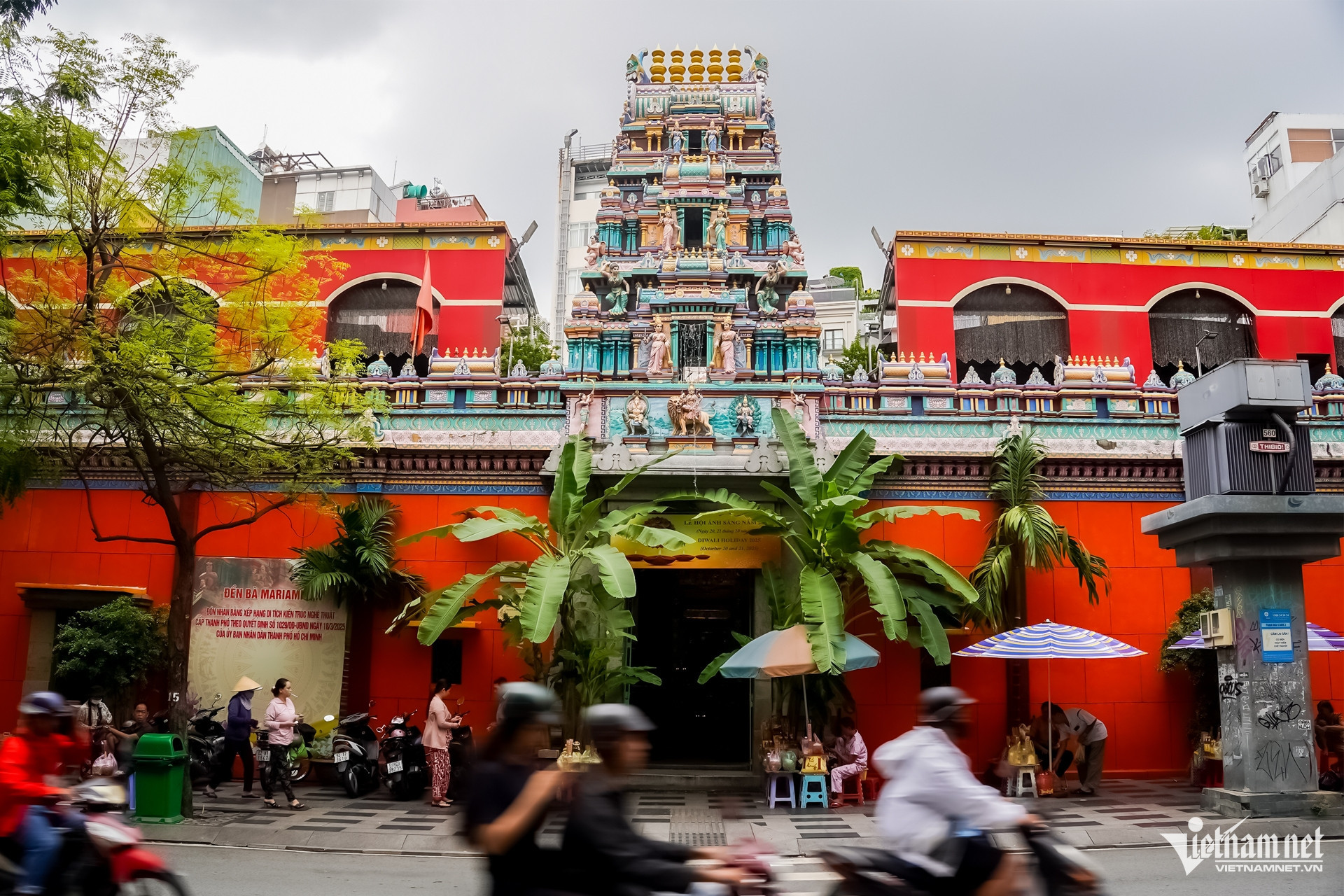
The Mariamman Temple, located in Ben Thanh Ward, was built in the late 19th century by Tamil immigrants from southern India who had settled in Saigon for business. The temple is dedicated to Mariamman, a revered goddess in Hinduism.
In October 2025, the temple was officially recognized as a municipal-level heritage site for its architectural and cultural value.
Dien Anh
.svg)
