 Vietnamnet.vn

 Podcast



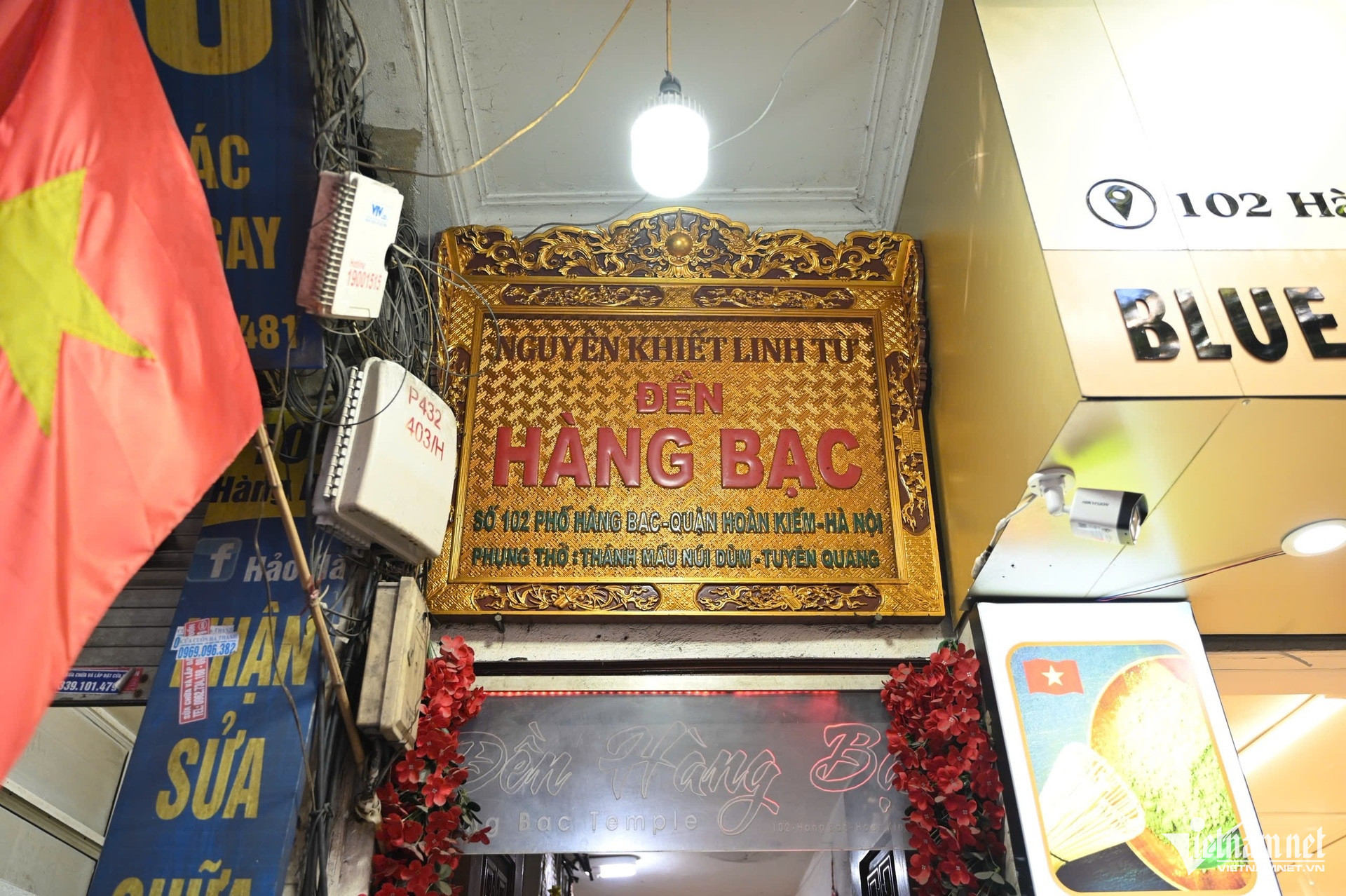
Located at 102 Hang Bac Street, Hoan Kiem District, the temple - officially named Nguyen Khiet Linh Tu - is dedicated to Princess Bach Hoa, a revered female deity.
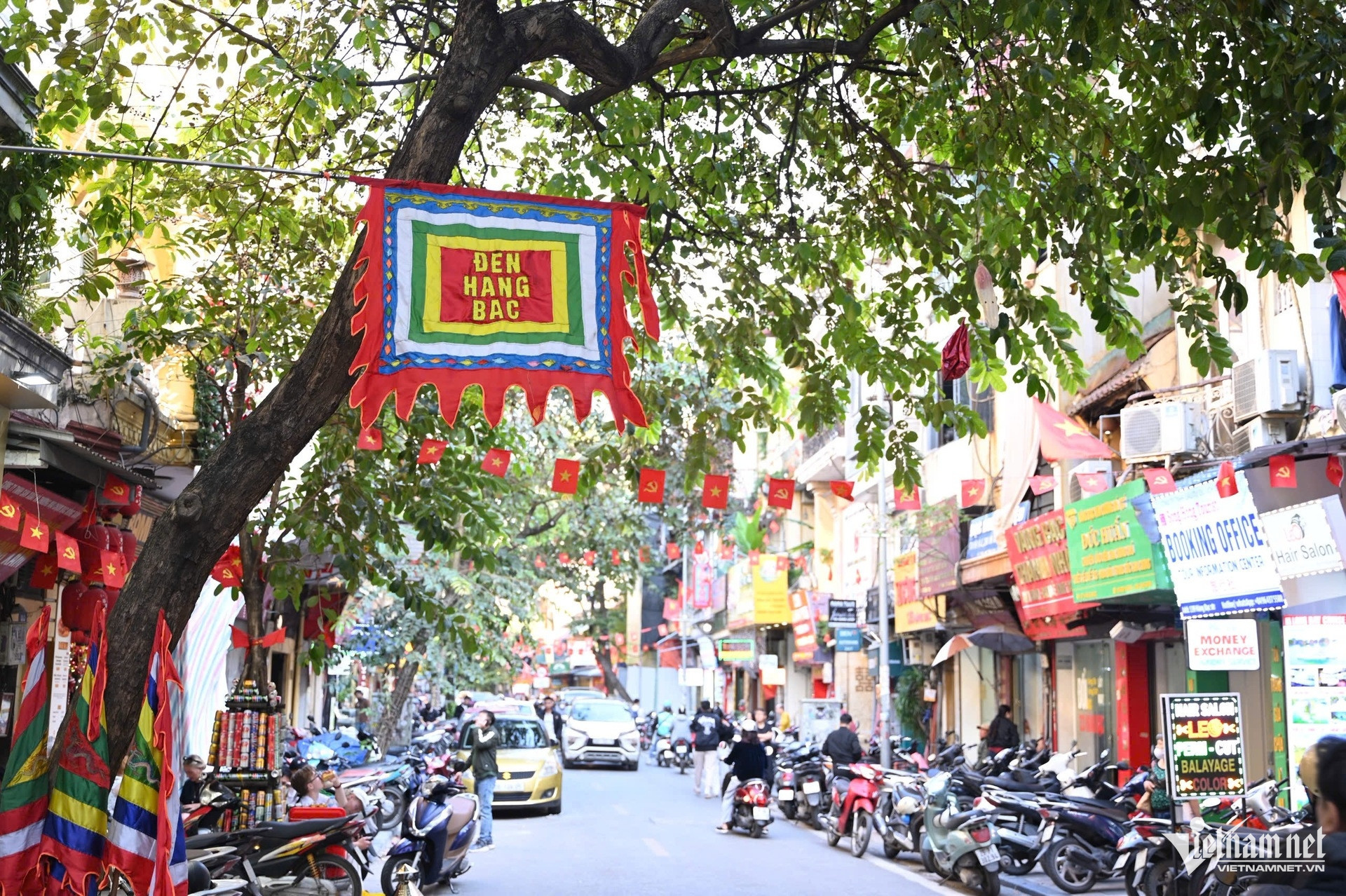
The temple’s presence is easily missed by passersby amid the vibrant street life. Only a multicolored ceremonial flag raised high signals its location.
According to historical records preserved at the Institute of Social Sciences, copied from the writings of village elder Nguyen Dinh Tuyen of Nguyen Khiet Ha hamlet (now Nguyen Sieu Street), the temple's deity Bach Hoa Princess was once worshipped at a small shrine in a mountainous gorge in the former Hung Hoa province (now encompassing parts of Tuyen Quang and nearby regions).
During the reign of King Le Canh Hung, the Hung Hoa region was ravaged by invaders. Before battle, royal troops offered prayers at the shrine seeking protection. Miraculously, the campaign was a complete success - with no bloodshed.
Amazed by the divine intervention, the king bestowed the deity with the honorific title “Nhu Gia – Trinh Thuan – Thuan Nhat Dai Vuong”, and ordered a temple to be built by the Nhị Hà River, declaring her the tutelary goddess of the Nguyen Khiet village.
The temple’s current location is not its original site. According to Nguyen Tat Kim Hung, a Meritorious Artisan and caretaker of the temple, it was once situated near Long Bien Bridge. It was relocated to make way for dike construction.
Today, visitors must pass through a narrow, one-person-wide alley to reach the temple.
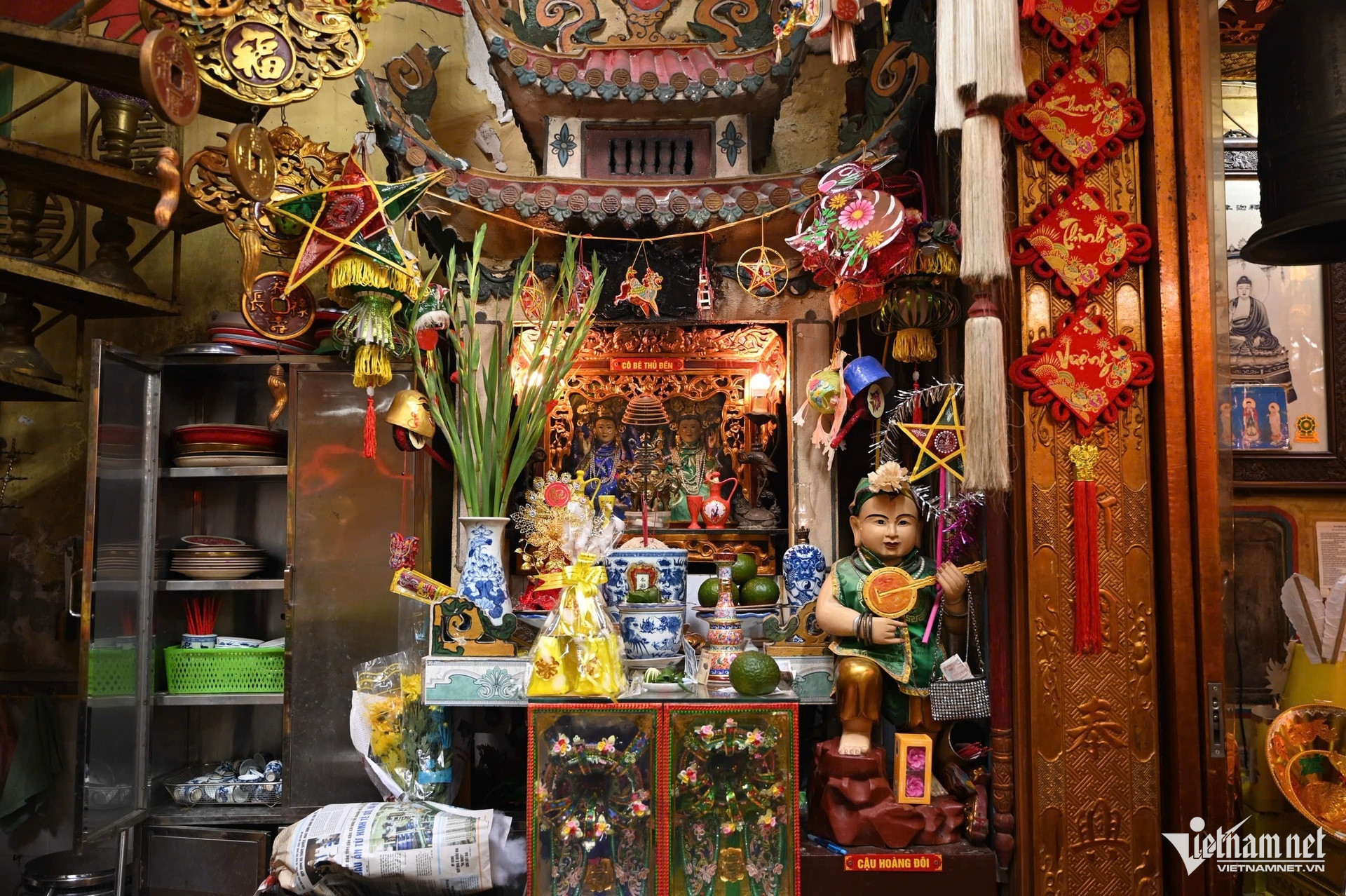
The structure features a two-story design. The ground floor serves as a reception area for visitors, while the second floor houses the main worship hall. Due to the temple’s limited width, the altars are arranged in tiers from front to back to maximize space.
Despite the confined space - just 70 square meters today - the temple once spanned over 377 square meters, with a traditional T-shaped layout. After peace was restored to Hanoi, families from various regions moved in, gradually reducing the temple’s footprint.
Today, the temple retains eight ancient stone steles, a crackled-glaze incense burner, and a prized bronze bell cast in 1871, weighing about 50 kg.
It also houses multiple sacred statues of deities from Vietnam’s Four Palaces Mother Goddess belief system, along with other historic artifacts.
In 1999, when the structure deteriorated due to age and termites, Madam Pho Thi Xuan, the temple’s elderly caretaker at the time, entrusted Mr. Hung to seek government permission for restoration. With official approval, the worship space was moved upstairs, while the ground floor was designated for guest reception.
“Hang Bac Temple opens every day. Thanks to features in several international travel guides, we welcome many foreign visitors. There are always people coming to offer incense and admire the temple,” Mr. Hung shared.
The temple practices Four Palaces Mother Goddess worship, a spiritual tradition unique to Vietnam. The main festival is held annually on the 12th day of the second lunar month, commemorating the ascension of Princess Bach Hoa.
Celebrations span three days (11–13 lunar February), featuring ceremonial offerings, ritual dances, and lavish tributes. During this time, people from across Vietnam come to pray for blessings and prosperity.
For many residents of Hanoi, Nguyen Khiet Linh Tu is not just a historic site, but a spiritual refuge. Ms. Hanh, a local resident, visits on the first and fifteenth days of every lunar month.
“Hang Bac Temple is sacred and steeped in history. Though small, it retains a solemn, ancient, and intimate atmosphere. I always pray for my family’s peace and health when I visit,” she shared.


The sacred space on the second floor. Photo: Nguyen Huy



Nguyen Huy & Ngoc Ha
.svg)
