 Vietnamnet.vn

 Podcast



As Tet approaches, a unique specialty from An Giang is stirring up excitement among food lovers. Known as khô nhái - or more affectionately, vũ nữ chân dài (“dancing legged beauties”) - this sun-dried frog dish is being eagerly sought after for gifting and festive feasts. Despite its price tag of over USD 20 per kilogram, many producers can’t keep up with demand.
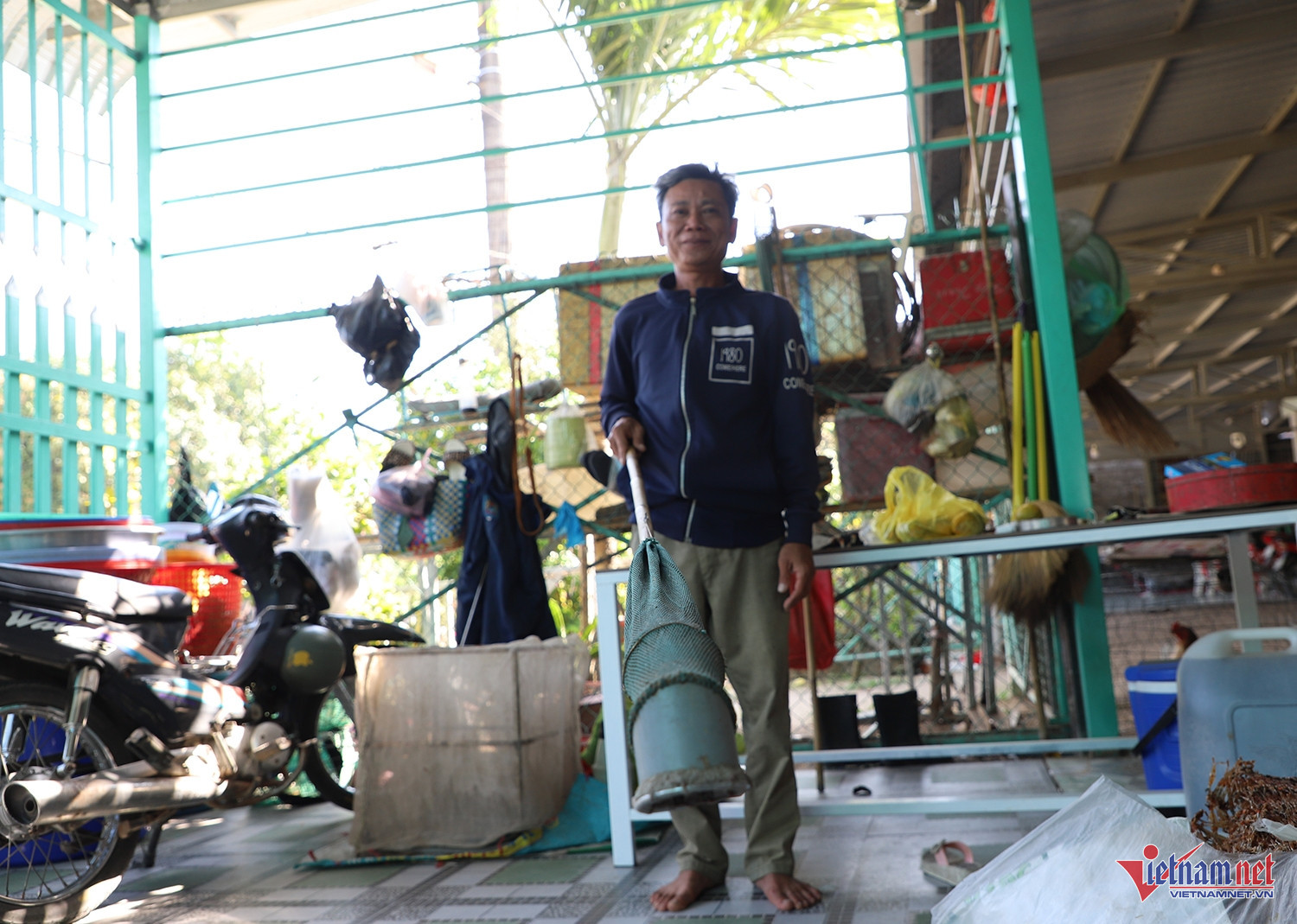
On these early Tet evenings, as city lights begin to glow, Vo Be Hoang, 49, from Vinh Lap hamlet in An Cu commune, An Giang province, gears up for another night of work. After a quick dinner, he dons a raincoat, grabs a flashlight, a bamboo catcher, and a mesh bag, then sets out on a motorbike with fellow “lamp hunters,” heading nearly 70 km to the rice fields of Ha Tien.
By 7 p.m., under the blanket of darkness across freshly plowed paddies, the hunters fan out, each taking a separate path. The croaks of frogs echo in the quiet night. In the pitch black, only the flickers of their flashlights cut through the fields, swiftly sweeping across the surface to detect hidden frogs.
The frog-catching tool is simple: a two-meter-long bamboo pole with a funnel-shaped trap at the tip. When a frog is spotted, the hunter quickly lowers the trap, capturing it in the funnel, where it slides into a netted pouch and cannot escape. The job requires speed, sharp eyes, and endurance, as hunters wade through cold water for hours.
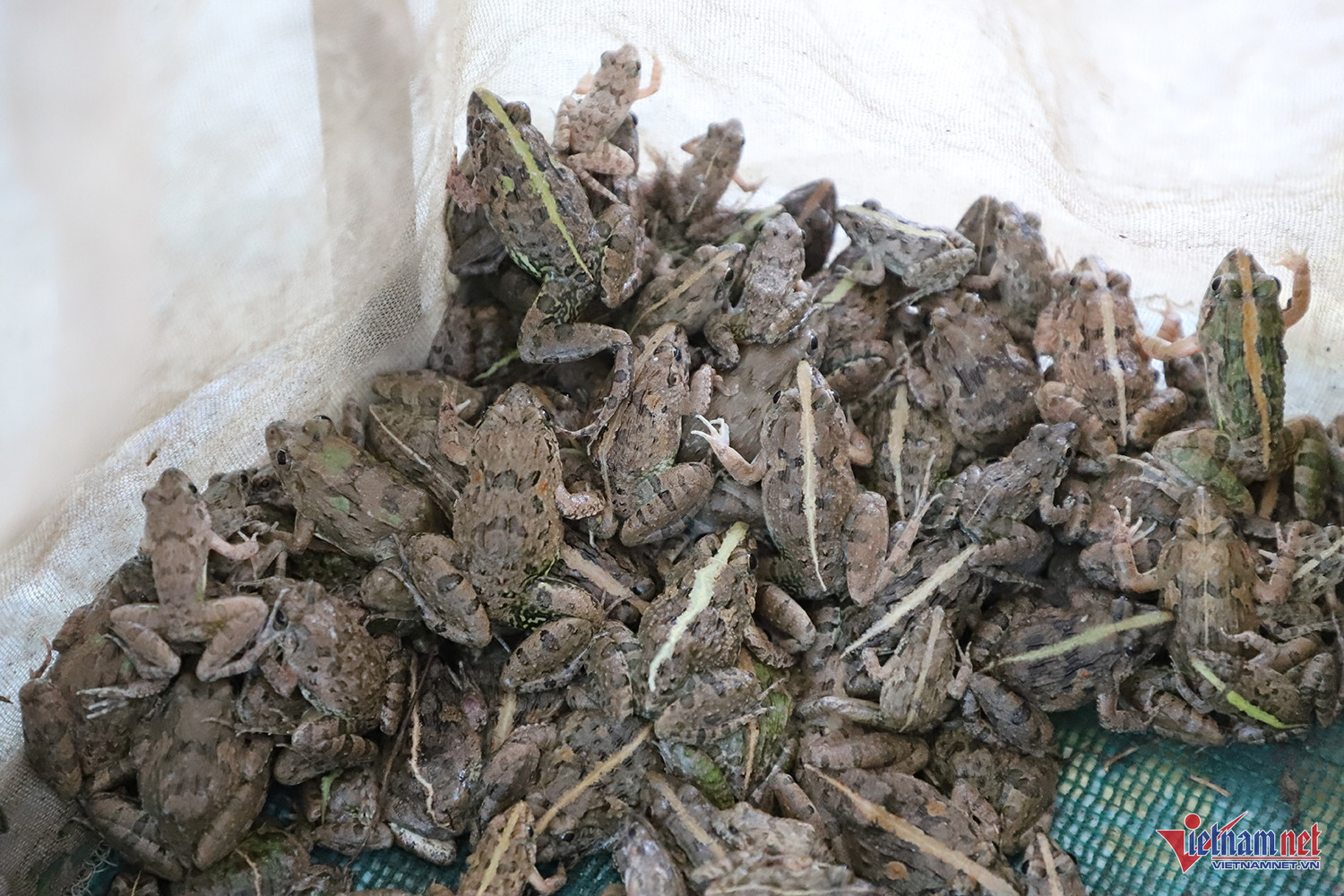
“There are fewer frogs this season, but the price is better,” said Hoang. During peak times, frogs sell for 45,000–50,000 VND/kg, but now fetch 60,000–70,000 VND (about USD 2.50–3) per kg. On an average night, he catches 3–4 kg of frogs; during peak season, up to 10 kg. The frogs are sold to households in the Nui Cam area, which has been known for frog jerky for over 15 years.
Once caught, the frogs are immediately transported to processing facilities overnight or early the next morning. Lai Thi Diem, 48, owner of Bay Hoang frog jerky workshop, emphasized that maintaining freshness is the most critical step. Throughout the cleaning and marinating process, the frogs must be kept on ice.
“If the frogs even begin to spoil, the entire batch is wasted - no amount of seasoning can save them,” Diem explained.

Prepping the frogs is labor-intensive. Wild frogs feed indiscriminately and may carry parasites, so each one must be skinned, gutted, and thoroughly washed multiple times to ensure hygiene and preserve their natural sweetness.
After cleaning, the frogs are marinated. Ingredients are simple - salt or fish sauce, chili, sugar - but each workshop has its own signature formula.
“Instead of salt, I use fermented freshwater fish sauce, which costs about 40,000 VND per liter. A liter is only enough to marinate 40 kg of frogs, less than salt would allow, but the flavor is sweeter and more aromatic,” Diem revealed.
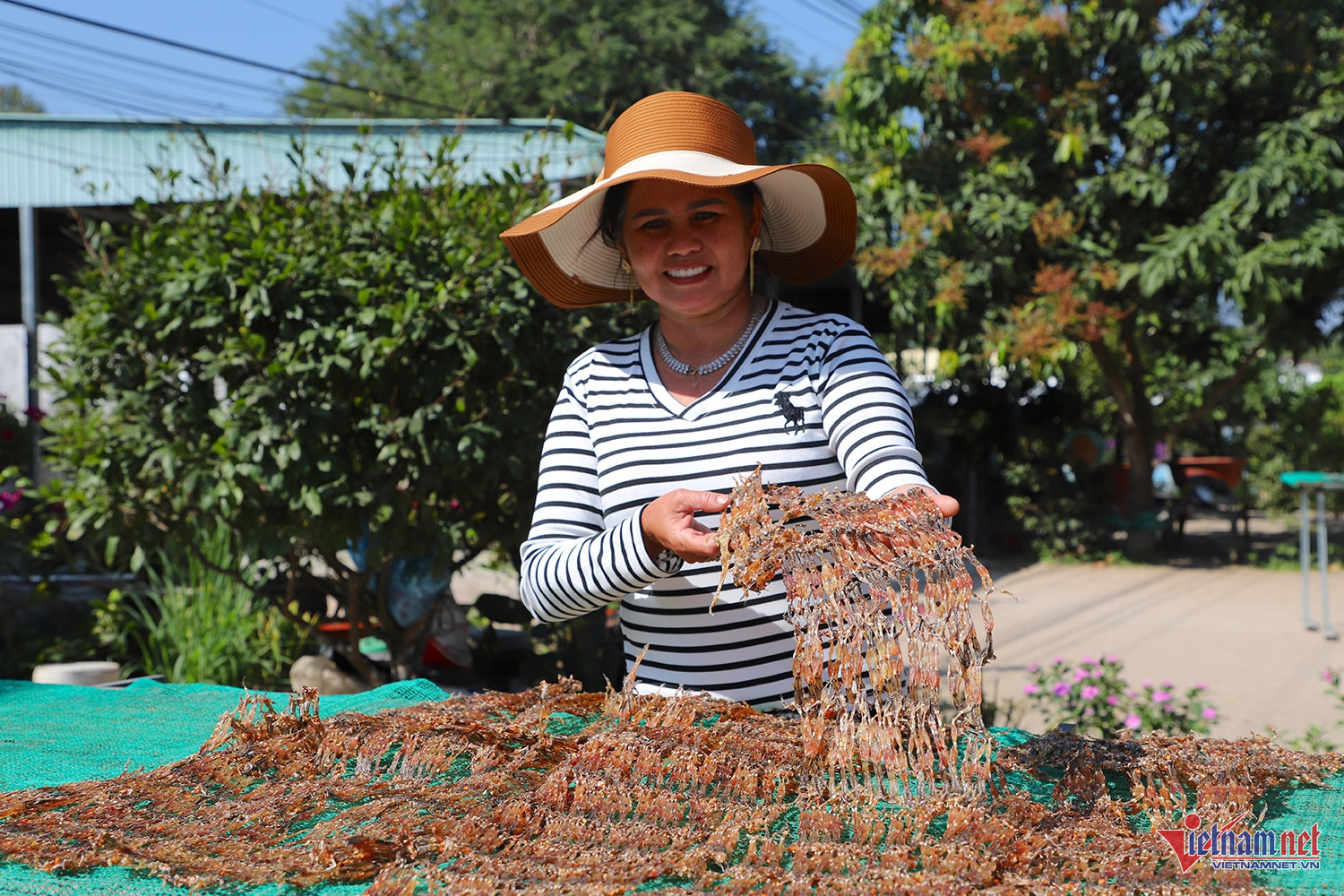
The marinated frogs are neatly arranged on racks and sun-dried - never machine-dried. According to veteran producers, frog jerky only achieves its signature crunch and flavor when dried naturally in the sun. Machine drying dulls the aroma and robs the meat of its signature richness. On average, 10 kg of fresh frog yields just 1.7–1.8 kg of finished jerky.
While frog jerky is made year-round, the peak season runs from May to October - during the rainy season, when frogs breed abundantly.
In recent years, however, natural frog populations have dwindled, reducing supply and driving up prices. Today, frog jerky sells for 350,000–600,000 VND/kg (roughly USD 14–25), depending on quality and season.
“We’ve already received orders for more than 200 kg. Supply can’t keep up. As Tet nears, the price might hit 700,000 VND/kg (nearly USD 30) - the highest in years,” Diem shared.

The name “vũ nữ chân dài” (literally, “long-legged dancing girls”) comes from the frogs’ slender, outstretched limbs once dried, which resemble elegant dance poses. Beyond the catchy name, the jerky has won over food lovers with its crunchy texture, rich aroma, and natural sweetness. Grilled or deep-fried, the entire frog - including bones - can be eaten, delivering a rustic yet addictive flavor.
Though humble in origin, frog jerky has become a prized holiday treat, cherished in gift baskets and family tables alike as Tet draws near.
Tran Tuyen
.svg)
