 Vietnamnet.vn

 Podcast



In a recent report on solutions to ensure electricity supply for the 2026-2030 period and adjustments to Power Development Plan VIII (Plan 8), the Ministry of Industry and Trade (MOIT) stated that in 2026, total electricity generation is estimated to reach 354.4 billion kWh, an increase of nearly 9.7 percent compared to 2025. Peak capacity (Pmax) across the entire system will reach 57,537 MW, 6.4 percent higher than the record level in 2025.
MOIT said that power supply in 2026 would be guaranteed, meeting the country's demand.
However, based on updated calculations and determination of electricity generation demand and Pmax year by year, the Ministry expressed concern that electricity output may experience a significant deficit, particularly in the Northern region.
In 2027, the whole country is expected to lack about 4,256 MW of capacity and 2.9 billion kWh of electricity. By 2030, the deficit could increase to nearly 14,000 MW and over 61 billion kWh; of which the Northern region alone may lack about 13,000 MW and nearly 45 billion kWh.
Meannwhile, implemented investment volume for power source and grid projects has been low over recent times compared to planning requirements, leading to the risk of power supply shortages in coming years, especially in 2027-2030.
Regarding LNG-fired power projects specifically, MOIT said these projects are progressing very slowly due to difficulties in financial arrangement, turbine supply, and power purchase agreement (PPA) negotiations, as well as imported LNG prices being very high and volatile.
Recently, at a meeting to review the progress of national key energy projects under the revised Power Development Plan VIII (PDP8R), Deputy Minister of Industry and Trade Truong Thanh Hoai said that progress across many projects still failed to meet requirements.
Most new LNG power projects are currently in the investment preparation phase and have not begun construction, while PPA negotiations are encountering numerous difficulties.
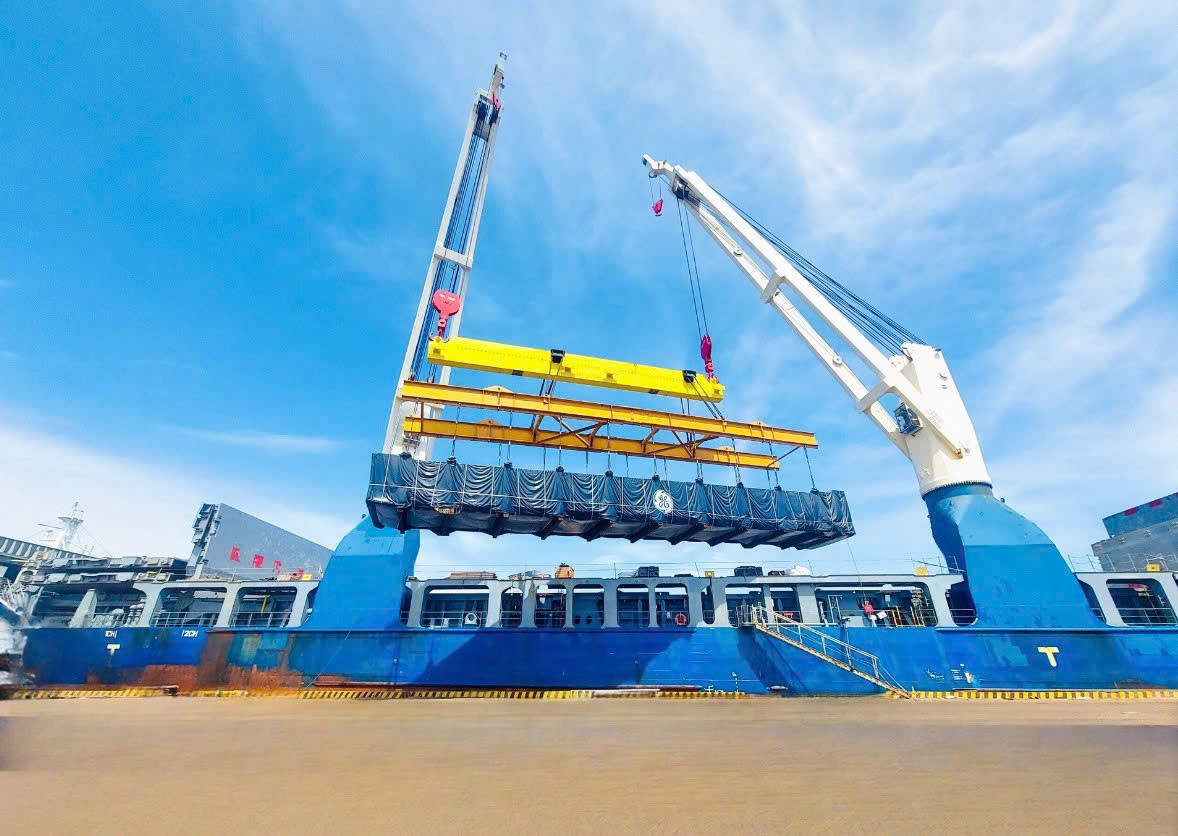
Phung Ngoc Lan, General Director of GE Vernova Vietnam, said PDP8R has set out a plan to boost LNG gas power sources, with approximately 22.4 GW of LNG capacity added from now until 2030. This demonstrates the critical role of gas in Vietnam's energy transition process.
However, LNG power projects feature large and complex infrastructure scales, with numerous items needing parallel implementation, such as project development, securing capital and fuel infrastructure, equipment procurement, and grid connection. Consequently, project timelines can be affected by multiple different factors rather than a single isolated issue.
Solutions
Lan stated that LNG gas power projects rely on an interconnected ecosystem that includes policy and commercial frameworks, finance, fuel and grid infrastructure, technology, as well as project execution capability. Overall progress will depend on whether these elements can develop synchronously.
Another increasingly noteworthy factor is the global power generation equipment market. As demand for new power capacity additions grows across multiple markets, original equipment manufacturer (OEM) manufacturing capacity, delivery lead times, and costs are becoming crucial factors requiring consideration.
This underscores the necessity of making timely investment and procurement decisions to safeguard project execution timelines.
Lan stressed that finance is also a vital part of the equation, especially when Vietnam's power sector transition demands immense investment capital.
GE Vernova's research shows that diversifying financing sources, including Export Credit Agencies (ECAs), commercial banks with ECA guarantees, and bankable project structures, can help broaden access to capital and optimize financing costs.
For successful implementation, the entire ecosystem needs to develop in sync. Alongside capital and infrastructure, Vietnam also needs technical and leadership capabilities to construct and operate an increasingly complex power system at scale.
GE Vernova estimates that Vietnam's power sector workforce could grow by 67 percent, from around 300,000 to 500,000 full-time equivalent (FTE) workers by 2035. This indicates that human capacity development needs to move hand in hand with physical infrastructure investment.
Vietnam has achieved progress in developing LNG import infrastructure, with Thi Vai and Cai Mep LNG terminals currently operational in the South, serving regional demand, including Nhon Trach 3 & 4 and the Phu My Power Center.
At the same time, LNG gas power projects are being planned along Vietnam's coastline, with many requiring LNG terminals and supporting infrastructure. This will demand substantial development and coordination efforts in the years ahead.
Tam An
.svg)
