 Vietnamnet.vn

 Podcast



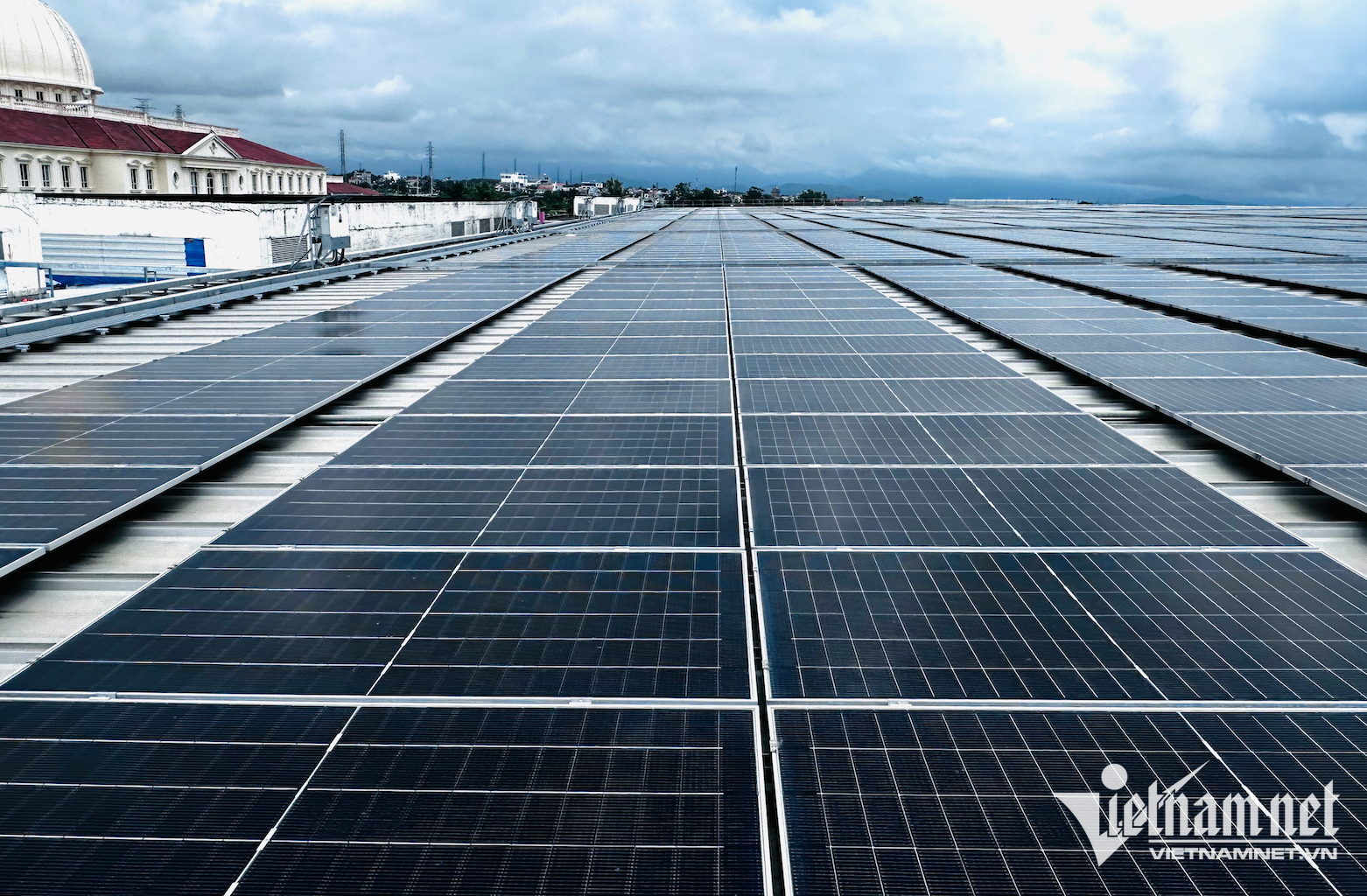
Data compiled by Vietnam Electricity (EVN) from its power corporations showed that by the end of July 2026, Vietnam had recorded 130,811 self-generated, self-consumed rooftop solar systems with a combined capacity of more than 11,200 MWp.
Notably, beyond supplying electricity for businesses and households, rooftop solar systems sold 6.6 billion kWh of electricity to the national grid during the first seven months of the year.
In practice, rooftop solar can not only help households reduce electricity bills, but also give them greater control over their power supply and limit the impact of potential electricity price adjustments in the future. These are among the reasons a growing number of households are taking an interest in rooftop solar.
Several provinces and cities across Vietnam have also begun introducing cash support and low-interest financing for households installing self-generated, self-consumed rooftop solar systems.
Nguyen Huu Khoa, a lecturer at Ho Chi Minh City Power College and a member of the Scientific Council of Vietnam Energy Magazine, said solar power delivers higher output when solar irradiation is strong, cloud cover is limited and photovoltaic panels receive more direct sunlight.
Solar systems in Vietnam typically generate electricity from around 8 am to 4 pm each day. According to Khoa, output generally reaches its highest levels between 10 am and 2 pm.
So which Vietnamese province or city offers the highest potential output for self-generated, self-consumed rooftop solar?
Based on the theoretical PVout figures - the amount of electricity generated per kWp of installed capacity - published by EVN in 2026, Khoa said solar irradiation varies considerably among Vietnam’s provinces and cities.
As a result, electricity output from rooftop solar systems can also differ significantly depending on location.
Calculations show that Lam Dong offers the highest solar output in the country, reaching 1,583 kWh/kWp per year.
Other provinces in the Central Highlands, along with Dong Nai, also rank among Vietnam’s strongest locations for rooftop solar generation, with output ranging from 1,496 to 1,575 kWh/kWp per year depending on the locality.
Dien Bien, Lai Chau and Son La have solar irradiation levels comparable to central Vietnam and offer the strongest rooftop solar generation conditions in the north.
Rooftop solar systems installed in these provinces can theoretically generate 1,431 kWh/kWp per year in Dien Bien, 1,411 kWh/kWp in Lai Chau and 1,391 kWh/kWp in Son La.
At 1,426 kWh/kWp per year, Ho Chi Minh City also offers favorable rooftop solar generation conditions in southern Vietnam, ranking behind only Dong Nai in the region.
At the other end of the spectrum, Hung Yen, Hai Phong and Hanoi have the lowest rooftop solar generation potential in the country, with theoretical output of 901 kWh/kWp, 902 kWh/kWp and 912 kWh/kWp per year, respectively.
One important point is that PVout represents theoretical electricity generation for each kWp of installed capacity. It is not a direct measure of a system’s economic efficiency or its payback period.
Energy expert Nguyen Huu Khoa stressed that rooftop solar systems involve strict technical requirements, particularly regarding equipment quality and the potential generation of electrical harmonics that can affect power quality on the grid.
Households should therefore choose reputable suppliers and hire an independent organization to inspect the system after installation to ensure it meets the required technical standards.
Beyond solar irradiation, electricity output also depends significantly on installation conditions, including the orientation and tilt angle of the panels and the amount of shading they receive.
Dust, leaves and shadows from high-rise buildings, billboards or trees can all reduce electricity generation.
According to Khoa, open rooftops with minimal obstruction generally deliver better solar power output.
Tam An
.svg)
