 Vietnamnet.vn

 Podcast



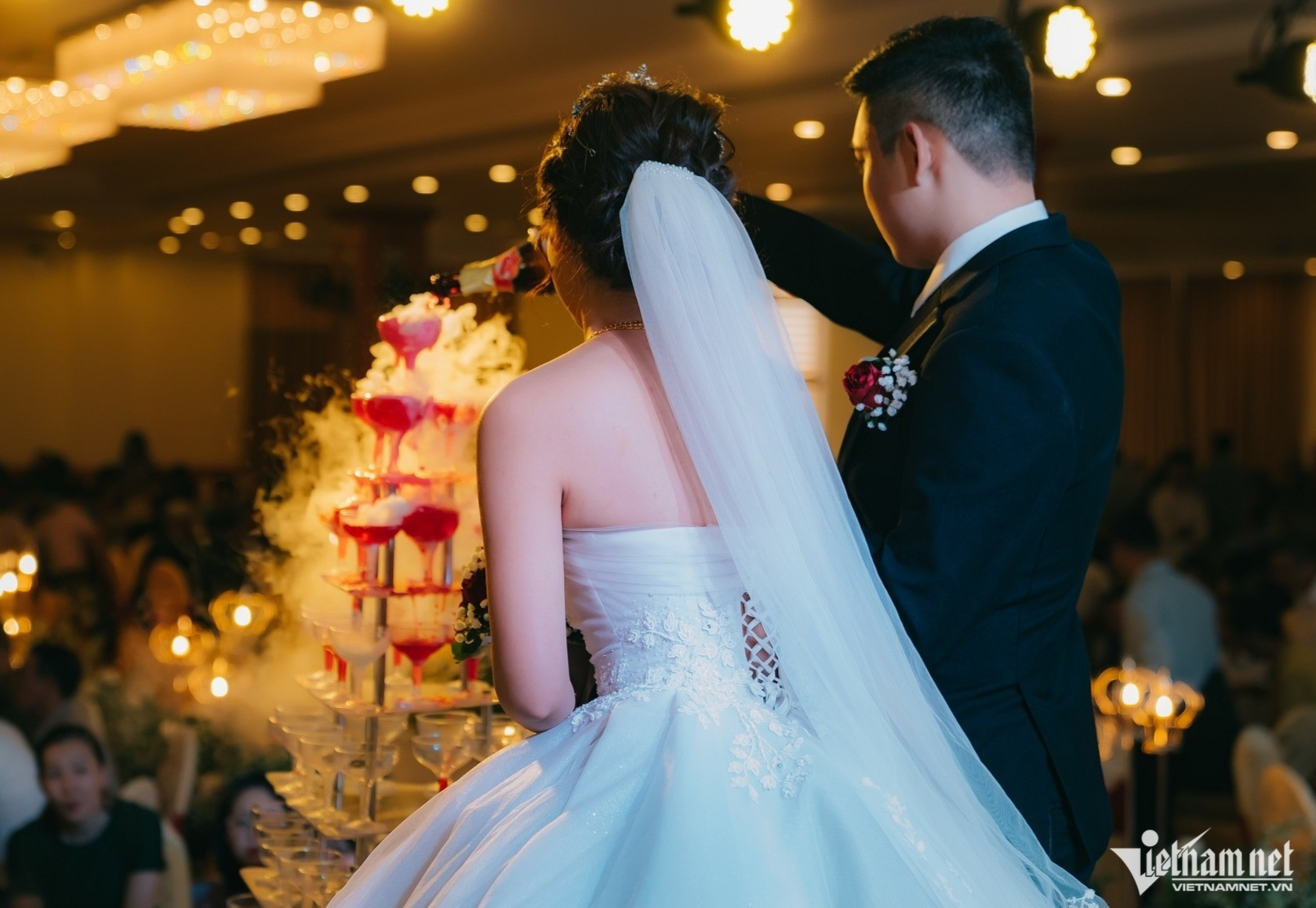
Nguyen Tung (35), from Hung Yen Province, has yet to start a family because of the pressure of buying a home in Hanoi. With a monthly income of VND50-60 million, even with financial support from his parents, he would still need to take on a mortgage lasting around 15 years to purchase a VND3.5 billion apartment.
“I’m afraid I’ll burn out too soon. And if I get married, I’ll also have to pay for a wedding and raise children,” he said.
Tung’s story is no longer unusual in modern society. According to the 2024 Mid-Term Population and Housing Survey conducted by the Statistics Office, the average age of first marriage among Vietnamese people reached 27.3 years, up 2.1 years compared to 2019. Men marry 4.2 years later than women on average, at 29.4 years and 25.2 years, respectively.
HCMC recorded the highest average age of first marriage nationwide at 30.4 years, nearly three years higher than in 2019.
Talking with VietNamNet, psychologist Hoang Anh Tu explained the psychological pressures that are leading an increasing number of young people to delay marriage.
In your view, why are more young Vietnamese people marrying later, or even losing interest in marriage altogether?
“Today’s young people are selfish, lazy when it comes to relationships, and afraid of responsibility.” That is something I often hear from many parents. But in reality, no one is “lazy about happiness.” Young people hesitate to get married because they are carrying too many invisible burdens.
In today’s world, Gen Z and Millennials face greater economic pressure than previous generations. Housing prices continue to rise, wedding costs are substantial, and raising children is far more expensive than before. Facing these financial realities, marriage can suddenly appear to be a “high-risk project” rather than a safe haven.
Besides economic pressures, many young people are also influenced by fractured marriages and trauma within their own families. This makes them more cautious, wishing to find a relationship with enough safety and understanding instead of rushing into marriage.
In your opinion, what psychological pressures do long-term single young people usually face? Does living alone for too long make it difficult for them to adapt to marriage?
No matter how strong, humans remain social creatures. Delaying deep connections sometimes leads to a feeling of "loneliness in a crowd." On one hand, they enjoy independence; on the other hand, they face existential crises and hidden depression when lacking a fixed emotional anchor during times of illness or vulnerability in life.
In the process of reading and listening to the confessions of many young people, I see that many long-term single individuals often carry a silent exhaustion due to pressure from social stigmas. They must continuously prove that being single is a choice rather than incompetence, and that "consumes" a great deal of energy and emotion.
Living alone for too long also makes it difficult for many people to adapt to marriage. When accustomed to their own rhythm of life, having to share, compromise, or alter habits easily generates psychological "shocks," even making them fear losing freedom when committing to someone.
How should the "age of marriage" be properly perceived?
We often confuse biological age with maturity. 25–27 years old might be a favorable age for childbirth, but that does not mean a person is psychologically and financially mature enough to build a family.
Entering marriage with an immature head regarding emotional management, an empty wallet, and an unrefined ego is no different from throwing oneself into a storm without a life jacket. Emotional maturity, the capacity for tolerance, knowing how to listen, knowing how to admit faults and correct them - that is the true "age" to get married.
How should society and families change their perception to reduce the pressure of "reaching the age where one must marry" on young people?
Families and society need to stop viewing marriage as a metric for success or the filial piety of children. Instead of urging "when are you getting married," care about how young people are living, and whether they are happy or not.
What young people need is a space safe enough to decide the pace of their own lives, because happiness does not possess a common template for everyone; it is not a pre-cast blueprint forcing everyone to assemble it just to catch up with a schedule.
Phuong Thuy
.svg)
