 Vietnamnet.vn

 Podcast


The Vietnam Buddhist Sangha (VBS) held a ceremony at the Vietnam Buddhist Academy in Ho Chi Minh City on the morning of November 6 to celebrate the 45th anniversary of its establishment (November 7, 1981 - November 7, 2026).
Speaking at the event, Permanent Deputy Prime Minister Pham Gia Tuc described the anniversary as a meaningful opportunity to reflect on the organization's 45-year journey of establishment, development and service to Buddhism and the nation.
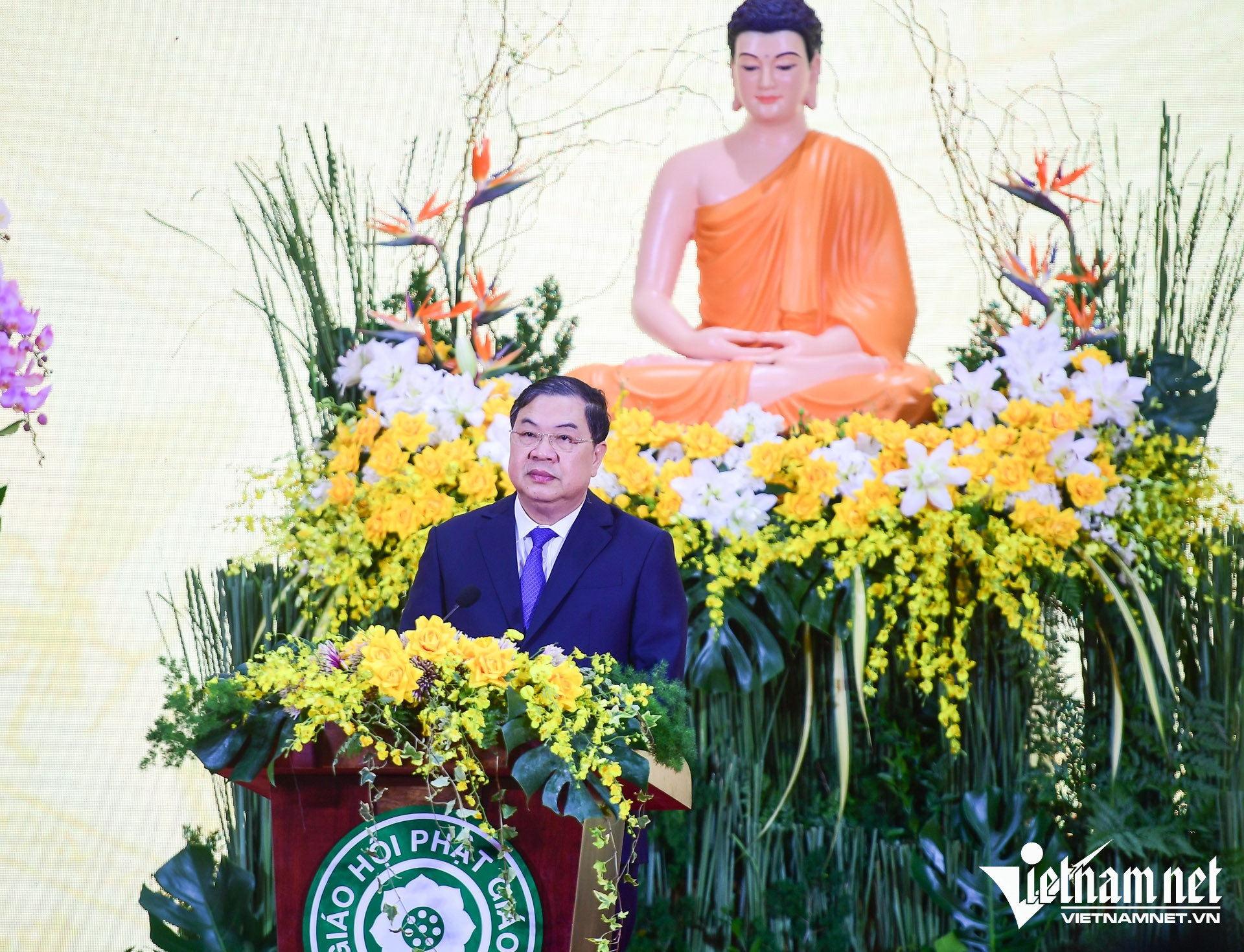
On behalf of the leaders of the Communist Party of Vietnam, the State and the Vietnam Fatherland Front, Tuc acknowledged and highly appreciated the contributions of the VBS, senior Buddhist dignitaries, monks, nuns, lay practitioners and followers to religious life and the country.
He also extended greetings and congratulations to Most Venerable Thich Thien Nhon, Chairman of the VBS Executive Council, the Patronage Council, the Executive Council, and Buddhist monks, nuns and followers at home and abroad.
Vietnamese Buddhism has accompanied the nation throughout history
Reflecting on Buddhism's longstanding relationship with the Vietnamese nation, Tuc said Buddhist values such as compassion, wisdom, selflessness and altruism had become intertwined with the country's traditions of patriotism, humanity, tolerance and solidarity.
These values, he noted, have become an important part of Vietnam's spiritual life and cultural identity.
According to the Deputy Prime Minister, whenever the country faced danger, Buddhists joined the wider population in defending the homeland.
He recalled that Buddhist monks had voluntarily exchanged their robes for military uniforms, ready to go to the battlefield and sacrifice their lives to protect the country.
During peacetime, Buddhism has actively contributed to national development, the preservation of cultural traditions and the strengthening of great national unity.
This tradition is reflected in the Vietnamese Buddhist principle of protecting the nation and bringing peace to its people.
Tuc noted that the Vietnam Buddhist Sangha was established on November 7, 1981, through the unification of Buddhist organizations, associations and traditions across the country.
The establishment marked an important historical milestone, fulfilling the aspirations of monks, nuns and Buddhist followers for unity and harmony while opening a new chapter of development under a unified national Buddhist organization.
Looking back over 45 years, the Deputy Prime Minister said the VBS had continued to grow, strengthening its role, position and reputation in society.
The organization has consistently followed its guiding principle of "Dharma - Nation - Socialism," promoted the Buddhist spirit of sixfold harmony and strengthened solidarity among different Buddhist schools and traditions.
It has also guided religious and social activities in accordance with its charter and Vietnamese law.
Tuc praised the growing attention given to Buddhist culture, education, monastic training, Buddhist studies, Dharma propagation and guidance for Buddhist followers.
These activities, he said, have helped spread the values of truth, goodness and beauty, as well as filial respect and compassion.
Charitable activities, humanitarian assistance and social welfare have also become defining features of the VBS, reflecting Buddhism's commitment to compassion and alleviating suffering.
Monks, nuns and Buddhist followers have actively supported disadvantaged people and vulnerable communities, including residents of remote areas, border regions and islands, as well as those affected by natural disasters and epidemics.
The organization has also contributed to education, healthcare, vocational training, environmental protection and community health.
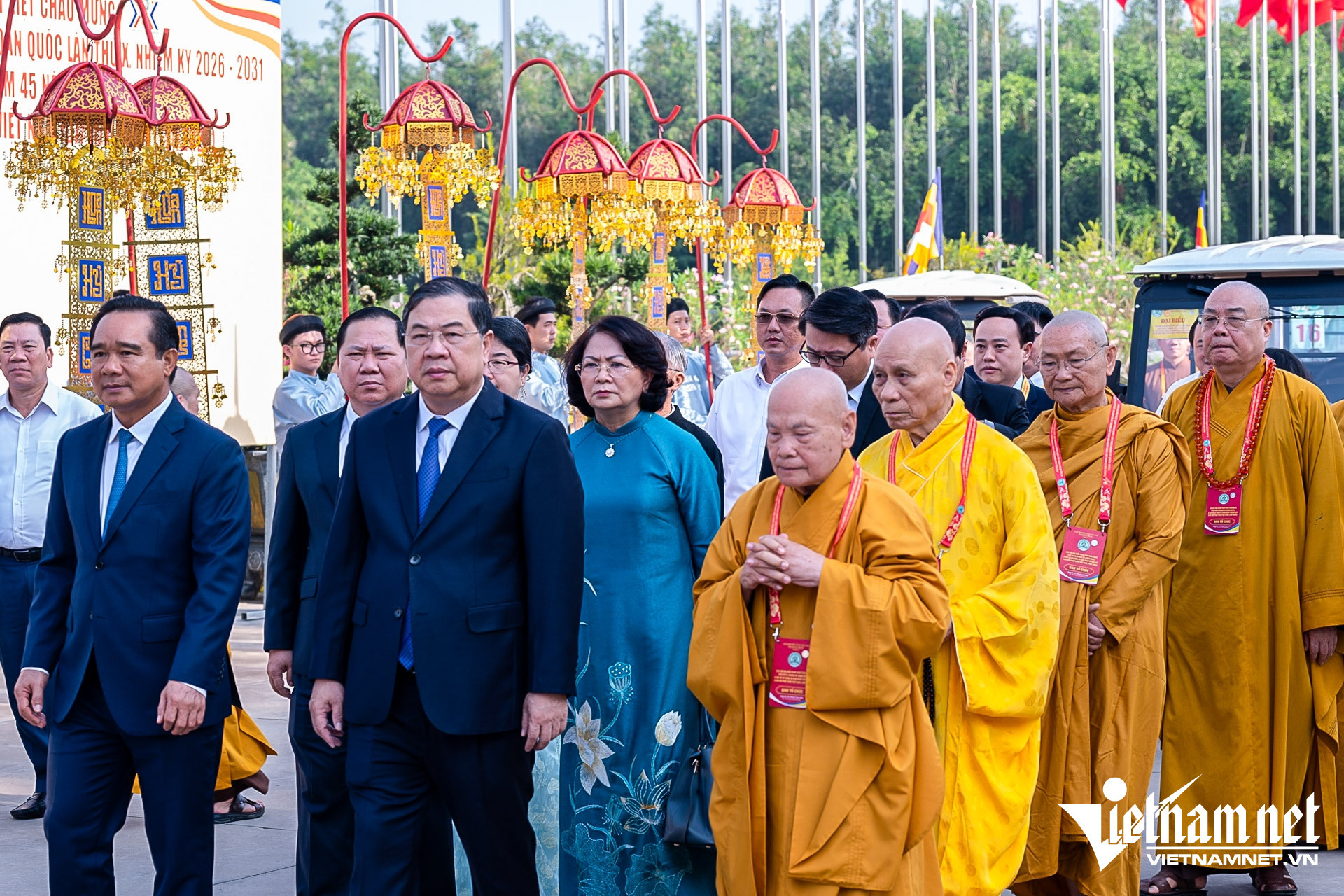
Referring to the Covid-19 pandemic, Tuc highlighted how the VBS and the Buddhist community demonstrated their commitment to serving society and standing alongside the nation.
Numerous Buddhist institutions, monks, nuns and followers contributed resources to pandemic response efforts.
Some monks and nuns directly joined frontline efforts to combat the pandemic, helping protect public health and support people's daily lives.
According to Tuc, during those difficult circumstances, Buddhist principles of compassion, wisdom, selflessness and altruism were translated into practical actions that strengthened people's confidence, resilience and determination.
Regarding international engagement, the Deputy Prime Minister praised the achievements of Buddhist diplomacy and international exchanges, which have helped promote Vietnam's image as a peaceful, friendly and culturally rich country.
The VBS worked with the State to organize the United Nations Day of Vesak celebrations in 2008 and successfully hosted the event three more times, in 2014, 2019 and 2025.
These events, he said, demonstrated the organization's reputation while enhancing Vietnam's international standing.
Reaffirming the policies of the Party and State, Tuc emphasized their consistent commitment to respecting and guaranteeing everyone's freedom of belief and religion.
He said all religions are equal before the law and that religious organizations are provided with conditions to operate in accordance with their charters, regulations and Vietnamese legislation.
"The Buddhist community is an inseparable part of Vietnam's national community and the great national unity bloc," he said. "The legitimate concerns and aspirations of senior Buddhist dignitaries, monks, nuns and followers must be respected, heard and addressed appropriately and promptly by competent authorities."
He also stressed that positive initiatives and contributions by Buddhist dignitaries, monks, nuns and followers should be recognized, commended and supported for the common benefit of the country and its people.
Expectations for continued growth of the Buddhist Sangha
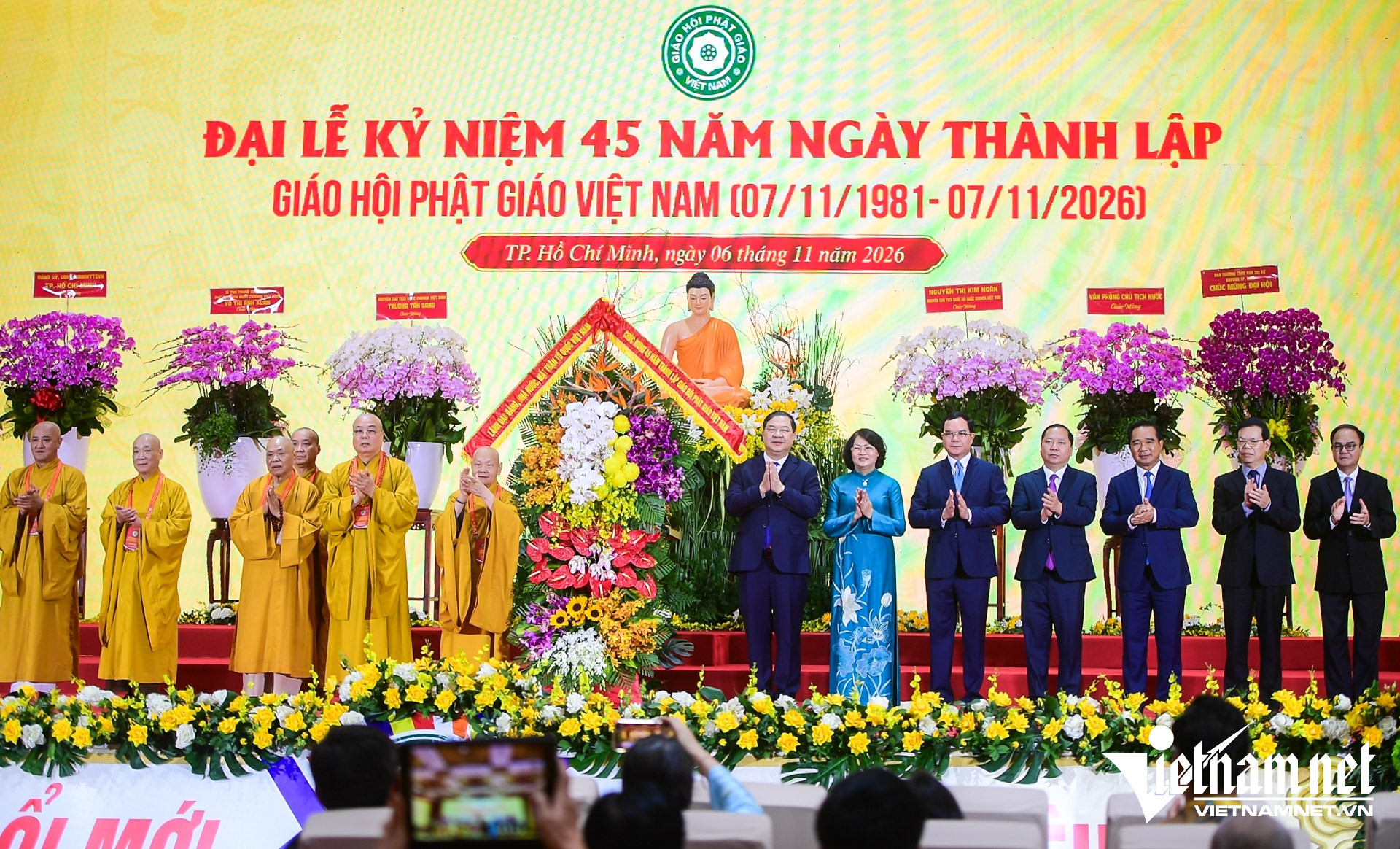
Tuc noted that the VBS's 45th anniversary celebrations coincided with the 10th National Buddhist Congress.
He praised the organization's proactive and responsible approach to selecting a congress theme suited to the requirements of the new development period.
He also welcomed its consideration of amendments to the VBS Charter to improve its organizational structure and operational effectiveness.
The Deputy Prime Minister expressed confidence that the congress would uphold the principles of solidarity, harmony, wisdom and democracy.
He hoped it would select respected Buddhist dignitaries and monastics with strong moral character, wisdom, credibility and dedication, ensuring continuity, stability and sustainable development within the organization.
Looking ahead, Tuc called on the VBS to continue strengthening unity and harmony while building an increasingly robust organization.
He encouraged the Sangha to uphold the Buddhist principles of morality, concentration and wisdom, alongside its commitment to active engagement in society.
The organization should also continue promoting Buddhism's cultural, ethical and humanitarian values while improving the effectiveness of charitable activities, social welfare programs and people-to-people diplomacy.
Greater efforts should be made to strengthen connections with Vietnamese communities overseas.
Tuc expressed confidence that, building on its patriotic traditions, its guiding principle of "Dharma - Nation - Socialism" and the foundations established over the past 45 years, the VBS would continue to develop and prosper.
He said the organization would remain committed to serving the country and its people, strengthening national solidarity and contributing to a prosperous, civilized and happy Vietnam, in keeping with Buddhism's tradition of protecting the nation and bringing peace to its people.
Phuoc Sang - Nguyen Hue

