 Vietnamnet.vn

 Podcast


The founding and guiding principles of the Vietnam Buddhist Sangha
Vietnam's reunification on April 30, 1975, created a historic opportunity for Vietnamese Buddhists to fulfill their long-standing aspiration to bring Buddhist organizations nationwide together under a single institution.
Earlier efforts to unify Buddhism in 1951, 1957-1958 and 1963 had resulted in the establishment of Buddhist organizations, but these represented only certain traditions, schools or particular regions.
Drawing lessons from those efforts, representatives of nine major Buddhist organizations and traditions established the Committee for the Unification of Vietnamese Buddhism in 1980.
The nine organizations were the Unified Buddhist Association of Vietnam in the North; the Unified Buddhist Church of Vietnam (An Quang); the Patriotic Buddhist Liaison Committee in Ho Chi Minh City; the Traditional Buddhist Church of Vietnam; the Association of Patriotic Monks for Solidarity in the Southwest; the Vietnam Mendicant Sangha; the Vietnam Theravada Buddhist Sangha; the Thien Thai Buddhist School; and the South Vietnam Buddhist Studies Association.
After more than a year of preparation and consultation, the National Buddhist Unification Congress was held at Quan Su Pagoda in Hanoi from November 4 to 7, 1981, with representatives of all nine organizations and traditions attending.
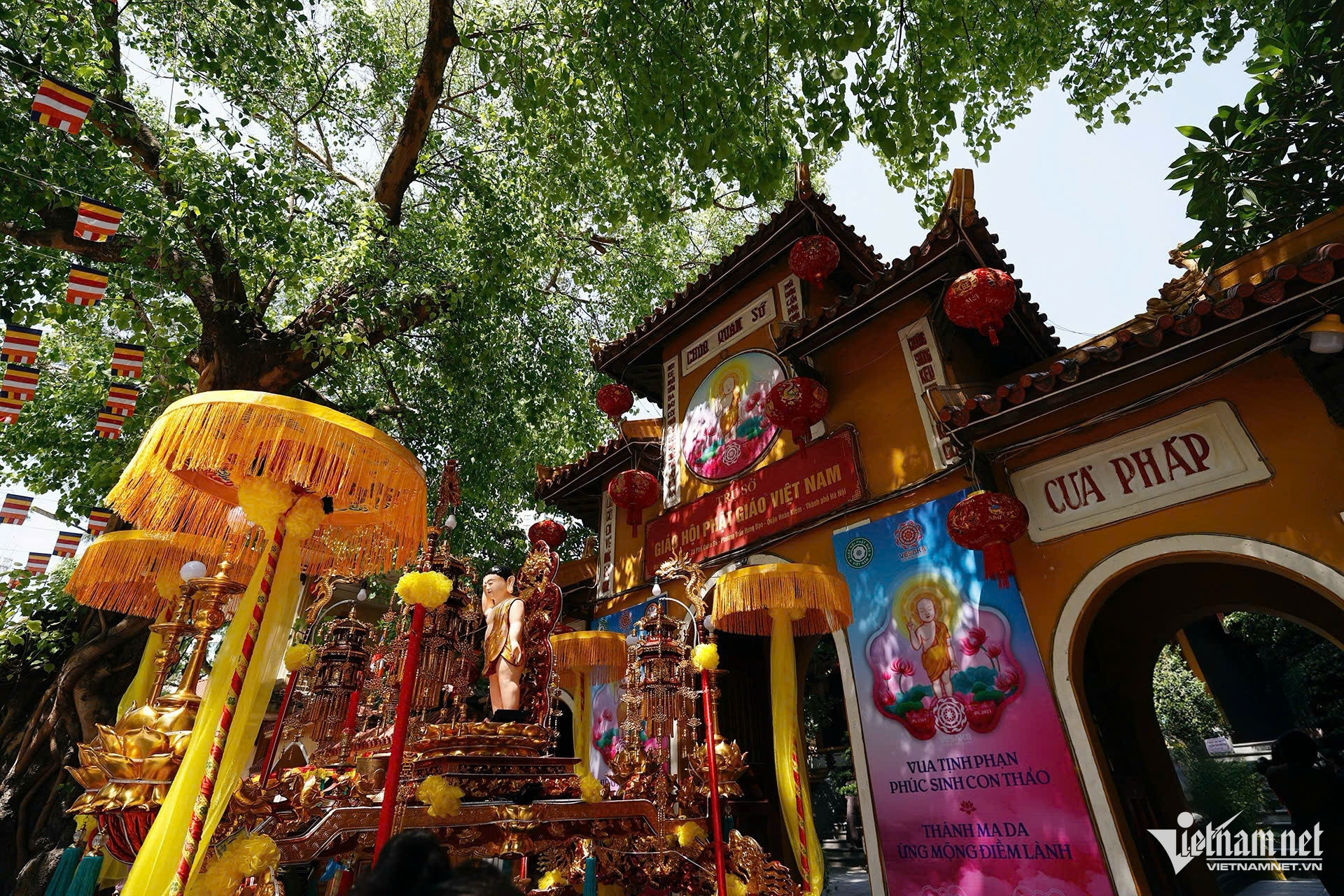
The congress formally established the Vietnam Buddhist Sangha (VBS) on the principle of unity in thought and action, leadership and organization, while respecting and preserving the traditions of different Buddhist schools, as well as legitimate Dharma practices and methods of cultivation.
The establishment of the VBS was intended to open a new chapter in Vietnamese Buddhist history, serve the country and its people, uphold Buddhist values during Vietnam's socialist development and strengthen the long-standing relationship between Buddhism and the nation.
The VBS adopted the guiding principle of "Dharma - Nation - Socialism," continuing the patriotic traditions of Vietnamese Buddhism and the Buddhist teaching that the Dharma is inseparable from worldly life, emphasizing harmony between religious practice and society.
Serving the nation, strengthening unity and expanding international engagement
Over the past 45 years, the VBS has completed nine terms: 1981-1987, 1987-1992, 1992-1997, 1997-2002, 2002-2007, 2007-2012, 2012-2017, 2017-2022 and 2022-2026.
Throughout this period, the organization has continued to consolidate and expand its activities, strengthening its position within Vietnamese society and the international Buddhist community.
The VBS has upheld Buddhism's tradition of valuing wisdom and learning, expressed in the teaching "wisdom is our true vocation," alongside the patriotic spirit and close relationship between Vietnamese Buddhism and the nation.
Its contributions span several major areas.
Buddhist education and training
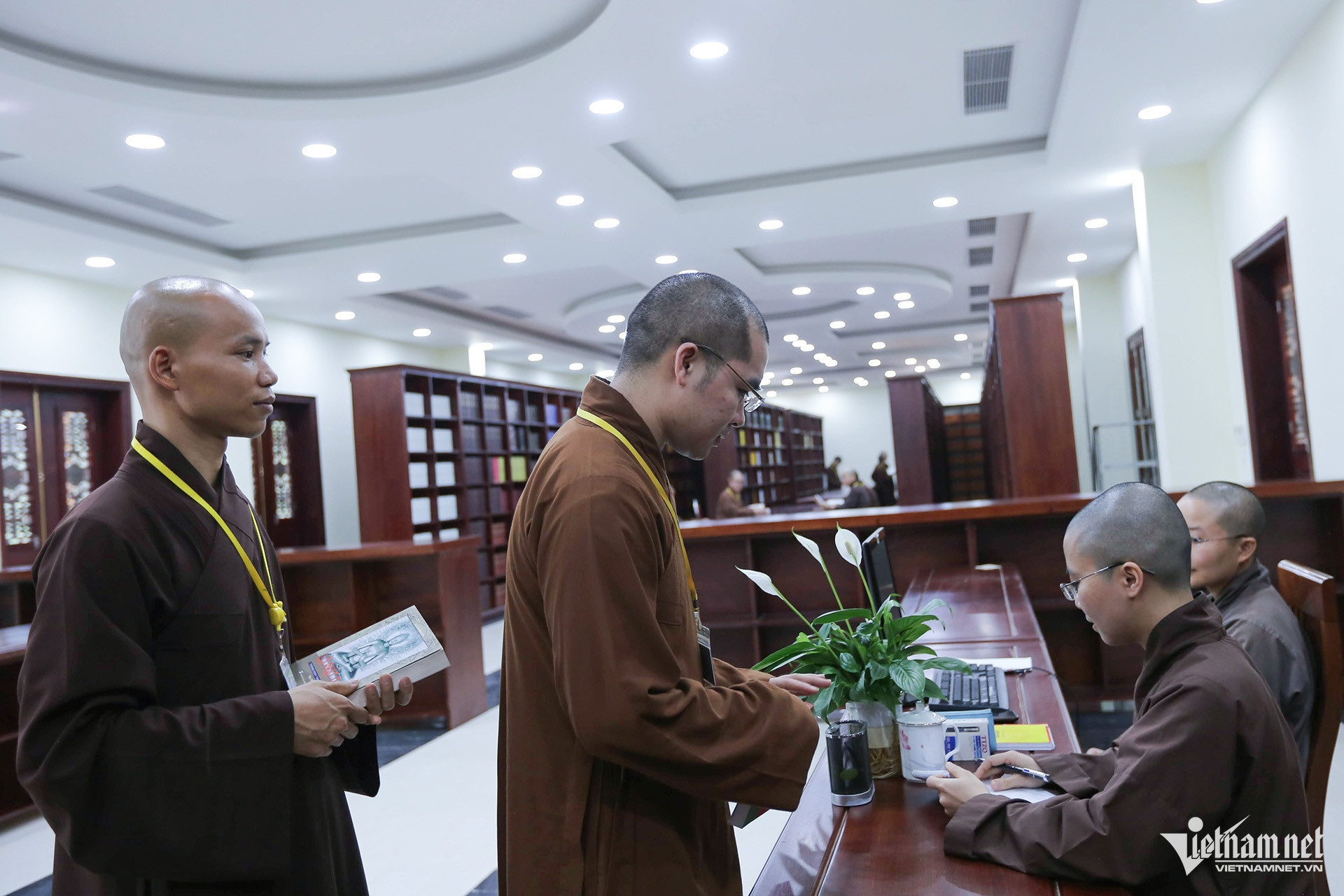
Before 1981, Vietnam had only one Buddhist university, Van Hanh University, and a small number of intermediate Buddhist schools.
Today, the VBS operates four Buddhist academies offering bachelor's degrees in Buddhist studies, 35 intermediate Buddhist schools and hundreds of elementary Buddhist education classes.
Three Vietnam Buddhist academies in Hanoi, Hue and Ho Chi Minh City have also received permission from the Prime Minister to pilot doctoral training programs in Buddhist studies.
Vietnamese Buddhist academies have signed educational cooperation and academic exchange agreements with 11 Buddhist universities abroad.
Hundreds of monks and nuns have been sent to study in India, China, Myanmar, Sri Lanka, Thailand, France, Australia, the United States, Japan and Taiwan (China), among other destinations.
Their fields of study include Buddhist studies, psychology, philosophy and sociology.
After returning to Vietnam, many have joined the VBS's departments, institutes and educational institutions, contributing to the development of the Sangha and the country.
Participation in public institutions
Since its establishment, the VBS has had representatives elected by voters to the National Assembly and People's Councils at various levels.
These representatives have served as a bridge between the aspirations of monks, nuns, Buddhist followers and the wider public and the Party and State, while helping communicate and implement national policies and laws, particularly among Buddhist communities.
Across 16 National Assembly terms, Vietnamese Buddhism has had 23 senior monks and nuns elected as deputies.
Since the VBS was established in 1981, beginning with the seventh National Assembly, 16 Buddhist dignitaries have served as deputies.
Notably, Most Venerable Thich The Long was elected Vice Chairman of the seventh National Assembly for the 1981-1987 term.
Four Buddhist dignitaries currently serve as National Assembly deputies.
They are Most Venerable Thich Bao Nghiem, Vice Chairman of the VBS Executive Council, who has served in the 13th, 14th, 15th and 16th National Assemblies; Most Venerable Thich Thanh Quyet, also Vice Chairman of the Executive Council, who has served in the same four terms; Venerable Thich Duc Thien, Vice Chairman and Secretary General of the Executive Council, who has served in the 15th and 16th terms; and Venerable Ly Minh Duc, a standing member of the Executive Council, who has served from the 13th through the 16th terms.
Many other monks, nuns and Buddhist followers participate in the Vietnam Fatherland Front Central Committee, the Vietnam Youth Federation, the Vietnam Red Cross Society, the Vietnam Veterans Association, the Vietnam Women's Union and social organizations at different levels.
Their participation has contributed to national solidarity and cooperation among religious communities.
Contributions to national development and international relations
In national construction and defense, the VBS has consistently followed its guiding principle of "Dharma - Nation - Socialism."
It encourages monks, nuns and Buddhist followers to participate in patriotic movements, environmental protection, community cultural development and efforts to strengthen local governance.
The Sangha also promotes cooperation with other religious communities and opposes activities it considers harmful to national and religious unity.
Its newspapers, magazines, websites, Buddhist forums and Dharma propagation activities, both domestically and internationally, have served as channels for communicating Vietnam's policies on freedom of belief and religion.
These activities have also been used to respond to allegations by groups the VBS considers hostile concerning Vietnam's human rights and religious freedom record.
The VBS has expanded its international engagement through participation in and hosting of major Buddhist events.
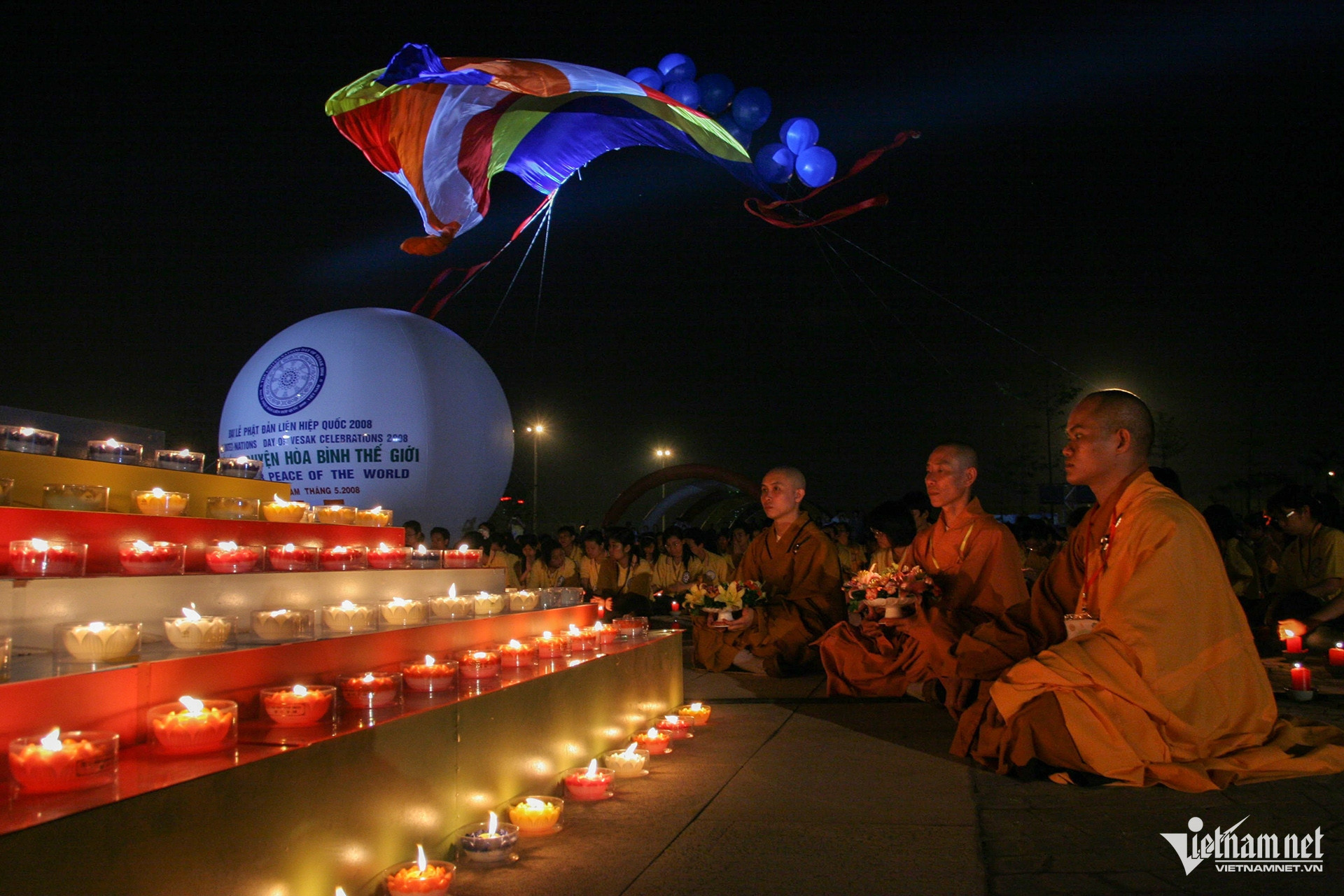
In 2008, the Sangha worked with the Vietnamese State to organize the United Nations Day of Vesak celebrations.
Vietnam subsequently hosted the United Nations Vesak celebrations in 2014, 2019 and 2025, attracting participants from hundreds of countries and thousands of international delegates.
The VBS has also participated in international Buddhist forums and events, including the Asian Buddhist Conference for Peace, the World Buddhist Summit, the Global Buddhist Summit and the Buddhist Leaders' Summit of the three Indochinese countries.
Through these activities, the Sangha has sought to deepen international understanding of Vietnamese Buddhism, the country, its people and Vietnam's religious policies.
The VBS has also established 22 overseas Vietnamese Buddhist associations and maintained regular connections with Vietnamese monks, nuns and Buddhist followers in 35 countries and territories.
These associations operate in countries including Laos, Cambodia, Thailand, South Korea, Japan, India, France, the Czech Republic, Poland, Ukraine, Hungary, Germany, Russia, Mozambique, Angola and the United States.
They help connect overseas Vietnamese communities, preserve and promote Vietnamese cultural identity and encourage ties with the homeland.
Through annual Buddhist activities and recognition of overseas Vietnamese Buddhist associations, the VBS also serves as a bridge between Vietnamese Buddhist communities abroad and the State.
Humanitarian and charitable activities
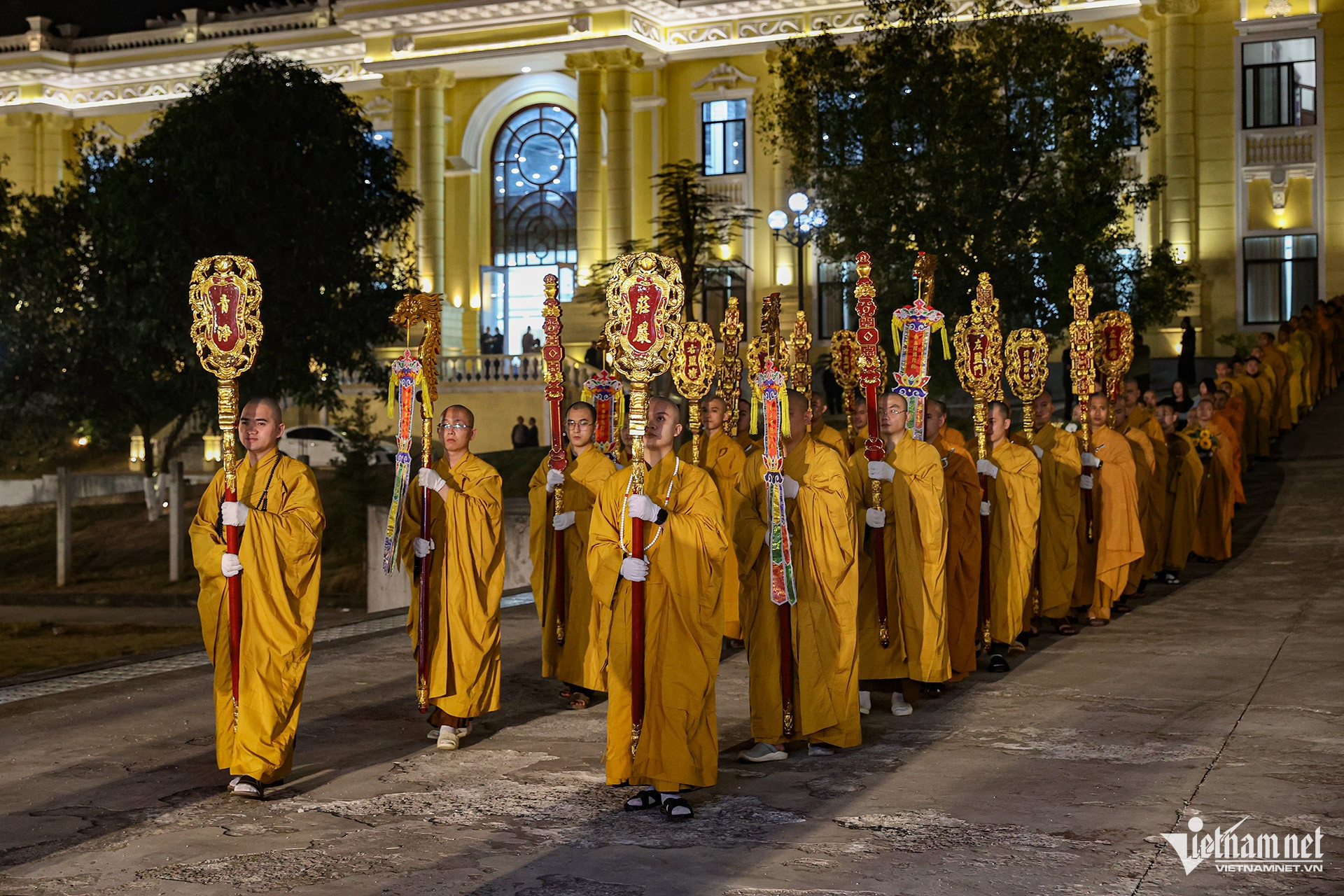
The VBS regularly organizes activities honoring wounded veterans, fallen soldiers and their families, as well as Vietnamese Heroic Mothers, while supporting a wide range of community initiatives.
The Sangha currently operates nearly 200 Tue Tinh traditional medicine centers, 700 facilities providing traditional medical consultations, acupuncture, acupressure and physiotherapy, and 10 general medical clinics.
Each year, these facilities provide free medical examinations and medicines to tens of thousands of patients.
The VBS also establishes scholarship funds, supports soldiers and fishermen in the Truong Sa (Spratly) Islands, builds community bridges and rural roads, provides transportation to disadvantaged people, organizes blood donations and helps build homes for families in need.
Other initiatives include supporting communities affected by natural disasters and floods and contributing to poverty reduction programs.
The Sangha has also provided assistance to international communities affected by natural disasters and disease outbreaks.
During its ninth term alone, the VBS spent approximately VND7.5 trillion (around $285 million) on social welfare and charitable activities.
These initiatives have contributed to efforts to improve living standards in Vietnam and demonstrated the organization's commitment to international humanitarian responsibilities.
Contributions to society, ethics and culture
Buddhist rituals have made significant contributions to preserving traditional culture and enriching Vietnam's cultural heritage.
Buddhist teachings and practices have also helped foster humanitarian values, compassion and ethical conduct among a substantial section of Vietnamese society.
Through its traditions, identity and practical activities, Vietnamese Buddhism has demonstrated a commitment to serving communities, expressing patriotism, promoting peace and respecting life.
The VBS continues this long-standing tradition.
The achievements of its nine terms reflect the commitment made when the organization was founded.
In a letter dated November 7, 1981, addressed to Truong Chinh, Chairman of the State Council, the Presidium of the Vietnamese Buddhist Unification Conference, represented by Most Venerable Thich Tri Thu, pledged that Vietnamese Buddhism would remain closely united with organizations within the Vietnam Fatherland Front.
The letter also affirmed that the VBS would operate actively within the Constitution and laws of the Socialist Republic of Vietnam and remain a trusted member of the national unity bloc in the cause of national construction and defense.
State recognition and future development
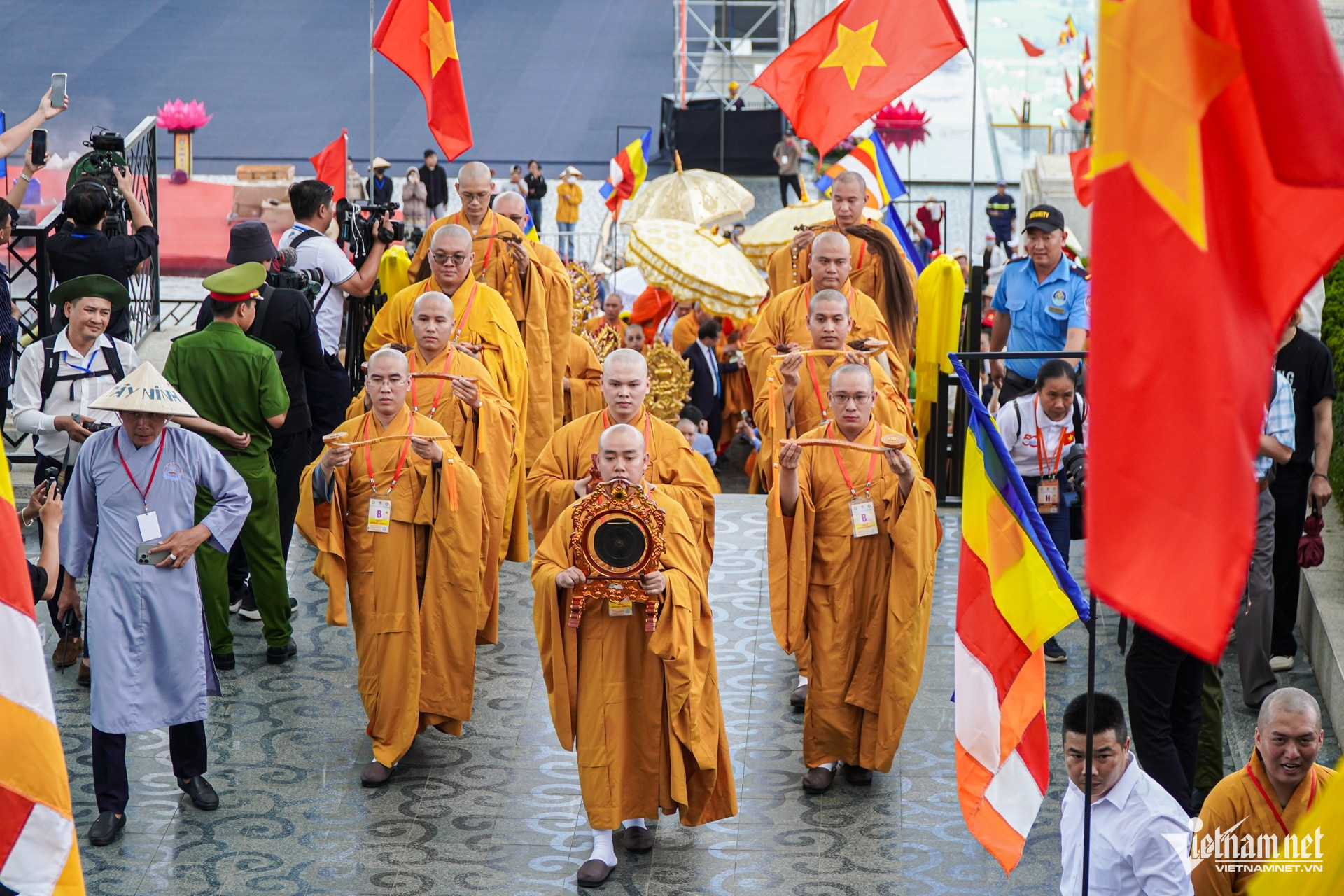
In recognition of its contributions, the Vietnamese State has awarded numerous honors to the VBS and individual Buddhist dignitaries and lay followers.
At the third National Buddhist Congress in 1992, the VBS became the first religious organization to receive the Ho Chi Minh Order.
It received the Ho Chi Minh Order for a second time in 2011, on the occasion of its 30th anniversary.
For the 45th anniversary of its establishment and the 10th National Buddhist Congress for the 2026-2031 term, the President decided to confer the First-Class Labor Order on the VBS and five individuals.
Second-Class Labor Orders were awarded to two organizations and three individuals, while Third-Class Labor Orders went to one organization and eight individuals.
Nine individuals received the Great National Unity Order.
The Prime Minister awarded certificates of merit to two organizations and 14 individuals, while the Minister of Ethnic and Religious Affairs honored seven organizations and 19 individuals associated with the VBS.
With continued support from Buddhist followers and favorable conditions created by the Party and State for religious activities, the VBS is expected to build on its achievements while addressing remaining shortcomings.
The organization aims to continue promoting the patriotic traditions of Vietnamese Buddhism, guiding monks, nuns and followers in practicing the Dharma in accordance with Vietnamese law, and contributing to national prosperity.
Its long-term objective is to develop harmoniously within Vietnamese society while maintaining its role as a religious organization accompanying the nation and working for national well-being.
Organizational development
When the VBS was founded, it operated under a two-tier organizational structure comprising central and provincial levels.
Its leadership consisted of two councils, the Patronage Council and the Executive Council, supported by two offices, six departments and institutes, and 27 provincial executive boards.
The organization has since developed a three-tier structure that includes the grassroots level.
It now has two councils, two central offices, 13 departments and institutes, and provincial Buddhist executive boards operating in all 34 provinces and centrally governed cities.
At the 10th National Buddhist Congress for the 2026-2031 term, the VBS plans to amend its Charter for the eighth time, with a focus on streamlining its organizational structure.
The proposed changes include merging specialized departments with overlapping functions to improve consistency and operational efficiency.
Growth in clergy, places of worship and followers
At its establishment, the VBS had nearly 20,000 monks and nuns and approximately 12,500 places of worship.
By October 2026, the organization had grown to nearly 65,000 monks and nuns, almost 19,000 places of worship and 250 registered locations for collective religious activities.
It also had approximately 15 million registered followers, alongside tens of millions of people in Vietnam and overseas who identify with or have an affinity for Buddhist beliefs and traditions.
Bui Thi Minh Nga
Deputy Director General, Government Committee for Religious Affairs, Ministry of Ethnic and Religious Affairs

