 Vietnamnet.vn

 Podcast



Colonel Pham Quang Huy, Deputy Director of the Traffic Police Department, pointed out that many localities have "broken the rules" by allowing 4-wheeled electric vehicles to circulate alongside cars, containers, and motorcycles on national and provincial highways, increasing the risk of accidents.
The Ministry of Public Security has coordinated with the Department for Roads of Vietnam and the Ministry of Construction to propose allowing electric vehicles to operate only on routes with dedicated lanes.
Regarding the proposal to restrict double-decker sleeper buses, Huy noted that many serious accidents involving these vehicles have occurred recently, primarily on steep, mountainous routes with high-gradient slopes.
Double-decker sleeper buses share many similarities with urban double-decker buses in Europe, which only operate on flat terrain.
Speaking at the meeting, Deputy Minister of Justice Dang Hoang Oanh said that ministries and branches fundamentally agree with the proposal to ban double-decker sleeper buses on level 3 and level 4 mountainous roads to ensure traffic safety.
However, to avoid abrupt impacts on business activities, the Deputy Minister suggested a roadmap with a transitional period for notification, combined with infrastructure reviews and supporting solutions, before moving toward a total ban.
Deputy Minister of Finance Do Thanh Trung suggested that, in the short term, authorities could research measures to enhance safety before each trip for drivers, owners, and vehicles. In the long term, they could consider allowing vehicle conversions to reduce the number of decks or change functions, accompanied by appropriate support policies.
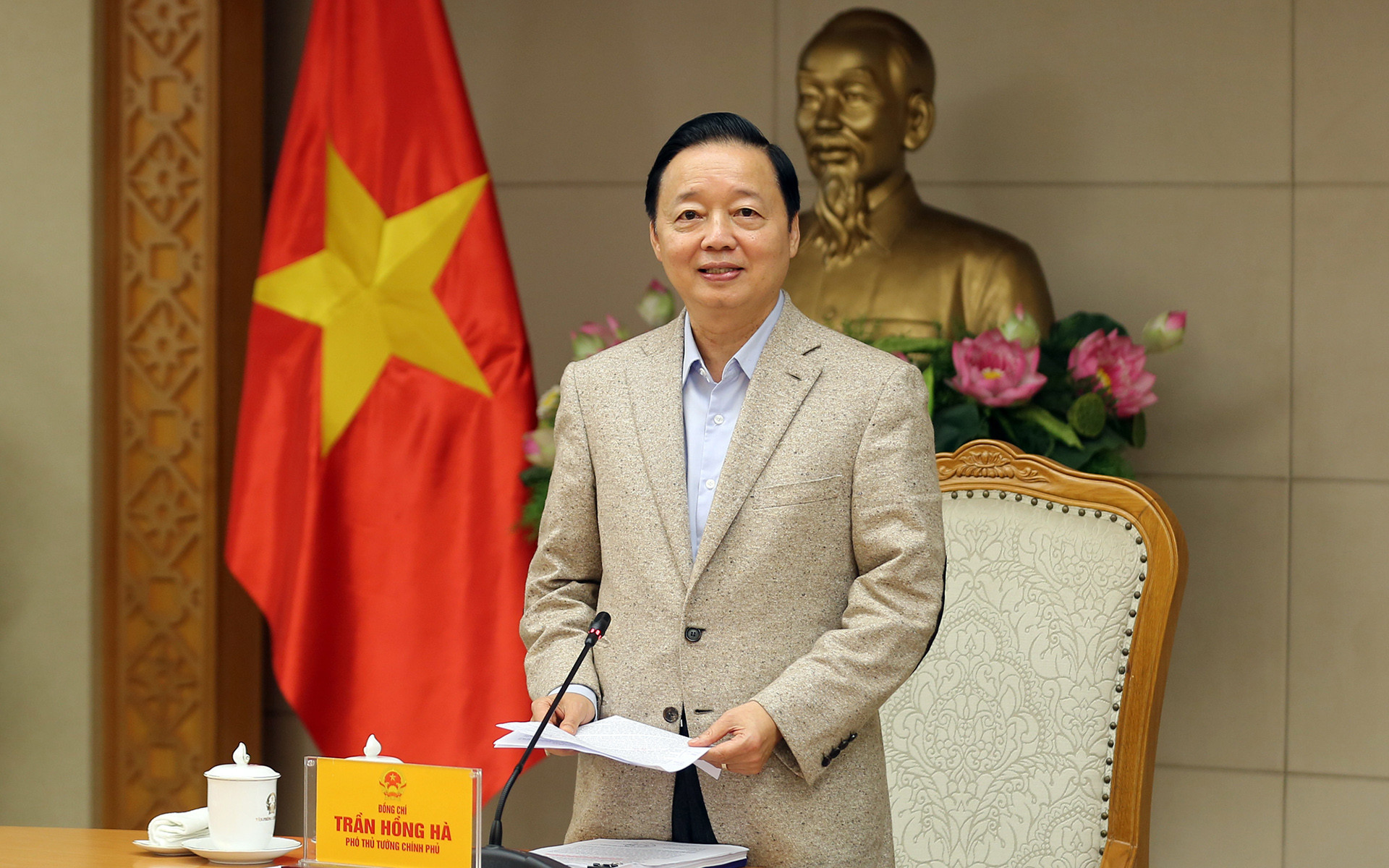
Deputy Prime Minister Tran Hong Ha emphasized that the spirit of amending road transport decrees is to prevent risks early. High-risk behaviors that have not yet resulted in accidents but could cause traffic violations must be prevented.
Regarding double-decker sleeper buses in mountainous areas, the Deputy Prime Minister emphasized that safety standards must be the central criterion. Vehicle design standards must always be linked to transport infrastructure standards.
Conventional double-decker sleeper buses are typically used for tourism in urban areas and flat terrain; they should not be used in high mountainous regions with difficult terrain and many slopes. If used, there must be specific standards for both the vehicles and the roads.
The Deputy Prime Minister requested the Ministry of Construction to urgently issue standards for double-decker sleeper buses operating in mountainous regions, covering infrastructure design, roads, and vehicles. Once these standards are issued, any double-decker sleeper bus that does not meet them will be prohibited from operating.
The State needs mechanisms for policies, credit, and funding to support businesses and owners in swapping, converting, or installing additional safety equipment according to standards, or moving operations to appropriate areas.
Ha asked the Ministry of Public Security to review all regulations such as licensing and health related to public passenger transport drivers, including double-decker sleeper bus drivers.
Regarding four-wheeled electric vehicles, the Deputy Prime Minister requested control measures so they only operate where there are dedicated lanes or areas with a maximum speed of 30km/h. Circulation must be banned on routes with speeds over 30km/h. The Ministry of Public Security will coordinate with the Ministry of Construction to identify prohibited routes.
The Deputy Prime Minister pointed out that a major cause of traffic accidents today is the situation where various vehicles with different speeds share the same road surface, especially on provincial and commune roads. Many routes designed for high-speed cars still allow motorcycles, bicycles, three-wheeled motors, and four-wheeled electric vehicles, increasing accident risks. He emphasized that this needs to be managed and regulated by law.
Ha also warned of safety risks from electric bicycles and vehicles with high design speeds that lack safety conditions. Electric bicycles can currently run at 50-60km/h without requiring a driver's license, training, or testing; therefore, the risk level is higher than even high-capacity motorcycles, he said. He suggested researching and including this in management documents to reduce accidents and risks for road users.
Vu Diep
.svg)
