 Vietnamnet.vn

 Podcast



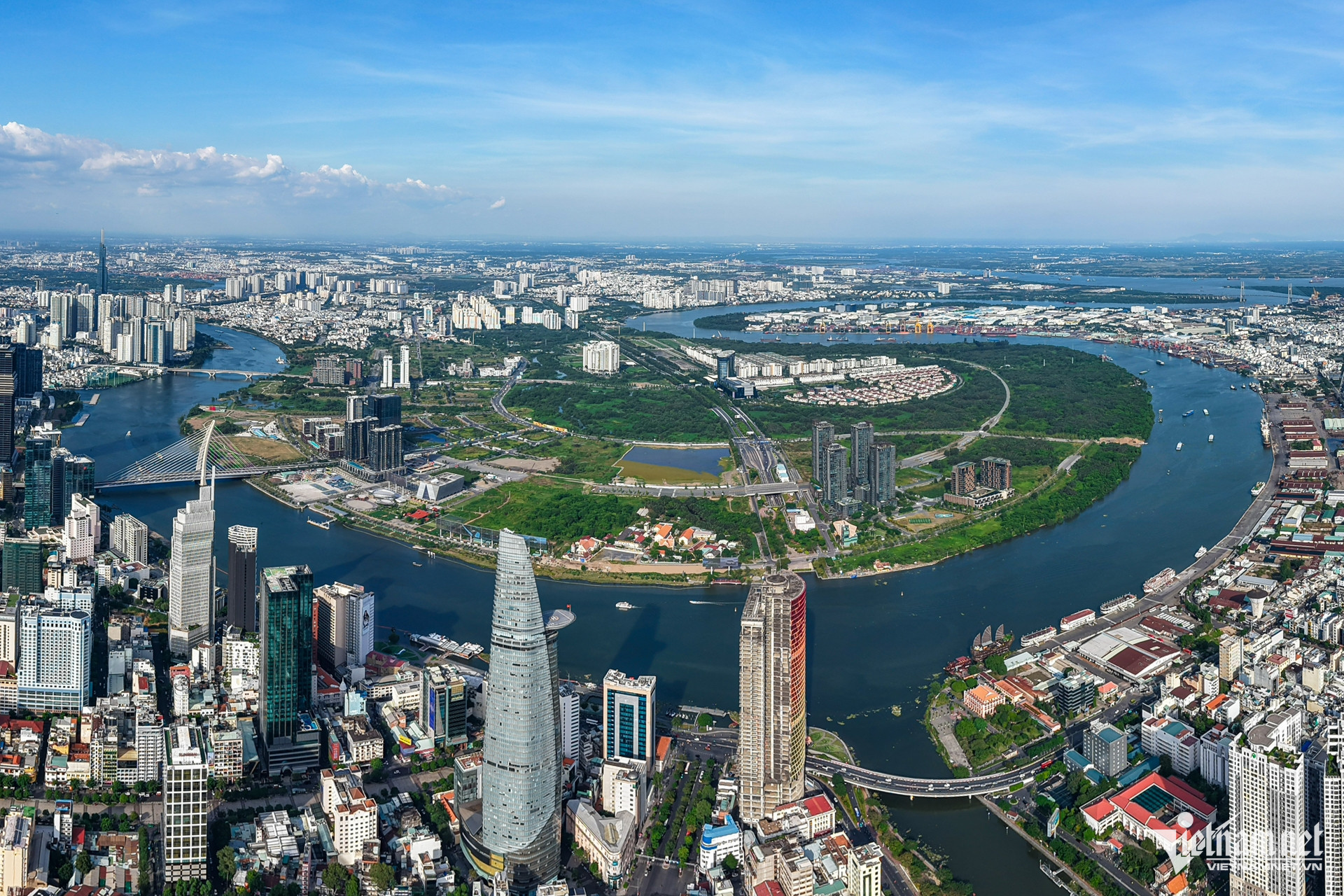
The Politburo has designated HCMC's development as a critically important political task of the entire Party, the people, the army, and the political system, especially the Party Committee, authorities, and citizens of the city.
The resolution clearly states the need to focus on completing superior institutions and policies, while strongly promoting decentralization and delegation of authority to create conditions for the special urban area of HCMC to become a symbol of Vietnam’s dynamic development in the 21st century.
The resolution clearly states the need to focus on completing synchronized, breakthrough and superior institutions and policies, while strongly promoting decentralization and delegation of authority to create conditions for the special urban area of HCMC to become a symbol of Vietnam’s dynamic development in the 21st century.
Regarding targets, the resolution states that by 2030, HCMC will be a civilized, modern, dynamic and innovative city, serving as a center for the economy, culture, society, science, technology, innovation, logistics and international integration, while taking the lead in the country’s industrialization and modernization and holding a prominent position in Southeast Asia.
By 2045, the city is envisioned as a civilized, modern, dynamic and innovative urban area; an Asian center for the economy, culture, society, science, technology and innovation; an attractive global destination with distinctive cultural and social development, high quality of life and deep international integration.
By 2075, when the city celebrates the 100th anniversary of national reunification, it is expected to become a global, smart and modern city with comprehensive development on par with leading cities worldwide, featuring green and sustainable growth, high quality of life and strong climate resilience.
Major tasks and solutions
The resolution outlines eight major tasks and solutions.
The first is building a new growth model based on science, technology, innovation, digital transformation, labor productivity and competitiveness.
HCMC is also required to implement a data strategy, focusing on establishing and connecting interoperable data systems for smart city governance; mastering core technologies such as AI, semiconductors, biotechnology, advanced materials and clean energy; developing innovation centers of national scale; introducing special policies to attract investment and technology transfer; strongly reforming public procurement mechanisms; and forming shared research, testing and innovation infrastructure.
The second is creating breakthrough and superior institutions for the city’s development in the new era. The Politburo’s resolution requests the drafting and issuance of a Special Urban Area Law to establish an exceptional institutional framework and legal foundation, described as a “breakthrough of breakthroughs,” enabling HCMC to maximize its potential and mobilize all resources for rapid and sustainable growth.
In addition, HCMC will be granted absolute decentralization and delegation of power for its People's Council, People's Committee, and the Chair of the People's Committee across various sectors (excluding defense, security, foreign affairs, and religion). The authority and accountability of heads at all levels will be enhanced, coupled with power-control mechanisms.
HCMC is also permitted to proactively pilot new mechanisms and controlled regulatory testing environments (sandboxes) that differ from current statutory provisions.
Third, planning the city's development with a long-term, stable vision that adapts to climate change. Accordingly, the city's master plan will be formulated using breakthrough thinking with a 100-year vision. This includes planning and developing several new satellite urban areas around the central urban zone, and prioritizing the completion of the urban railway network alongside developing connectivity infrastructure for seaports, airports, industrial parks, and free trade zones.
Fourth, mobilizing and efficiently utilizing all resources for rapid and sustainable city development. HCMC needs to build mechanisms to unleash the private economy's participation in production and business development; form private economic conglomerates of national and regional stature; enhance the efficiency of state-owned enterprises; and construct mechanisms to unlock resources from land.
Fifth, building a developed, civilized, and modern special municipality, with a strong focus on upgrading the citizens' quality of life. The Politburo has assigned HCMC to develop into an international-caliber metropolis following a multi-polar, multi-center model with smart, modern infrastructure and governance.
Sixth, developing the city's culture and people to be civilized and modern. The city will be built into a major education and training center, striving to achieve a top-tier advanced education system in Asia before 2030.
Seventh, ensuring national defense and security; elevating the efficiency of foreign affairs and international integration. One of the vital tasks is intertwining socio-economic development with defense and security assurances, striving to achieve a "drug-free" HCMC by 2030.
Eighth, building a clean, strong City Party Committee and political system. This includes designing appropriate salary and compensation to attract and retain talent. The city is authorized to decide on additional personnel quotas, not exceeding 20 percent of the target allocated by the Central Government, and pilot models to attract high-quality human resources.
Tran Thuong
.svg)
