In remote Quang Ninh, young people are bringing ethnic culture online, turning everyday life into stories that resonate far beyond the mountains.
From remote villages perched along steep mountain slopes, daily life is quietly changing under the light of digital technology. Beyond shortening distances to information, knowledge and essential services, technology is opening new opportunities for livelihoods, improving education levels, and reinforcing confidence in a better future.
Its presence in remote and mountainous areas is not merely an infrastructural step forward, but part of a broader journey toward inclusive development, ensuring that no one is left behind in the country’s path to modernization.
The series “When technology crosses mountains and forests to reach villages” captures these visible transformations in the socio-economic life of ethnic minority communities - from access to public services, education and healthcare to production and agricultural trade in the digital era.
Telling stories in the language of the digital age
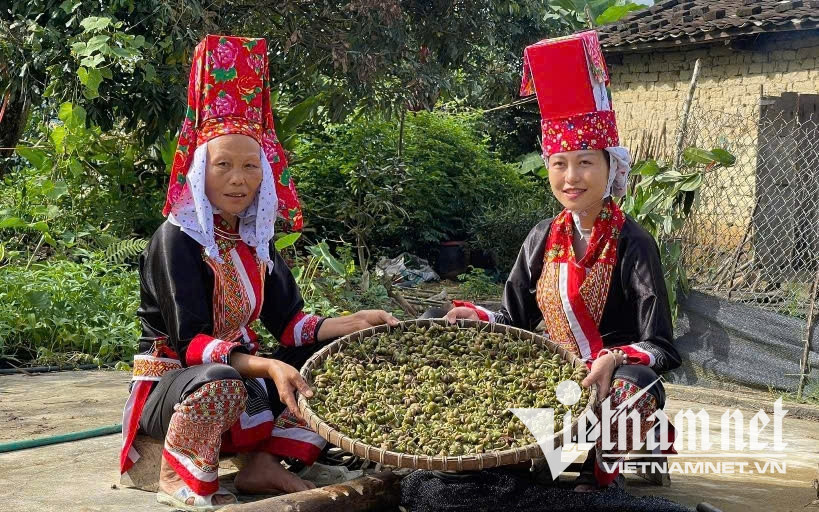
Chiu Thi Hien (right) livestreams traditional Dao herbal remedies on TikTok.
From village hearths to smartphone screens, young people in the mountainous areas of Quang Ninh are bringing ethnic culture onto social media. With simple photos and unpolished videos, they tell stories of their homeland in a way that feels both authentic and quietly proud.
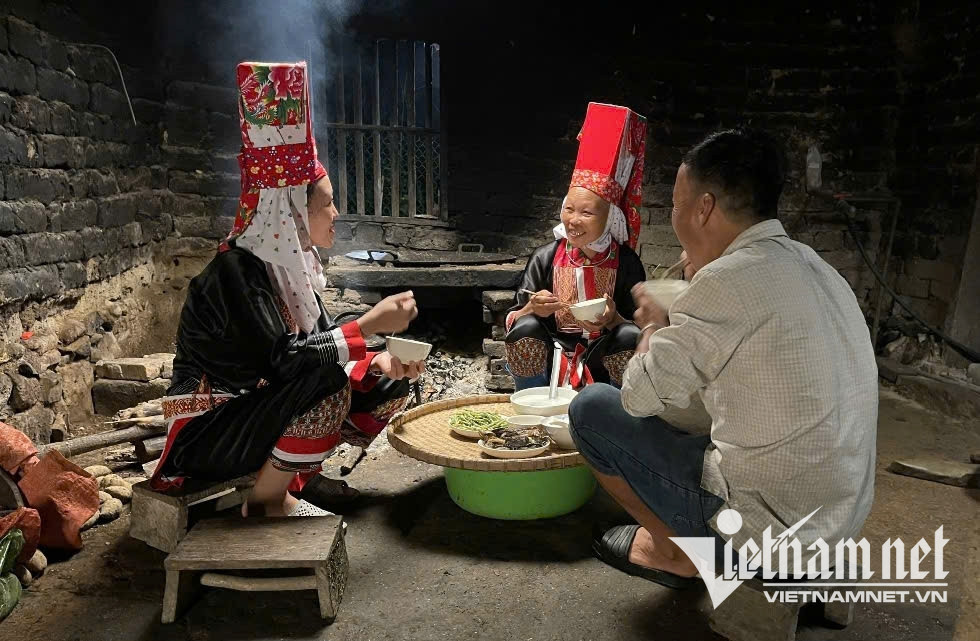
Rather than chasing sensational trends or viral content, these young storytellers choose a more grounded approach. A Dao initiation ceremony is captured through the eyes of family members. The Soong Co folk songs of the San Chi echo alongside laughter in the village. The craft of bamboo weaving by the Tay, or simply a family meal gathered around a winter fire, becomes a narrative in itself.
The images may lack technical finesse, but they carry a raw honesty that allows viewers to feel the depth of culture and the rhythm of life in the highlands.
According to Bach Tung Lam, Deputy Head of the Culture and Information Office in Quang Duc commune, the involvement of young people has introduced a new approach to cultural preservation.
“In the past, preserving ethnic cultural identity relied mainly on elderly artisans. Now, young people are becoming the next generation - more creative, telling stories in the language of the digital age. This is a very positive sign,” he said.
This wave of sharing does not only reach outward audiences. It also strengthens bonds within families and communities. Many older women, for the first time, see garments they made with their own hands being proudly presented online by their children and grandchildren.
“They filmed me and I couldn’t stop smiling. I never thought the shirt I sewed would be shared online and appreciated by so many people,” Trieu Thi San said.
Creating new livelihoods from online storytelling
Everyday life is also shared online, attracting the attention and following of many viewers.
Although internet infrastructure remains limited in some remote villages, it has not diminished the aspirations of young people to engage with the digital world. With more than 79 million social media users nationwide, highland youth in Quang Ninh are becoming part of that broader current.
From small villages nestled along mountain slopes, they switch on 4G connections on modest smartphones - often treasured family possessions - to share the melodies of Then singing, the rhythms of Soong Co, or the warmth of a winter fire among Dao and Tay communities.
Even shaky livestreams or quickly recorded clips become vivid, authentic snapshots of life today, filled with pride and cultural identity.
One notable example is Truong Manh Hung, a young Tay man born in 1992 in Binh Lieu commune. Driven by a passion for photography and a desire to showcase his homeland, Hung has traveled across border mountains, capturing defining images - from the mist-covered “dinosaur spine” ridge to Then singing by streams, terraced rice fields at harvest, and the So flower festival at year’s end.
His photos and videos, shared on Facebook and YouTube, have created a strong ripple effect. Recalling a memorable moment after posting images of the famous mountain ridge, Hung said: “I uploaded the photos in the morning. By evening, most guesthouses in Binh Lieu were fully booked. Visitors came in numbers we had never seen before, eager to experience the place themselves.”
From promoting local landscapes, Hung has taken a further step by working with residents to develop community-based tourism - offering trekking experiences, cultural exploration, and traditional cuisine.
Gradually, natural landscapes and ethnic culture are becoming new sources of livelihood, opening sustainable development pathways for local communities. This also reinforces the local government’s view that community tourism will be a key development direction for the 2025-2030 period.
In the broader journey of digital transformation, young women in these highland areas are also asserting their role. One example is Chiu Thi Hien, 27, from the Dao Thanh Phan community in Ban Pat village, Luc Hon commune.
After finishing high school and studying agriculture and forestry at university, Hien chose TikTok to share daily life, traditional herbal knowledge, and the culture of her community. She also uses Zalo to promote and sell her family’s herbal medicine products.
“In recent years, young people have been using Zalo and TikTok a lot. Seeing this as a clear trend, I learned how to use technology and have been posting regularly for over a year now, receiving strong support,” Hien said.
And so, the spirit of “telling village stories” among young people in Quang Ninh’s highlands continues to grow stronger. With deep cultural roots, even a simple smartphone and genuine storytelling can touch millions of hearts - and open new doors for development in these mountainous regions.
 Vietnamnet.vn

 Podcast



.svg)
