 Vietnamnet.vn

 Podcast



Tran Tuyen
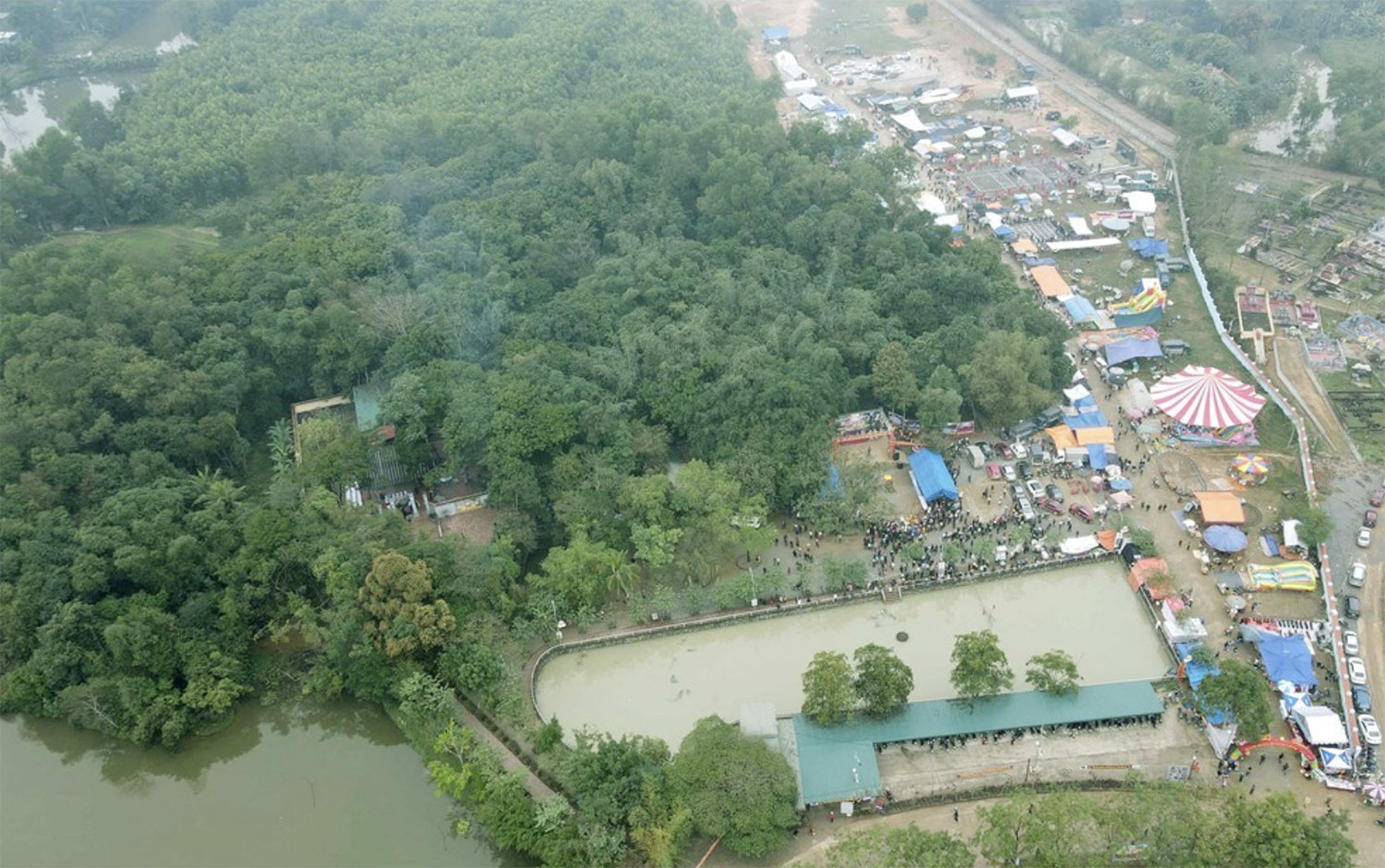
Duc Hoang Temple in Giai Lac Commune, Nghe An Province, sits amid lush greenery beside Dieu Oc Lake, one of the landscapes historically praised as part of the “Eight Scenic Wonders of Dong Thanh.”
The name refers to eight renowned beauty spots in the former Dong Thanh region, which covered areas of the former Yen Thanh and Dien Chau districts.
The scenery is picturesque throughout the year, but summer is perhaps its most striking season, when lotus flowers bloom across the lake.
Against a backdrop of green hills and clear water, the ancient temple appears through the trees, creating a harmonious picture of nature and traditional architecture.
The temple traces its origins to the Tran Dynasty, when it began as a small shrine. In 1505, walls were built and the upper sanctuary was given a tiled roof. A middle sanctuary was added in 1882, while the lower sanctuary, gateway and surrounding walls were completed in 1936.
Over the centuries, the temple has undergone several restorations. Records document two rounds of work in 1907 and 1908, when the upper and middle sanctuaries and ceremonial objects were restored. In 1990, local authorities and residents carried out another restoration of the site.
Despite centuries of war, natural disasters and repeated repairs, Duc Hoang Temple has retained its ancient character and sacred atmosphere.
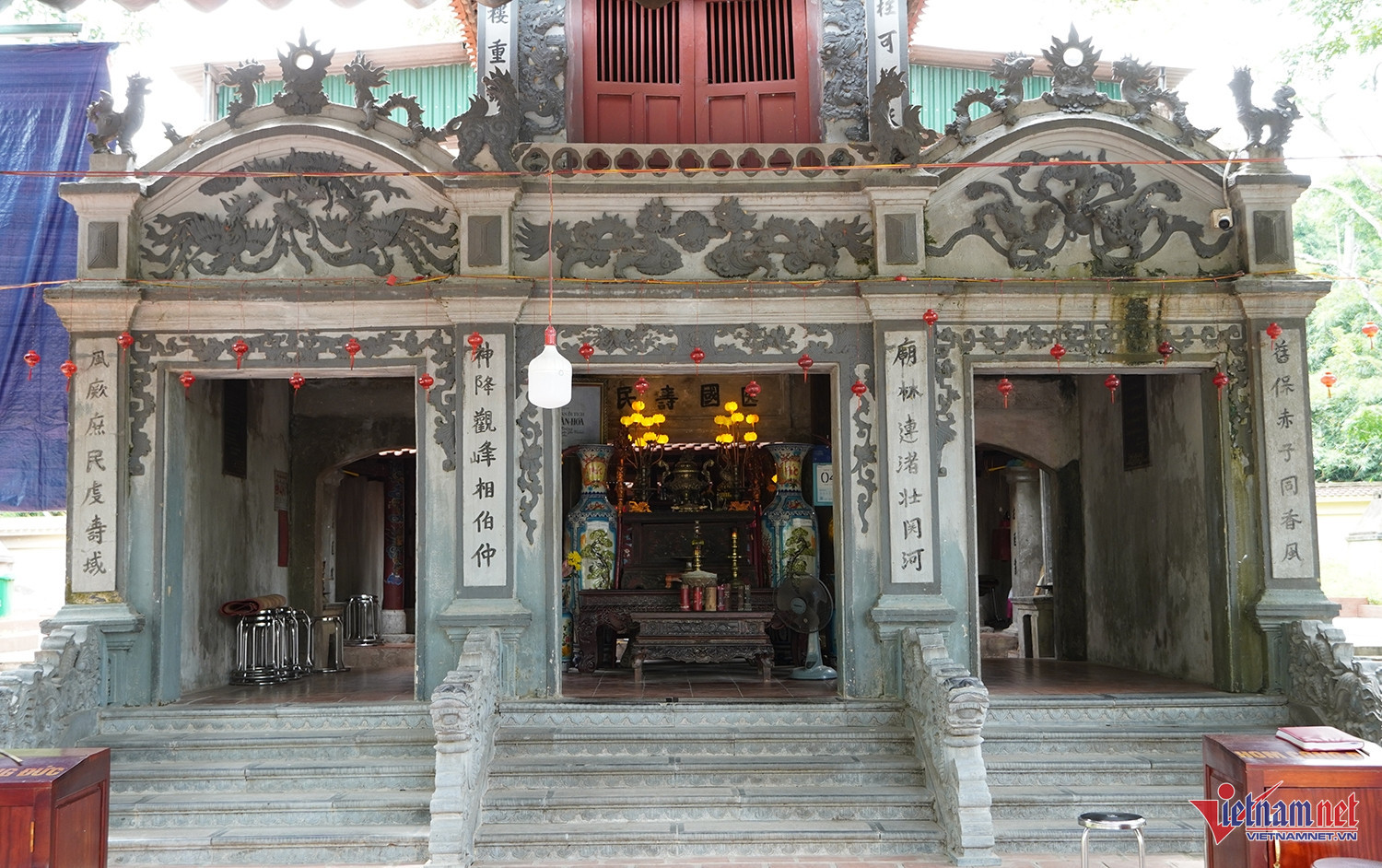
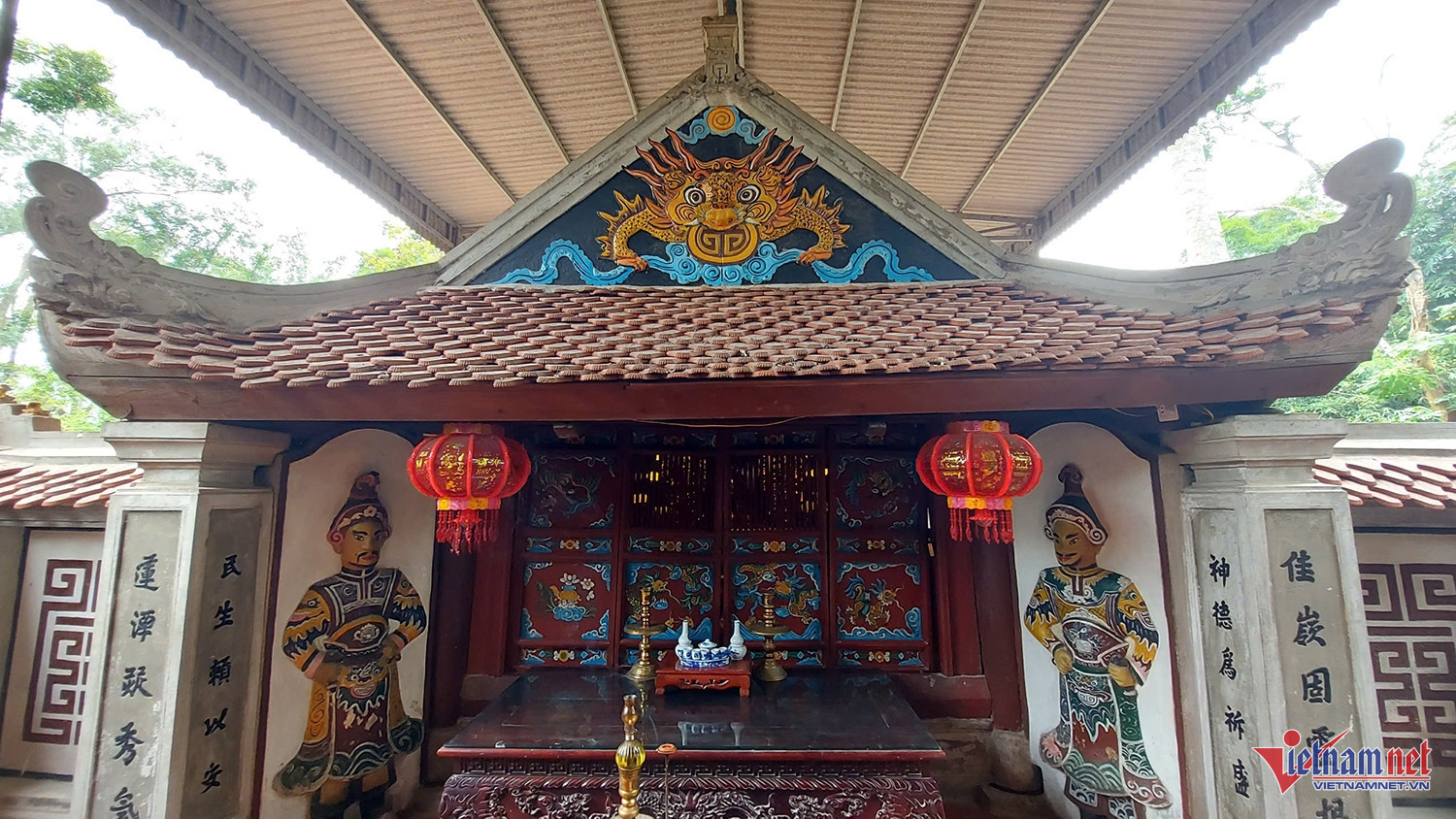
Its architecture bears the hallmarks of traditional Vietnamese design, with three main structures: the lower, middle and upper sanctuaries.
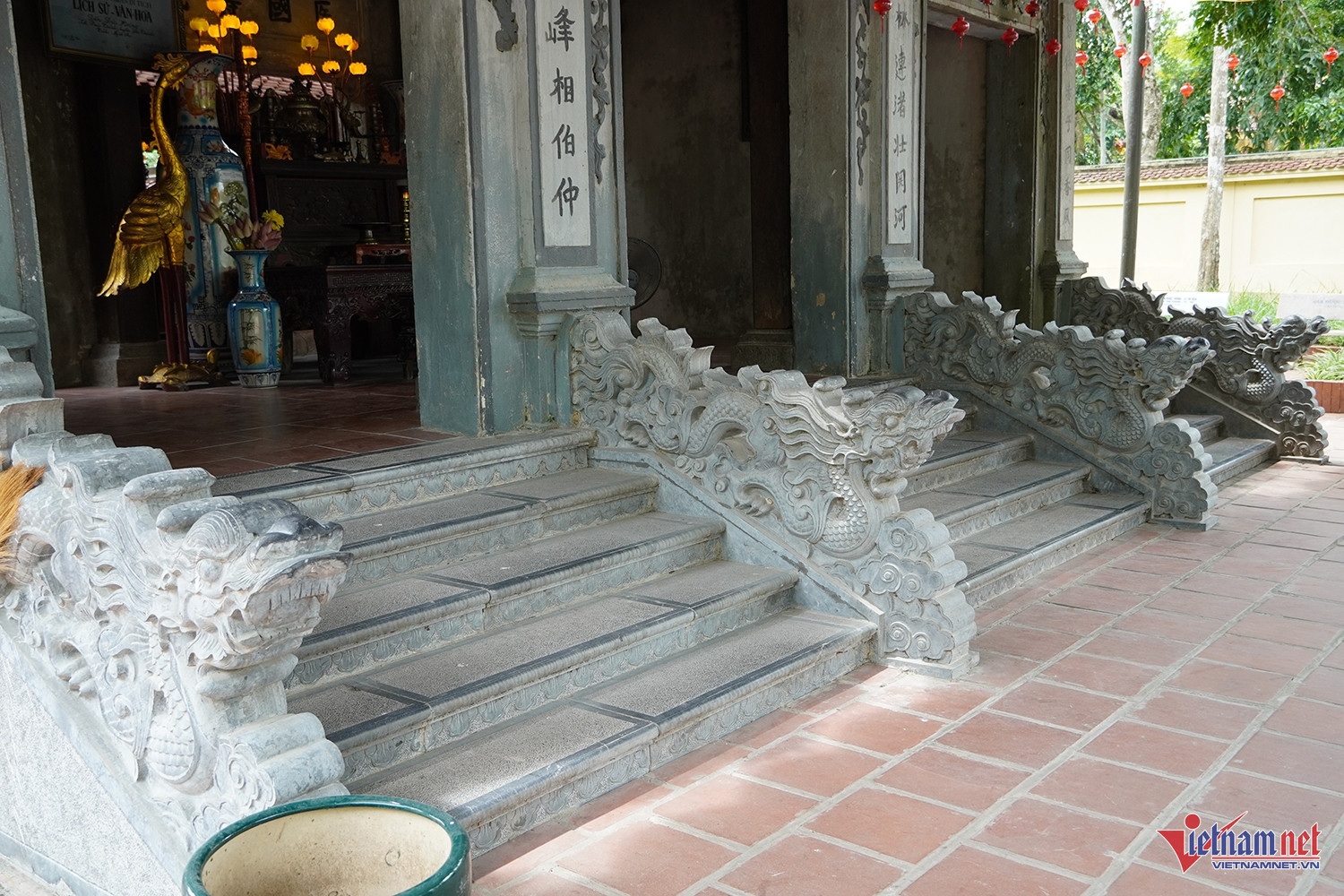
The lower sanctuary consists of three compartments and features a traditional structural design. Its arches are decorated with the Four Sacred Creatures and stylized motifs, while the central section is built in a two-tier pavilion style and topped with yin-yang roof tiles.
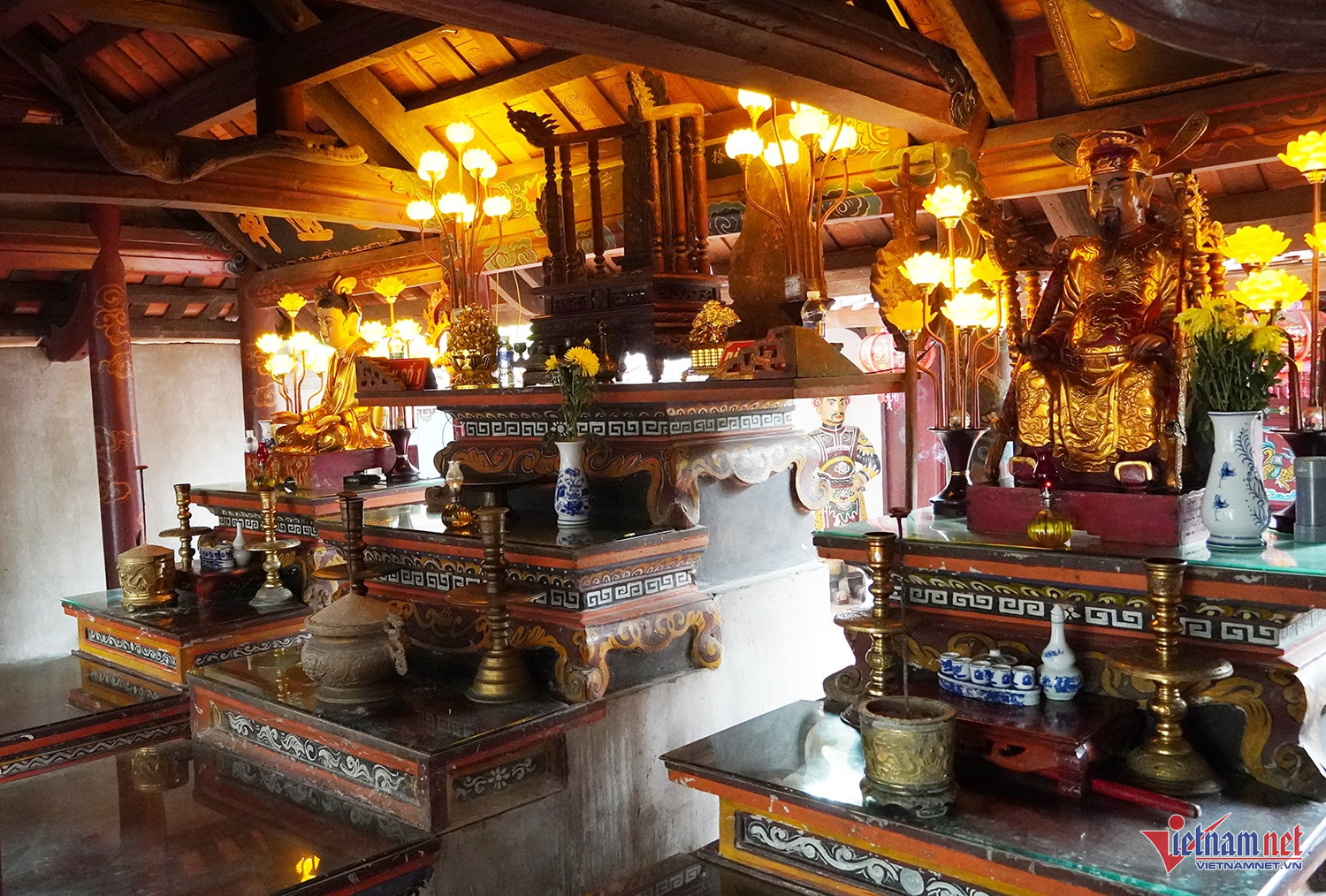
The middle sanctuary comprises three compartments and two gable ends, supported by a four-pillar structure and containing three worship spaces.
The right-hand section is dedicated to Princess Lieu Hanh, the central section honors deities worshipped collectively at the temple, while the left is dedicated to Duc Thanh Tran, the revered name associated with Tran Hung Dao.
At the innermost part of the complex stands the upper sanctuary, the temple's most sacred space. It houses a tablet dedicated to the Snake Deity and an altar honoring Sat Hai Dai Vuong Hoang Ta Thon.
According to local historical records, Hoang Ta Thon was a general of the Tran Dynasty from Van Phan, an area now part of Duc Chau Commune in Nghe An.
He achieved numerous military successes during the resistance against the Mongol-Yuan invasions and was granted a title by the royal court before being assigned to defend the coastal region.
After his death, communities in many places established temples in his honor, including Duc Hoang Temple.
Beyond its historical significance, the temple preserves numerous valuable artifacts of artistic and research importance, including incense altars, ceremonial thrones, ancestral tablets, altar cabinets and wooden plaques, along with a collection of Han-Nom documents.
Together, these objects provide a window into the religious practices and history of Nghe An over several centuries.
In recognition of its historical, cultural, architectural and artistic significance, Duc Hoang Temple was designated a national historical and cultural relic in 1998.
.svg)
