 Vietnamnet.vn

 Podcast



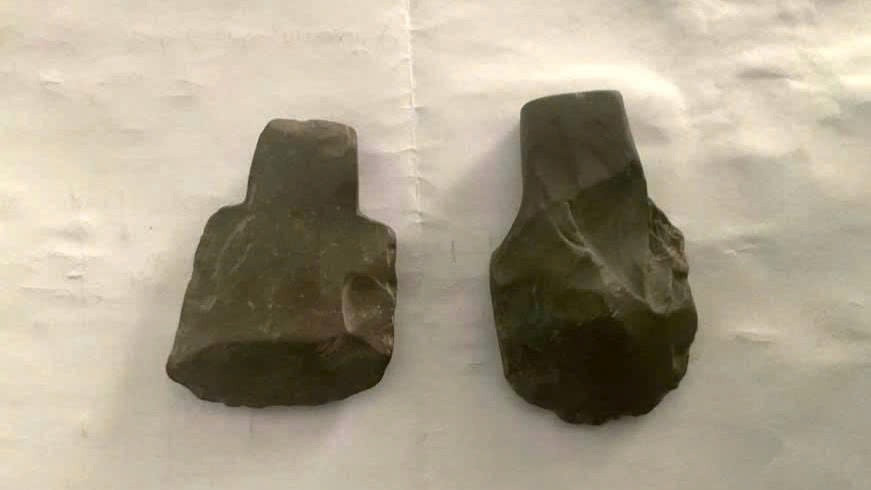
Stone axes discovered inside En Cave. Photo: Quang Tri Provincial Museum
During a recent survey of En Cave, an expedition team uncovered five ancient stone axes embedded within layers of sediment eroded by floodwaters, revealing traces of prehistoric human activity dating back thousands of years in the Phong Nha - Ke Bang National Park.
On April 25, the Quang Tri Provincial Museum announced it had received the artifacts, donated by a British - Vietnamese cave exploration team for research and exhibition purposes.
The expedition, led by Howard Limbert of the British Royal Cave Exploration team, discovered the five stone axes inside En Cave, located within the national park. The artifacts have been dated to approximately 6,000 to 8,000 years ago, belonging to the Neolithic period and likely associated with the Bau Tro culture.
Crafted from siliceous stone, the axes include two types: those with sloping shoulders and those with horizontal shoulders. Visible marks of shaping and polishing remain on their bodies and blades, along with signs of wear at the handles and edges, indicating repeated use in the daily lives of prehistoric inhabitants.
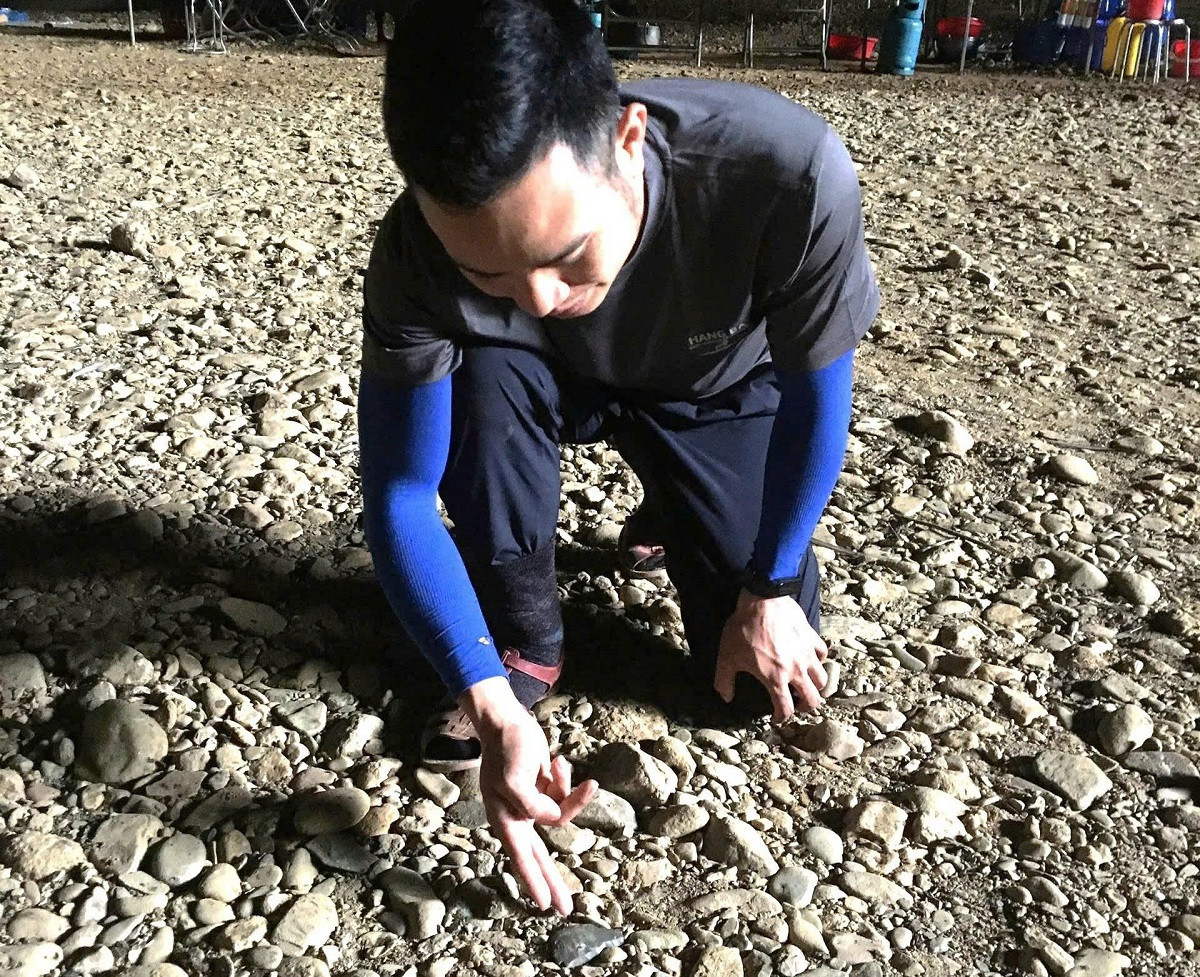
Members of the expedition team uncover the stone axes. Photo: Quang Tri Provincial Museum
Notably, the axes were found within sediment layers that had been eroded by floodwaters inside the cave, where remnants of ancient cultural strata are still preserved. This discovery reinforces the view that the Phong Nha - Ke Bang area once served as a site of habitation or activity for early human communities thousands of years ago.
Following the discovery, Howard Limbert and his wife donated the artifacts to the Quang Tri Provincial Museum and the Hanoi Museum to support scientific research and help promote the cultural and historical value of the region.
En Cave, one of the largest caves in the world, stretches over 1.6 kilometers in length with a volume of approximately 6.7 million cubic meters. Its vast chambers, towering ceilings, and multiple openings that allow natural light make it a striking natural wonder. The cave has been developed for adventure tourism since 2012 and serves as a gateway to the renowned Son Doong Cave.
During the same survey, conducted from March 21 to April 11, the expedition also discovered 26 additional caves within the national park. Many feature unique geological structures, underground rivers, and diverse stalactite systems, underscoring the area’s immense potential for both scientific research and tourism.
Hai Sam
.svg)
