 Vietnamnet.vn

 Podcast



One project was in a good, convenient location and priced at around VND20 million per square meter, which fit the amount of money I had. There was just one thing that made me hesitate: the ownership of the apartment was limited to 70 years.
The other project was inferior in many respects, especially in terms of location. Its price was as high as VND30 million per square meter, well beyond what I could afford at the time.
In the end, I chose the second apartment though I had to borrow money from a bank. The reason was quite simple: the long-term ownership that allowed me to leave to my children and grandchildren.
Some people were willing to pay an extra billion dong or more just to buy the two words "long-term."
More than a decade has passed, but that psychology seems unchanged. When apartment prices in Hanoi and HCMC have exceeded VND100 million per square meter, buyers are looking for more than just a place to live. They are spending an entire fortune to buy an ownership right that they believe will be preserved long-term.
That is why whenever there is a proposal to link apartment ownership terms to the lifespan of a building, debate erupts again. People understand that buildings will eventually degrade. What concerns them is how their property rights will be protected when the building itself no longer exists.
I recount this story in the context that just three years after time-limited apartment ownership was removed from the Housing Law due to a lack of consensus, the Ministry of Construction has put forward an almost identical proposal under different wording.
A difficult problem that needs solving
It is not difficult to understand why the ministry wants to revisit the proposal.
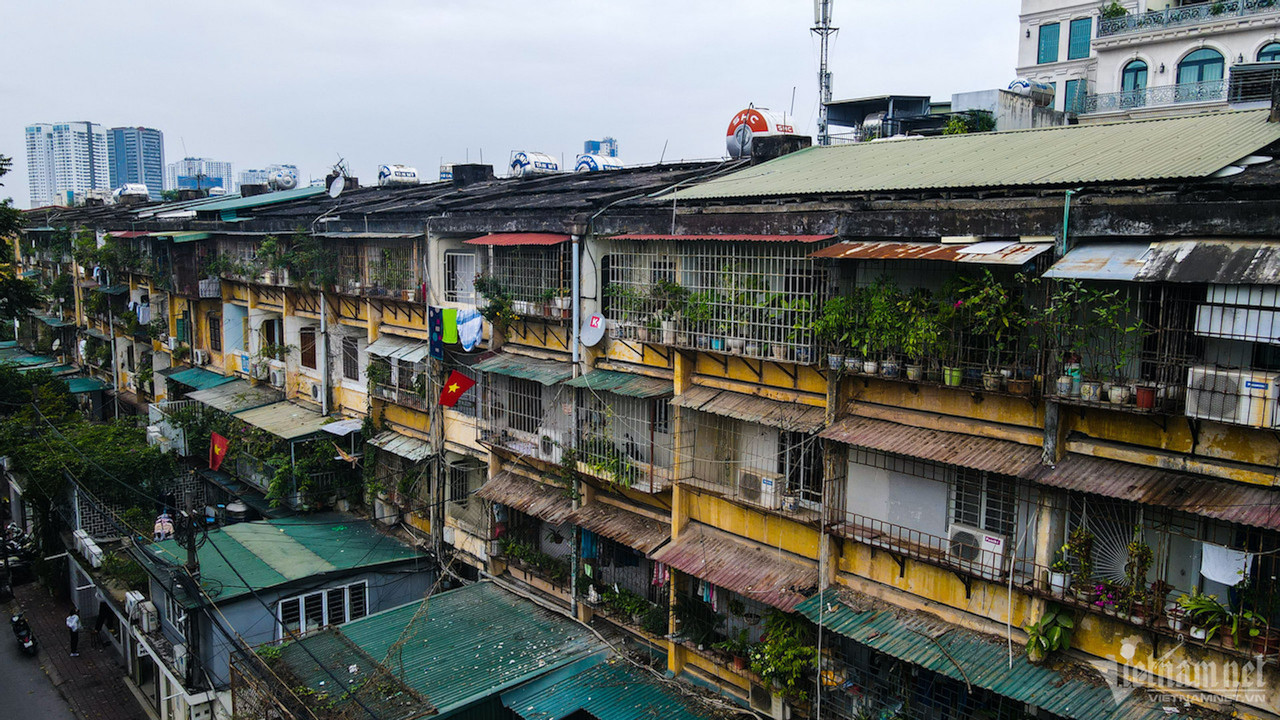
Thousands of old apartment buildings in Hanoi, HCMC and other major cities are deteriorating. Many buildings have been deemed unsafe, yet their renovation remains stalled because residents, businesses and local authorities have failed to reach agreement.
In other words, the ministry is trying to open a door that has been stuck for years.
Under the amended Housing Law draft, apartment ownership would be established when the State recognizes it and would end when the building reaches the end of its service life or is subject to mandatory demolition. If the building remains safe after inspection, its service life could be extended. If it must be demolished, residents would be entitled to participate in reconstruction or receive compensation in accordance with regulations.
The ministry's argument is clear. An apartment cannot be viewed as an asset that exists forever when the building itself has a finite lifespan. Linking ownership rights to the lifespan of the building would provide a more favorable legal basis for demolishing and rebuilding old apartment complexes.
This is not the first time the Ministry of Construction has proposed such a policy. In 2022, time-limited apartment ownership was included in a draft Housing Law but was eventually removed due to a lack of consensus. Now, the proposal has returned.
There is nothing unusual about that. The real question is whether, after three years, the Ministry of Construction has new grounds to persuade the National Assembly and the public. If the root causes still lie in compensation, resettlement and the selection of investors, changing the ownership regime may not be the right tool.
The biggest difference between the Ministry of Construction and the HCMC Real Estate Association’s viewpoints (HoREA) lies not in their goal but in how they seek to solve the problem.
The former believes that linking apartment ownership duration to a building's lifespan is necessary to break the deadlock in renovating old apartment complexes. The latter, meanwhile, argues that the lifespan of a building and ownership of an asset are two different matters. A building may reach the end of its service life and have to be demolished, but that does not mean residents' ownership rights should automatically end with it.
HoREA proposes a different approach. Instead of imposing a single ownership regime on all apartments, the law could allow two models to coexist: apartments built on land with long-term residential use rights would continue to have long-term ownership, while time-limited ownership could be developed at lower prices, allowing people and the market to make their own choices.
This proposal does not reject time-limited ownership. It simply argues that the choice should belong to the market rather than being imposed on everyone.
Tu Giang
.svg)
