 Vietnamnet.vn

 Podcast



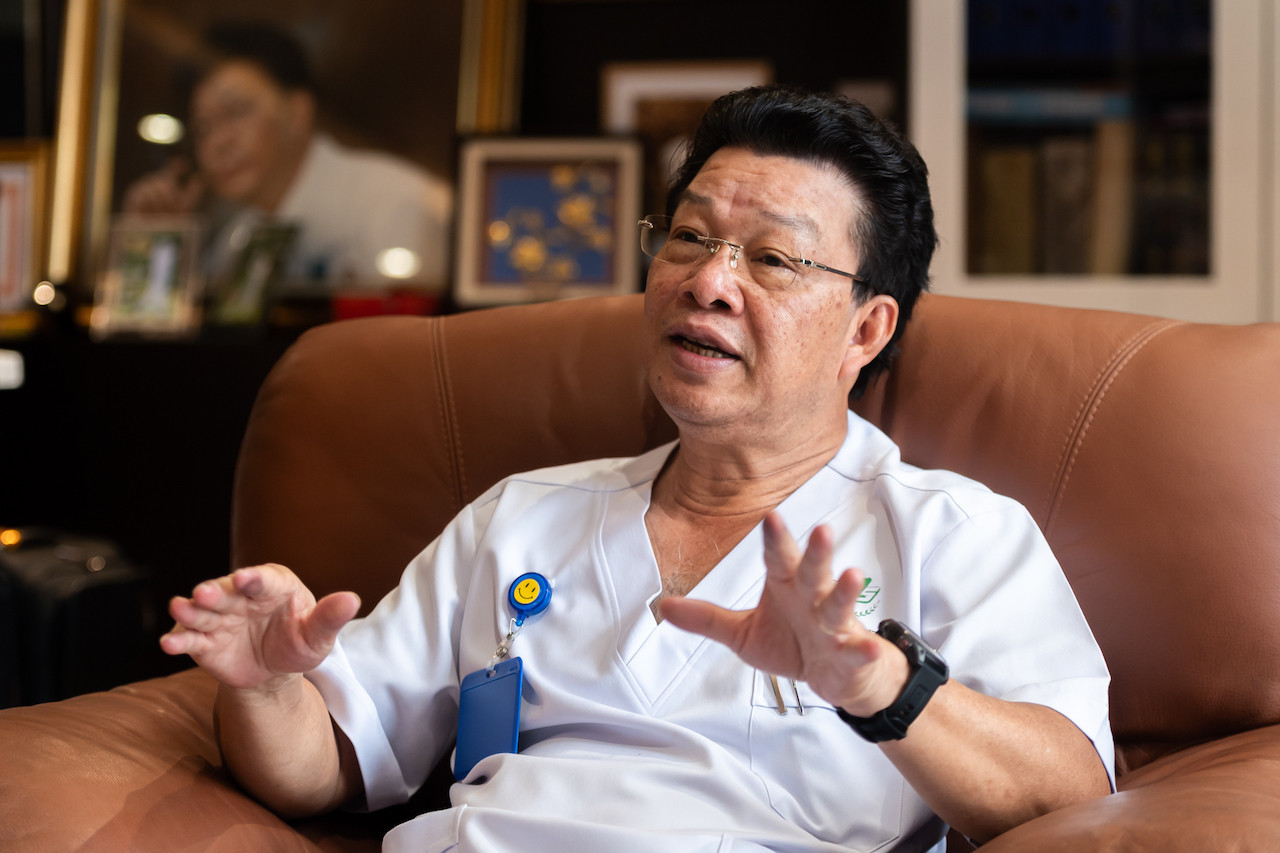
Prior to becoming a doctor, Son once dreamed of being an architect designing landmark structures, a seafarer sailing across oceans, a diplomat immersed in different cultures, or an artist.
But in early 1979, at age 17, he was admitted to the Military Medical Academy after a rigorous screening process. Upon graduation, he joined Military Hospital 175 and performed international duties in Cambodia, and since then has remained dedicated to medicine for over 40 years.
He recalls moments when opportunities arose to pursue different paths, advance his career, or secure greater financial stability. Yet he chose to stay. The journey, he said, involved “a lot of sweat and tears” but he was “truly happy.” If given the choice again, he would still choose to be a physician and teacher in uniform.
Often dubbed “the man who built the most hospitals in Vietnam,” he smiles and calls it a playful description. However, the number of projects he helped conceptualize, advise on planning, and design is indeed significant. These include key facilities at Military Hospital 175 such as the Oncology and Nuclear Medicine Institute and the Orthopedic Trauma Institute, the Truong Sa Medical Center, Hong Duc Hospital, and An Sinh Hospital.
Each project bears the mark of Major General Nguyen Hong Son's thinking.
“It is not about how many hospital beds but the investment value per hospital bed,” he said, adding that hospital architecture must also bring a sense of healing.
Drawing on practical experience and academic knowledge, he worked closely with architects to ensure that patients remain at the center of every planning decision, from space and functionality to equipment.
This patient-centered approach once made the licensing of a hospital with just 25 beds a notable case at the time.
From 3-person medical team to Truong Sa Medical Center
The Major General recalls that 30 years ago, on Truong Sa Lon Island, there was only a three-member medical team living on dry coral sand, lacking fresh water, vegetables, medicine, and proper equipment. Today, it has become a modern medical center, a “lifeline” in the middle of the sea.
The center was initiated by leaders of Military Hospital 175, with significant contributions from Son and sustained support from Tuoi Tre newspaper through campaigns such as CQ boats, “Bricks for Truong Sa,” “Sacred Land for Truong Sa,” and “Green Trees for Truong Sa.” All were driven by the aspiration for peace and safeguarding of national sovereignty.
Over the years, the center has provided tens of thousands of medical examinations and treatments, handled thousands of emergency cases, and performed hundreds of surgeries. Notably, two babies born on the island were named Nguyen Ngoc Truong Xuan and Thai Binh Hai Thuy, in gratitude to the medical staff and to Truong Sa.
According to Son, the success of the island medical model comes from five core factors: the ability to handle basic internal and surgical emergencies; doctors trained to move “from specialists to generalists”; a telemedicine system implemented since 2007 enabling mainland consultations; air and sea medical evacuation capacity day and night; and a tightly coordinated command system among forces.
Field hospitals and military medicine abroad
Beyond developing maritime healthcare, in 2018 Vietnam deployed, for the first time, a military unit overseas for an international mission at the request of the United Nations. Military Hospital 175 was entrusted with leading the Level 2 Field Hospital in South Sudan.
“From personnel organization, training, equipment, and foreign languages to adapting to local climate, culture, and religion - everything was unprecedented,” the Major General recalled.
From the Level 2 Field Hospital 2.1 in 2018 to 2.7 in 2025, Vietnamese field hospitals in South Sudan fulfilled their missions with distinction, earning Peacekeeping Medals and commendation letters from the UN Secretary-General.
“Beyond medical treatment, we instructed our doctors to also teach literacy, guide farming practices, and provide community health education. These efforts created a unique story of ‘vegetable diplomacy.’ There were successful emergency cases after which local authorities and residents gifted cows and goats, their most valuable assets, as expressions of gratitude,” he said.
Le Huyen
.svg)
