 Vietnamnet.vn

 Podcast



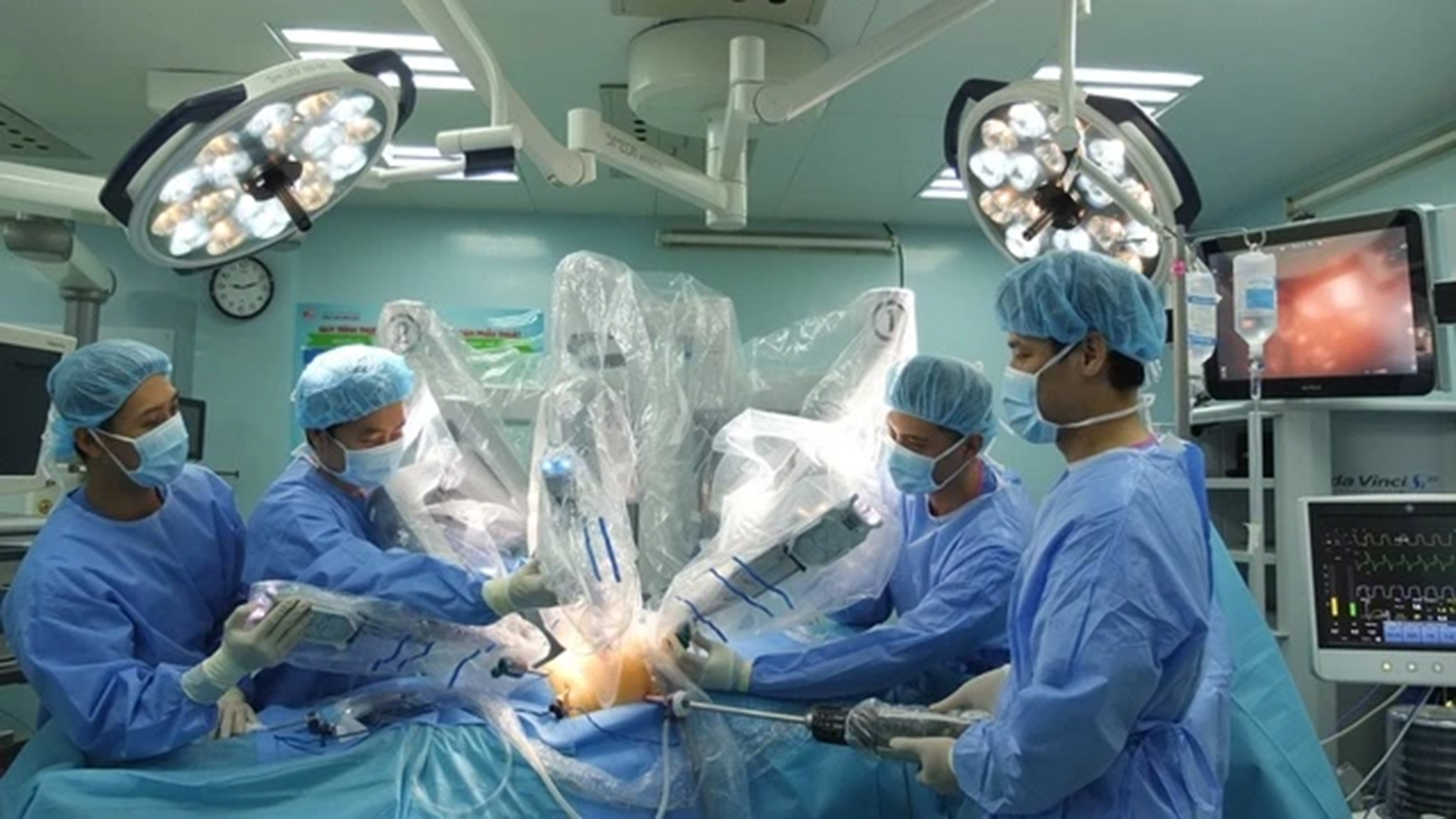
On March 2, Binh Dan Hospital in Ho Chi Minh City announced that it had successfully treated a patient diagnosed with pulmonary sequestration. This is the first reported case in Vietnam in which a rare form of pulmonary sequestration was operated on using robotic surgery.
The patient, identified as N.N.T., 56, from Tay Ninh Province, incidentally discovered a lesion in the lower lobe of his left lung during a routine health check. Imaging results at Binh Dan Hospital revealed a 23x26mm mass, sufficient to diagnose intralobar pulmonary sequestration.
The artery supplying the mass originated directly from the descending aorta and measured up to 17mm in diameter - an unusually large size that posed significant risks if left untreated.
According to MSc, Specialist Level II Nguyen Van Viet Thanh, Head of the Department of Thoracic and Thyroid Surgery, the greatest challenge of the operation lay in this abnormal feeding artery. “The vessel was large, fragile and densely adherent due to chronic infection in the surrounding area. Even a minor error during surgery could have led to uncontrollable bleeding,” he said.
For decades, this condition has typically required open surgery, involving a large chest incision and rib retraction to access the lesion. The advent of thoracoscopic techniques has helped reduce invasiveness to some extent, but limitations remain in complex cases.
After a hospital-wide consultation, the surgical team opted for the Da Vinci robotic system as the most suitable solution under the circumstances. The procedure lasted approximately 120 minutes. The robotic platform provided high-resolution 3D imaging with significant magnification, allowing the team to clearly visualize vascular structures hidden deep within the chest cavity.
Following surgery, the entire sequestered lung segment was completely removed. The descending thoracic aorta was safely preserved, and no bleeding complications occurred.
Doctors recommend that individuals who experience recurrent pneumonia in the same location, cough up blood, or incidentally detect abnormal lung masses should promptly seek care at specialized medical facilities for screening with multi-slice computed tomography (MSCT). Early surgical intervention, before complications arise, remains the most definitive and safest treatment option.
Phuoc Sang
.svg)
