 Vietnamnet.vn

 Podcast



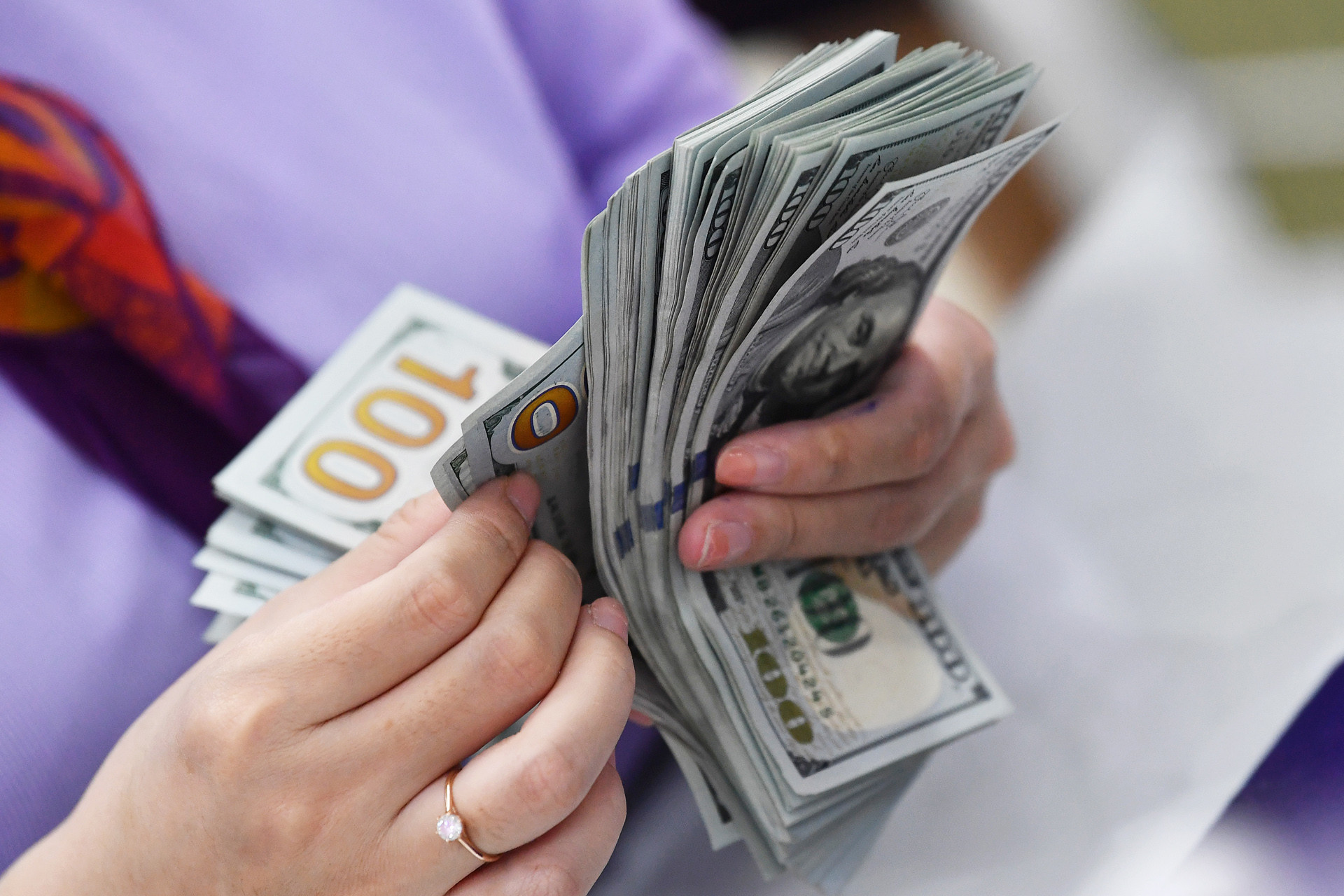
A stronger VND has put heavy downward pressure on domestic gold prices, even though the world’s gold prices remain high.
Dollar declines consecutively
The opening dong/dollar exchange rate on December 17 on the free market fell another VND50 to VND26,950 per dollar (selling price). Prior to that, on December 16, the USD already dropped by about VND100. Compared with nearly VND28,000 per USD in November, the USD on the black market has fallen by more than VND1,000, equivalent to a decline of about 3.5 percent, a sharp drop in a short period.
As of the morning of December 17, the USD price on the free market had only increased by 4.6 percent compared with the end of last year, versus nearly 8 percent by late November. This increase is not far from the 3.3 percent rise in the dong/dollar rate on the banking market.
As such, the forex market has stabilized significantly, and speculation shows signs of a marked decline. The free USD/VND exchange rate plummeted as interest rates recently rose in the banking market, primarily concentrated in small and medium-sized private commercial banks (some reaching 8 percent/year).
Major banks have begun to raise interest rates but still maintain relatively low desposit levels: 3.5-5 percent for 6-9 month terms, and 5.2-5.3 percent/year for 12-13 month terms.
The State Bank of Vietnam (SBV) has not yet adjusted the base interest rate but increased the Open Market Operations (OMO) rate from 4 percent to 4.5 percent/year in early December 2025 to relieve liquidity pressure when overnight interbank rates occasionally hit 7 percent/year. This move, combined with foreign exchange swaps (USD/VND swap), helps the SBV inject VND into the system more flexibly.
The USD/VND exchange rate plunged in the final days of the year, thus helping reduce pressure on monetary policy, which is expected to contribute significantly to the ambition of achieving economic growth of over 8 percent in 2025 and over 10 percent in 2026.
The VND has strengthened by 3.5 percent, exerting considerable pressure on other assets, including real estate and gold. However, it has calmed the psychology of hoarding foreign currency and narrowed the gap between the free rate and the bank rate to just a few hundred dong, instead of VND1,500 as before.
The cooling of the USD/VND rate is also partly due to the weakening of the USD on the international market. The DXY index recently dropped near the 98-point threshold, the lowest level in about two months. This is because the US Federal Reserve (Fed) previously cut interest rates for the third time this year, reducing them by another 0.25 percentage points to 3.5 percent-3.75 percent/year.
On the night of December 16, the US reported an increase in the unemployment rate from 4.4 percent to 4.6 percent, while the underemployment rate rose from 8 percent to 8.7 percent.
USD supply in Vietnam is expected to be more abundant toward year-end thanks to exports and remittances, helping ease exchange rate pressure. Maybank Securities believes that Fed rate cuts to lower levels and continued monetary easing will help narrow the USD–VND interest rate differential, thereby reducing pressure on Vietnam’s exchange rate and creating favorable conditions for the SBV to rebuild foreign exchange reserves and gain more room to manage interest rates.
Domestic gold prices under great pressure
The real estate market over the past month has been quite quiet in many places, including areas in Hanoi that were previously overheating. Gold prices are also under strong downward pressure. Especially at private gold shops, prices that were pushed to very high levels over VND160 million/tael are now only at VND141-144 million/tael, even though world gold is near its old peak.
SJC gold bars and SJC gold rings also fell sharply when converted according to the USD/VND exchange rate. In the December 16 session, gold prices decreased by about VND1.6 million/tael.
In principle, when the exchange rate drops, the "VND cost price" for converting goods priced in USD will decrease; gold is a typical example because international gold prices are listed in USD.
The impact on the gold market usually occurs through two main channels. The first is the conversion channel: at the same world gold price, a lower USD/VND rate will pull the VND-converted gold price down. The second is the expectation and cash flow channel: when the free USD "falls" rapidly, the demand for holding USD for defense decreases, and some money may return to VND deposits or move to other assets.
Manh Ha
.svg)
