 Vietnamnet.vn

 Podcast



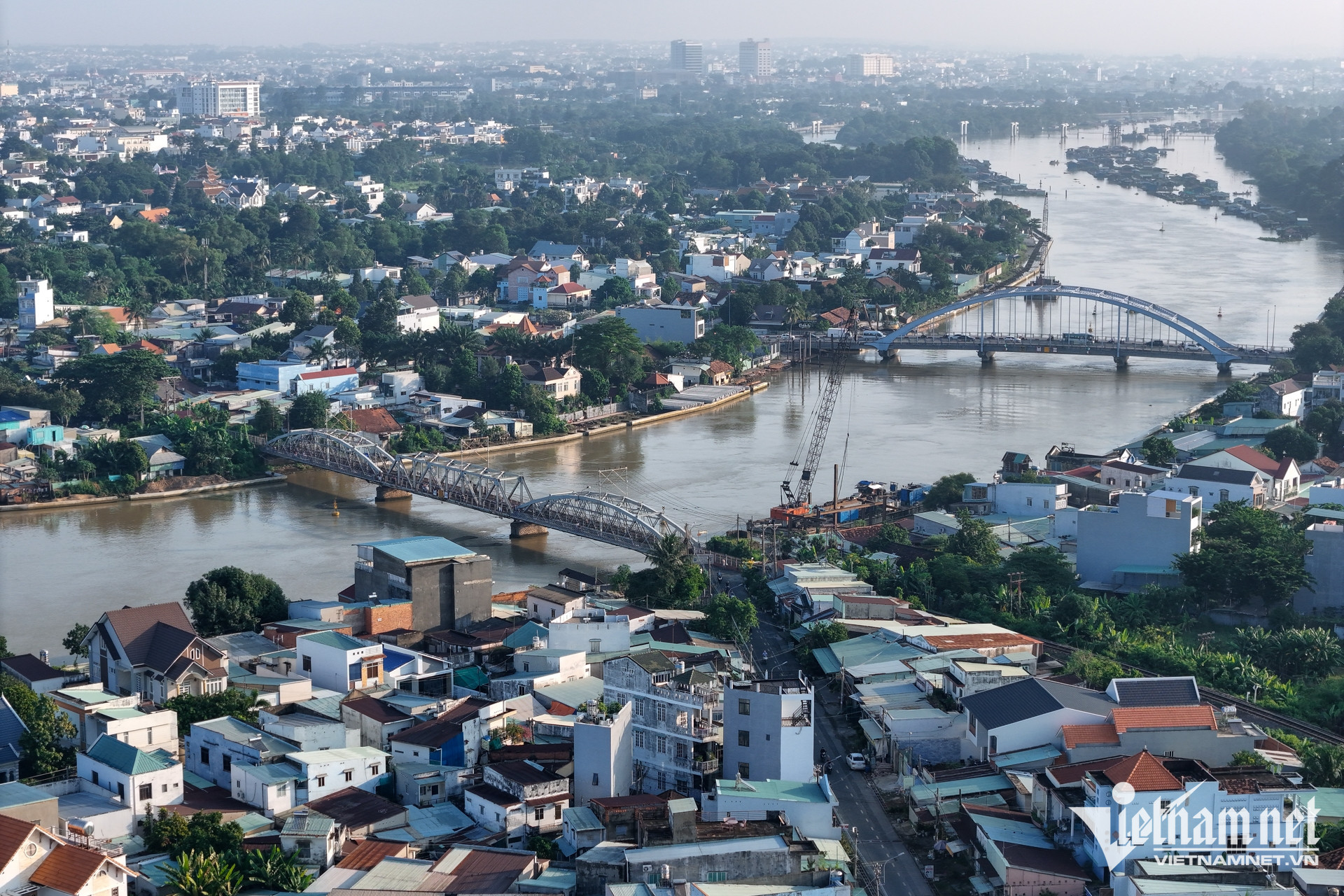
Under the resolution, Dong Nai City will be formed on the basis of the entire natural area and population of Dong Nai Province. The new city borders Ho Chi Minh City, Lam Dong Province, Tay Ninh Province, and Cambodia.
Dong Nai thus becomes the seventh centrally governed city of Vietnam, following Hanoi, Ho Chi Minh City, Hai Phong, Da Nang, Can Tho, and Hue.
The National Assembly has tasked the Government, the People’s Council, and the People’s Committee of Dong Nai Province - and, from the effective date of the resolution, those of Dong Nai City - along with relevant agencies and organizations, with implementing the resolution. This includes restructuring and consolidating local administrative bodies in accordance with regulations, while ensuring stable living conditions for residents and meeting development requirements.
Agencies, organizations, and units whose names are associated with Dong Nai Province will be renamed to reflect Dong Nai City once the resolution takes effect.
Official documents and papers issued prior to the resolution’s effective date that remain valid or within their usage period will continue to be applied in accordance with the law until they expire or are amended, supplemented, replaced, annulled, revoked, or withdrawn by competent authorities.
The National Assembly also noted that, from the date the resolution takes effect, in addition to policies applicable to centrally governed cities, existing specific mechanisms and policies for Dong Nai Province will continue to be implemented in Dong Nai City until the end of their designated period or until new decisions are issued by competent authorities.
Positioning Dong Nai as a pioneer in high-tech industrial development
Prior to the resolution’s adoption, a government report indicated that both the Committee for Legal and Judicial Affairs and National Assembly deputies expressed strong consensus that Dong Nai fully meets all required criteria for becoming a centrally governed city, satisfying all five statutory conditions.
The Government outlined development orientations for Dong Nai City, aiming to transform it into a pioneering model of a high-tech and sustainable industrial economy in Vietnam.
This model will focus on advanced and green manufacturing, high-tech agriculture, and the city’s role as an international-scale logistics gateway.
At the same time, a comprehensive system of solutions - including regional connectivity, technology transfer, logistics hubs, and training centers for high-quality human resources in the southern region - is expected to be implemented in a coordinated manner. These efforts will form a solid foundation for affirming Dong Nai’s role in driving regional socio-economic development and positioning it as a complementary urban center alongside the Ho Chi Minh City megacity.
Dong Nai Province has identified a clear roadmap to complete its master planning, general planning, urban planning, and other related plans in 2026, ensuring balanced development across its regions.
The province has also reviewed and prioritized infrastructure investment, expanding strategic transport corridors, ring roads, and interregional connections - particularly routes linking Long Thanh with the Mekong Delta - along with public transport systems to form a modern regional transport network. It is accelerating key projects, including expressways, ports, logistics systems, and connectivity to Long Thanh International Airport, while upgrading core urban infrastructure and completing technical systems aligned with the urban governance model.
The Government has also taken into account recommendations from the Standing Committee of the Economic and Financial Committee and will direct the Dong Nai People’s Committee and relevant ministries to prioritize all available resources to achieve socio-economic development targets. This includes finalizing urban planning and implementing specific plans and solutions to improve urban standards that currently remain below target levels.
The Government has set a goal for Dong Nai to have 50 percent of its commune-level administrative units classified as urban areas by 2030.
Tran Thuong
.svg)
